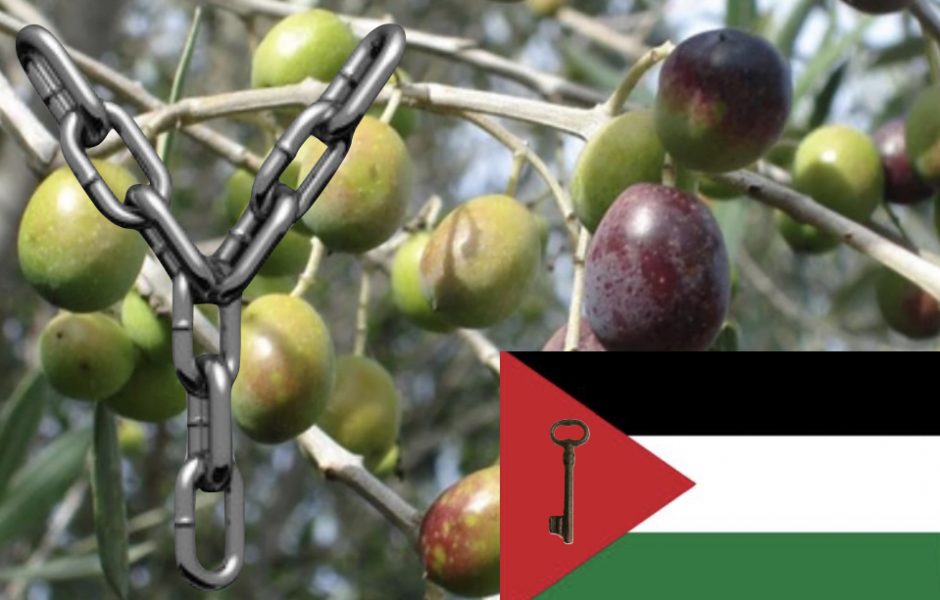
We stand firmly against injustice in all its forms. Nothing can justify the current war crimes committed by Israel in occupied Palestine. Equally, nothing can excuse the continued support offered by other nations to this apartheid regime. If you believe in human rights, dignity, and justice, then we urge you to boycott this rogue state. Silence is complicity, do what’s right.
[Scene: A vast hall of marble and glass — the European Commission in Brussels. Outside, rain falls softly. Inside, the floor reflects both the light above and the moral darkness beneath. Handala stands barefoot, facing the wall. Ursula enters, papers in hand, her face polished with diplomacy.]
Ursula von der Leyen:
Who let this child in here? You shouldn’t be in these halls, little one. This is where adults make decisions.
Handala (without turning):
Adults? You mean those who speak of human rights while choosing who gets to be human?
Ursula:
We defend democracy, freedom, and security. The European Union stands for peace.
Handala:
Peace has a strange meaning here. You send weapons to the illegal occupier and silence to the occupied. Tell me, Madam President — when you say “security,” do you mean for those who have walls, or for those who have none left?
Ursula (measured):
Israel has the right to defend itself.
Handala:
And Gaza has the right to exist. Or does existence itself threaten your alliances?
Ursula:
You don’t understand politics, child. The world is complex — history, law, responsibility—
Handala (interrupting):
History? You should know it well. Germany once said it was only following orders too.
Law? You helped write it — then watched it burn with every bomb dropped on Gaza’s children.
Responsibility? You owe it not to the past, but to the living.
Ursula (coldly):
We have condemned the humanitarian situation. We call for aid, for restraint—
Handala:
Condemned? You condemned words while others condemned children. You called for “aid” after you helped starve them. Restraint, Madam President, is a word without meaning to a mother who buries her child under concrete.
Ursula (defensive):
We must be careful with language. The term “genocide” must be determined by courts.
Handala:
So justice must wait until every witness is dead? You once said Europe had learned from its crimes. Tell me, when did forgetting become your form of remembrance?
Ursula (quietly):
I have seven children. I know what loss means.
Handala (turns slightly, still not showing his face):
Then every time you see their faces, remember the children you refused to see. Their names could fill every corridor of this building — and still, you’d call it politics.
Ursula:
You don’t understand the weight of leadership.
Handala:
No. I understand its cowardice.
You lead nations but cannot lead your conscience.
(Silence. The sound of distant thunder. Handala begins to walk toward the exit, still facing away.)
Ursula (softly):
Where are you going?
Handala:
To where Europe’s values are buried — among the ruins you refused to see. When you are ready to face them, you’ll find me there, still turned away, waiting for justice to look me in the eye.
This morning, I watched a child plant a sapling beside your roots. His small hands pressed the soil with care, his face shining with a quiet pride he could not yet name. The air was cool, filled with the scent of wild thyme and the distant hum of the land awakening. You stood above him like a guardian, ancient, patient, eternal, as if blessing him with your shadow.
In that moment, I understood what you have been trying to tell us all along: that hope does not grow from words alone, but from hands that touch the earth. That every seed we plant is a promise, a promise that life continues, that Palestine endures.
The children of this land carry your story in their hearts. They grow among your branches, learning the language of the soil, the rhythm of the wind. They know that every olive they pick, every sapling they nurture, is an act of remembrance and of defiance. They have inherited both your resilience and your grace.
You, dear tree, have seen centuries pass, empires rise and fall, seasons of struggle and silence. Yet here you are, still alive, still giving. And now the children of Palestine carry your legacy forward. In their laughter, in their songs, in the gardens they plant beside their homes, they build tomorrow with faith that no storm can wash away.
One day, this young sapling will stand tall beside you. Its roots will intertwine with yours, its leaves will dance in the same sun. And long after we are gone, it will tell our story of endurance, of love, of belonging, just as you have done for generations.
I wept until my tears were dry
I prayed until the candles flickered
I knelt until the floor creaked
I asked about Mohammed and Christ
Oh Jerusalem, the fragrance of prophets
The shortest path between earth and sky
Oh Jerusalem, the citadel of laws
A beautiful child with fingers charred
and downcast eyes
You are the shady oasis passed by the Prophet
Your streets are melancholy
Your minarets are mourning
You, the young maiden dressed in black
Who rings the bells in the Nativity
On Saturday morning?
Who brings toys for the children
On Christmas eve?
Oh Jerusalem, the city of sorrow
A big tear wandering in the eye
Who will halt the aggression
On you, the pearl of religions?
Who will wash your bloody walls?
Who will safeguard the Bible?
Who will rescue the Quran?
Who will save Christ?
Who will save man?
Oh Jerusalem my town
Oh Jerusalem my love
Tomorrow the lemon trees will blossom
And the olive trees will rejoice
Your eyes will dance
The migrant pigeons will return
To your sacred roofs
And your children will play again
And fathers and sons will meet
On your rosy hills
My town
The town of peace and olives.
People often ask me what it feels like to live under Israeli occupation.
They ask whether it’s possible to feel anything other than hatred toward those who punish us collectively, humiliate us at checkpoints on daily basis, shoot indiscriminately our children, steal our land, demolish our houses, control our movement, even our breath.
I never know how to give a simple answer, because nothing about this life is simple.
But I can tell you what I feel.
Imagine waking up each morning with the quiet relief that you survived the night, that you were not arrested, injured, tortured, raped or shot while you slept.
For many Palestinians, this is not an abstract fear but a daily reality shaped by brutal military occupation, constant raids, thousands of checkpoints, and systemic restrictions on movement and safety.
What does it mean to begin a day under this weight?
And how do you end it, knowing that tomorrow may bring the same uncertainty , the same struggle, the same need to simply endure?
When you wake up every morning not knowing if your home, your family, or your dignity will survive the day, emotions don’t behave the way they do in peaceful places.
I have known fear, fear that crawls under your skin and stays there forever.
I have known humiliation, quiet, sharp, unforgettable.
I have known grief that does not end, because every day brings a new funeral, a new loss, a new hole in someone’s life.
And yes, I have known hatred.
Not because I was taught it.
Not because my people are “born with it,” as the occupiers like to say.
But because when someone takes your land, dehumanises your existence, and decides your rights for you, hatred is not a decision or a plan, it’s a natural reaction and wound.
A wound that bleeds every time you try to live a normal life.
This might surprise people, but hatred is not the only companion of an occupied heart.
Sometimes I feel sorrow, deep, crushing sorrow for what we’ve lost and witnessed.
Sometimes I feel angry for the constant military support our occupiers receive from those who pretend to care about human rights.
Sometimes I feel confused about the future of humanity in the face of selective treatment.
Sometimes I feel sad for the endless suffering of Palestinians.
Sometimes I feel hopeless for for the world’s inability to put an end to the illegal occupation of my people.
Sometimes I feel numb, as if emotions have tired themselves out.
Sometimes I feel hope, fragile and trembling, for a future I’ve never seen but cannot stop imagining.
Sometimes I even feel compassion for individuals who are caught in the same system, even if they stand on the oppressive side.
Sometimes I feel nobody cares but
sometimes I feel that millions of people around the world support our cause.
The truth is: the human heart is capable of many feelings, even under a boot.
But they are never simple.
They are never pure.
They are tangled in pain, layered with memories, shaped by survival.
Imagine waking up every morning with the feeling that you are still not imprisoned or shot or tortured? This is the feeling of every Palestinian being oppressed by Israelis. How to begin the day and how to end it?
If there is one feeling that defines life under occupation, it is not hatred.
It is desperation.
Desperation is what grows in you when you realise your freedom will not come through negotiation.
When every path to dignity is blocked.
When every door closes no matter how peacefully you knock.
People like to debate the actions of the oppressed.
They judge the symptoms while ignoring the sickness.
But what happens when a person, or a nation, reaches the point where fear is no longer heavier than despair?
Desperation does not justify everything.
But it explains everything.
And explanations matter, especially to those who prefer to look at consequences rather than causes.
I am responsible for my actions, this is true.
But the world forgets that someone else is responsible for the conditions that shaped those actions.
Occupation is not just the presence of soldiers.
It is an apartheid system, a brutal structure that controls your body, your choices, your future.
When the entire population of Palestine is humiliated, enclosed, impoverished, displaced, and denied justice for more than seven decades…
When people are made to feel invisible…
When people are locked in enclaves and separated by walls..
When people are treated like animals…
When people are disrespected and abused…
When the perpetrators are perceived as victims and the victims as perpetrators…
When the world allows your suffering to become normal…
Then the occupying power cannot wash its hands of the consequences.
The chain of responsibility begins long before the desperate moment.
Occupation plants the seed.
Oppression waters it.
Desperation is the fruit.
Judge the fruit if you must,
but do not ignore the tree that grew it.
Can We Ever Feel Something Other Than Pain?
Yes.
But not like this, not while the injustice continues.
I have seen glimmers of what peace could look like.
Children still laugh.
Old people still dream.
Families still sit together, imagining a life where we do not need permission for basic human existence.
I believe that someday we could feel hope without pain attached to it.
We could feel trust.
We could feel forgiveness , not forced, not demanded, but genuine.
But this can only happen when the Israeli occupation ends.
When we are given not charity, not pity, but dignity.
When we are allowed to stand equal, not tolerated as lesser beings.
Only then will the heart have space for emotions other than anger, survival, or grief.
I do not wake up choosing hatred.
I wake up choosing to survive.
If the world wants to understand us, it must understand our pain, not dismiss it, not sanitize it, not demonise it , not ban it, not blame it.
Because until justice arrives, until freedom is real, an occupied heart will continue to feel what any human heart would feel under such conditions.
Not because we are a people of hatred,
but because we are a people of Israeli-made wounds,
and wounds demand to be felt before they can ever hope to heal.
Watermelon and Palestinian Identity: The watermelon serves as a symbolic representation of Palestine due to its color alignment with the Palestinian flag, which is characterized by red, black, white, and green. Its role as a symbol of Palestinian nationalism and resistance gained prominence following the Six-Day War in 1967, a pivotal moment when Israel seized control of the West Bank and Gaza. Shortly after that, Israel prohibited the waving and display of the Palestinian flag in Gaza and the West Bank. To circumvent this restriction, Palestinians adopted the watermelon, as its cut-open form displays the national colors. Since then, the watermelon has retained its significance, becoming a timeless representation of Palestinian identity and unwavering resilience. Cultivated locally in Gaza and the West Bank, watermelons have become a popular fruit among Palestinians. The watermelon has emerged as a prominent symbol for pro-Palestinian demonstrators, experiencing a resurgence on social media, particularly amid the ongoing Israel-Hamas war which began on October 2023.
Pre-Oslo Restrictions on Palestinian Flag: In 1980, Israeli authorities closed down an exhibition at the 79 Gallery in Ramallah, featuring the artwork of Palestinian artist SlimanMansour and others. Additionally, before the so-called Oslo Accords (1993), Palestinians faced punishment for possessing a Palestinian flag or any item with similar colors to the Palestinian flag. As a child, I vividly recall the hardships of having a Palestinian flag at home, as Israeli soldiers would conduct house searches, subjecting the entire family to harassment, punishment, and arbitrary arrest. This serves as a poignant illustration of the harsh reality of the Israeli occupation and its intimidating impact. The ban on the Palestinian flag was eventually lifted in 1993, a development associated with the Oslo Accords.
Global Flag Solidarity Sparks Israeli Crackdown: In 2023, during the war on Gaza, where massive genocides were committed against the Gazan people, resulting in the deaths of approximately 12,000 children and 10,000 elderly individuals, there was a resurgence in many countries worldwide, with people holding Palestinian flags everywhere to express support for the Palestinian population and condemn the genocide. This has prompted Israel to crack down on the display of the Palestinian flag. As a result, the Israeli Knesset preliminarily approved a draft law on Wednesday, prohibiting the raising of the Palestinian flag in the 1948 territories. The bill, presented by Almog Cohen of the “Jewish Power” party, led by extremist National Security Minister Itamar Ben Gvir, received 54 votes in favor and 16 against. According to Haaretz, if the law passes three readings, individuals waving the Palestinian flag could face penalties of up to one year in prison. The move reflects heightened tensions and restrictions on expressions of Palestinian identity within the Israeli political landscape.
The Palestinian Identity Shines Through: As the watermelon continues to symbolize Palestinian resilience, the symbolic power of the fruit and the determination of the Palestinian people persist despite the challenges. It serves as a reminder that even in the face of adversity, the pursuit of justice and identity remains unwavering. The evolving narratives of symbolism and suppression tell a broader story of a people committed to asserting their presence, rights, and aspirations. The Palestinian identity will undoubtedly stand out against Zionist brutality, which fears the Palestinian flag and persists in obliterating Palestinian culture with brutal and fascist measures. May the vibrant colors of freedom and peace flourish for all Palestinians.
The International Day of Solidarity with the Palestinian People, observed annually on November 29, serves as a solemn reminder of the ongoing plight of the Palestinian people under the Israeli apartheid and a global call for justice, peace, and human rights. Established by the United Nations General Assembly in 1977, this day underscores the international community’s commitment to addressing the unresolved question of Palestine and supporting the rights of its people to self-determination, independence, and freedom from Israeli occupation.
Historical Context
The date, November 29, is significant as it marks the anniversary of the 1947 UN General Assembly resolution that proposed the partition of Palestine into two states—one Palestinian and one Jewish. While this resolution was a pivotal moment in the history of the region, its implementation led to profound and lasting consequences for the Palestinian people, including massacres, ethnic cleansing , statelessness, and the ongoing denial of their human rights. The day of solidarity provides an opportunity to reflect on these historical injustices and to renew calls for a just and lasting solution.
A Global Recognition of Struggle
The solidarity day is not merely a symbolic gesture; it is an acknowledgment of the Palestinian people’s resilience in the face of brutal Israeli aggression. Over decades, Palestinians have endured occupation, apartheid policies, forced displacement, and systematic human rights violations.
Despite these challenges, they have demonstrated remarkable endurance and determination to assert their identity and rights. The international observance aims to amplify their voices and highlight the urgent need for meaningful action to address their suffering.
The Role of International Solidarity
Solidarity with Palestine extends beyond words of support; it demands tangible action from the global community. This includes:
Advocating for Accountability: Holding israel responsible for violations of international law accountable, including through mechanisms such as the International Criminal Court.
Ending Israeli Occupation and Apartheid: Calling for an end to Israel’s illegal occupation of Palestinian territories and dismantling policies that amount to apartheid, as documented by numerous human rights organizations.
Supporting Humanitarian Efforts: Providing humanitarian aid to alleviate the dire conditions in Gaza, the West Bank, and refugee camps, where Palestinians face severe restrictions on access to basic needs.
Boycott, Divestment, and Sanctions (BDS): Supporting non-violent resistance strategies that pressure Israel to comply with international law and respect Palestinian rights.
Advancing a Two-State Solution or Alternatives: Reviving genuine discussions on viable solutions that ensure peace, security, and justice for all people in the region.
Exposing Hypocrisy and Double Standards
The International Day of Solidarity with the Palestinian People also exposes the glaring double standards in global responses to human rights violations. While other crises often garner swift action and widespread condemnation, the plight of Palestinians is frequently met with inaction or selective outrage. This day challenges the world to confront its own inconsistencies and to uphold universal principles of justice and equality without bias.
A Vision for the Future
Solidarity is not only about recognizing past and present injustices but also about envisioning a future where Palestinians can live in dignity and freedom. This involves ensuring their right to return, dismantling the structures of occupation and apartheid, and creating conditions for coexistence based on mutual respect and equality.
The International Day of Solidarity with the Palestinian People is a call to action for individuals, organizations, and governments worldwide. It is a day to reaffirm our shared humanity, to demand justice, and to work collectively toward ending the oppression of the Palestinian people. As long as Palestinians are denied their fundamental rights, global solidarity remains not only a moral imperative but a necessary force for change. Let this day inspire renewed efforts to achieve a just and lasting peace for Palestine and the world.
Posted inJustice, Palestinian art & culture|Comments Off on International Day of Solidarity with the Palestinian People: A Call for Justice and Humanity
The proverb “When you have more than you need, build a longer table, not a higher wall” carries a universal moral message. It calls on people and nations to choose generosity over fear, openness over exclusion, and community over division.
But this message takes on a deeper, more urgent meaning when viewed through the reality of occupied Palestine, where a literal separation wall divides families, communities, and entire ways of life.
The concrete barrier that cuts through the West Bank stands more than 700 kilometers long and up to eight meters high. For many Palestinians, it is not only a physical obstruction but also a symbol of:
• collective punishment.
• restricted movement
• economic hardship
• separation from farmland
• isolation from family and
neighbours
• apartheid and fascism
• unequal distribution of resources
• hatred, racism , discrimination and ongoing conflict
Where walls rise, fear grows. Where tables extend, trust is built.
A longer table is not just a metaphor for hospitality, it is a call for justice.
It means:
• recognizing the humanity of those on the other side of political or physical borders
• acknowledging shared values and shared struggles
• understanding that safety comes not from fortification but from fairness
• creating spaces where people can meet, eat, talk, and be seen
In occupied Palestine, where families are separated by Israeli checkpoints and apartheid walls, the idea of a shared table is a radical act of hope.
In Palestinian culture as in many others food is a sacred expression of love. Offering bread, olives, or warm dishes to a guest is more than nourishment; it is a declaration:
“You are welcome. You belong here.”
A long table filled with maqlouba, hummus, taboon bread, and fruits from the land symbolizes:
• rootedness
• hospitality
• resilience
• cultural survival
At such a table, the wall becomes irrelevant or better yet, collapses completely.
Walls freeze conflict.
Tables invite conversation.
What would it mean to choose policies that build understanding instead of barriers?
That prioritize dignity over superiority and dominance?
That see every human being as deserving of safety, respect, and a place at the table?
It would mean imagining a future where:
• children on both sides grow up without fear
• communities thrive through cooperation
• diversity becomes strength
• justice replaces hostility
A future where the long table becomes real not just an illustration.
The message is simple, but its impact is profound:
Those who have more power, land, safety, and resources carry a responsibility to share.
Extending the table is an act of courage.
Breaking the apartheid wall is an act of justice.
Sitting together is an act of peace.
In a world where too many walls rise, may we choose to build spaces of connection, in occupied Palestine and everywhere where every person has a seat, a voice, and a share in the feast of humanity.
In a shocking escalation of genocide, Israeli airstrikes have deliberately targeted hospitals in Gaza, killing medical staff and destroying critical infrastructure essential to saving lives. These actions, condemned globally, represent an assault on the principles of humanity, international law, and the moral fabric of civilization itself.
Hospitals as Targets
Hospitals, by definition, are sanctuaries of healing. They are explicitly protected under international law, particularly the Geneva Conventions, which prohibit attacks on medical facilities, personnel, and the sick or wounded. Yet in Gaza, these sanctuaries have become death traps. Strikes on hospitals like Al-Ahli Baptist Hospital and others have not only claimed the lives of patients and staff but have also paralyzed Gaza’s already overwhelmed healthcare system.
The bombing of medical facilities in a region suffering from blockades, shortages of medical supplies, and constant bombardment compounds the crisis exponentially. Patients undergoing surgeries have died mid-procedure. Premature babies dependent on incubators powered by electricity have succumbed as generators failed. Doctors have been killed as they worked to save lives, turning heroes into casualties.
Killing Those Who Save Lives
Medical staff in Gaza have become frontline responders to relentless violence, working under impossible conditions. These doctors, nurses, and paramedics—many of whom stayed behind to care for the injured despite the risks—have been targeted and killed. Ambulances have been struck by missiles, leaving first responders dead or gravely injured.
By targeting the very individuals who strive to preserve life, the Israeli occupation army has committed an atrocity that strikes at the heart of human dignity. The loss of these brave souls is not just a tragedy for Gaza; it is a loss for humanity as a whole.
A Clear Violation of International Law
The deliberate targeting of hospitals and medical staff constitutes a blatant violation of international humanitarian law. Such acts are war crimes, plain and simple. The Geneva Conventions are unambiguous: medical facilities and personnel must be protected, even in the midst of war. To target them is to defy the fundamental tenets of humanity.
Israel has defended its actions by claiming that Hamas uses hospitals as shields for military operations. Yet these claims are unverified and fake, and do not justify indiscriminate bombings that kill civilians and destroy vital infrastructure. Even in cases of alleged military use, international law mandates proportionality and the protection of civilians. Bombing a hospital filled with sick and injured patients, staff, and displaced families is indefensible.
Humanitarian Crisis Worsens
The destruction of hospitals has plunged Gaza into a humanitarian catastrophe of unimaginable proportions. Gaza’s healthcare system was already on the brink due to years of blockade, lack of medical supplies, and power shortages. Now, with key hospitals in ruins, the injured are left to die without treatment. Women in labor have nowhere to deliver safely. Children injured in bombings are dying for lack of care.
The psychological toll is equally devastating. For the people of Gaza, hospitals were among the few places of refuge in a warzone. That refuge is now gone, leaving millions with nowhere to turn.
The Global Response
While much of the world watches in horror, global leaders have offered little more than empty statements. The United Nations, international human rights organizations, and medical advocacy groups have called for an immediate cessation of attacks on medical facilities and the protection of healthcare workers. Yet these calls have been largely ignored.
For every bomb that falls on a hospital, for every doctor killed, the international community’s failure to act becomes a deeper stain on its conscience.
The Moral Reckoning
The bombing of Gaza’s hospitals is not just a military act—it is a moral outrage. It is a direct attack on the most fundamental human values: the sanctity of life, the protection of the vulnerable, and the duty to heal, not harm.
If these actions are allowed to go unpunished, they set a dangerous precedent, signaling to the world that hospitals, medical staff, and the sick and wounded can be considered acceptable collateral damage in warfare. Such a precedent endangers not just Gaza, but every conflict zone on the planet.
The bombing of Gaza hospitals by the Israeli military is a war criminal act that defies justification, violates international law, and erodes the moral foundations of humanity. It is imperative that the international community holds those responsible accountable. Failure to do so will not only abandon the people of Gaza but will also erode the principles that protect us all in times of war and peace.
The world must not look away. The cost of silence is measured in lives lost and humanity diminished.
In recent times, a growing number of calls have surfaced among Palestinian and Israeli intellectuals and academics urging the reconsideration of the bi-national state option. This proposal emerged in response to somewhat clear indications of the faltering of the two-state solution and a recognition of the need to embrace more effective strategic alternatives capable of addressing the fundamental issues at the heart of the Israeli-Palestinian conflict.
This study delves into the realm of the one-state option, bridging the gap between theory and practice. It traces the evolution of the bi-national state concept from its inception to the present, while also examining the circumstances that led to the collapse of the two-state solution through political and intellectual lenses. Additionally, the study explores the implications of Israeli racist practices on this shifting landscape.
The primary goal of this research is to introduce the concept of a bi-national state, evaluating its potential to serve Palestinian national interests. It scrutinizes the ability of this option to grapple with the challenges of achieving a final solution and bringing an end to the Israeli-Palestinian conflict. Furthermore, the study aims to elucidate the obstacles encountered in realizing this option. Shedding light on the multi-dimensional aspects of the one-state solution, particularly in the aftermath of the stagnation in the peace process between the Palestinian and Israeli sides and the collapse of the two-state project, becomes paramount.
Addressing pivotal issues such as settlements, refugees, and the insistence on a Jewish state, the study underscores the critical discussions surrounding the major projects of both the two-state solution and the one-state option. There has been extensive discourse on settlement policies and their impact on derailing the two-state project, as well as the destabilizing effect of the insistence on the Jewishness of the state on the peace process. Notably, proponents of the one-state solution argue for its superiority, emphasizing its potential to revive the concept of popular sovereignty and secure comprehensive national and political rights, especially for the Palestinian people.
In examining the challenges faced by proponents of the one-state project, the research explores intellectual issues such as collective identity and Israeli particularity in coexistence. Additionally, it delves into the responses of the Israeli and Palestinian populations and the reactions of national and international movements regarding the acceptance and support of this option, emphasizing the need for well-developed movement strategies that demystify the concept and address concerns.
The study concludes that the consideration of a one-state option is a matter of evolving significance, gaining momentum over time, especially as the two-state option fails to provide convincing prospects for the future of the national project. There is a discernible and steady increase in support for the idea of a single state.
Follow the link on the detailed study ( apologies, translation from Arabic to English is being carried out)
Israeli apartheid cannot continue to exist and must be dismantled as a matter of urgency. Its very foundation is built on a system of abhorrent racism and a genocidal approach toward the indigenous Palestinian people. This structure of oppression has enabled the illegal occupation and theft of Palestinian land for decades, and it is long overdue for the international community to take meaningful action to end these injustices.
The Need for Immediate Action
The illegal occupation of Palestine and the associated crimes against its people must be addressed without delay. The international community must:
1. Stop Arming Israel: Cease all military aid and arms sales to Israel that fuel violence and perpetuate the oppression of Palestinians.
2. End the Genocide and Suffering: Demand an immediate halt to the ongoing atrocities against Palestinian civilians.
3. Dismantle Checkpoints and the Separation Wall: Destroy the illegal and racist checkpoints and the separation wall that segregate and oppress Palestinians.
4. Protect the Vulnerable: Ensure that the human rights of all vulnerable citizens in the region are safeguarded.
Building a Future of Equality
To achieve lasting peace and justice, a comprehensive solution is necessary. I believe in a one-state solution, where every individual, regardless of their skin color or ethnic background, has equal rights and opportunities.
A new constitution must be created, establishing a secular and democratic state that guarantees freedom, equality, and justice for all. Religion should not play a role in governance, ensuring that no group holds undue power or privilege.
Rights and Reconciliation
The new state must prioritize the rights of Palestinians who have suffered displacement and oppression for more than seven decades. Key steps include:
• The Right of Return: Palestinians in the diaspora must be given priority and the right to return to their homeland before any consideration is given to other ethnic groups.
• Restoration of Land and Rights: Palestinians must be compensated for their lost land and denied rights, ensuring justice for generations of suffering.
A Just and Equal Society
No one has the right to justify violence or oppression in the name of self-defense if it involves the slaughter of innocent people. No life is inherently more valuable than another. Jews are not superior to Palestinians, and Palestinians are not superior to Jews. Equality must be the cornerstone of the new state.
The name of this new country and its leadership are secondary to the critical need for justice, dignity, and human rights for all. What matters is that the rights of Palestinians are fully restored, and a new chapter of coexistence begins, free from the chains of apartheid and occupation.
A Call to the World
The international community must act with courage and resolve to end this injustice. Silence and inaction only perpetuate the suffering of millions. Together, we can dismantle Israeli apartheid, end the occupation of Palestine, and build a future based on equality, justice, and peace for all who call this land home.
Theodor Herzl (born May 2, 1860, Budapest, Hungary, Austrian Empire [now in Hungary]—died July 3, 1904, Edlach, Austria) founder of the political form of Zionism, a movement to establish a Jewish homeland.
In the realm of beliefs and religious texts, interpreting outdated scriptures literally, either purposely or due to religious indoctrination, can lead to an exclusive mindset, a false sense of superiority, brutality justifying violence, ethnic-based discrimination, and the extreme denial of basic human rights to others. Meticulously interpreted and intolerant religious beliefs serve as instruments for committing massacres, forcibly expelling people from their land, claiming divine commands, and asserting unjustifiable superiority over others. This is the story of Zionism in Palestine. The absurdity lies in the fact that no one has spoken to God or signed a contract with Him to bestow preferential qualities upon a racial group over the rest of humanity.
Zionism and the Torah: A Divine Justification
Zionism, aiming to establish a Jewish state in historic Palestine, draws inspiration from the Torah. The concept of Amalek takes center stage, mentioned by Israeli Prime Minister Netanyahu during the war on Gaza in October 2023. In the Torah, Amalek is portrayed as adversaries of the Israelites, initiating a brutal attack during their alleged exodus from Egypt. Most Zionist interpretations take this story literally, viewing every land acquisition as a divine gift. This belief justifies Israel’s actions, particularly in Gaza, causing civilian casualties and making the region uninhabitable. This is not an individual belief; rather, it’s a common belief among all Israeli people. The world has witnessed this, watching Israeli Occupation Force (IOF) soldiers chanting Amalek’s song for killing children and annihilating everything in Gaza. It is implanted in the minds of kids in kindergartens and schools.
The Distorted Command: Legitimizing Brutality
The command to “utterly destroy” Amalek, found in 1 Samuel 15:3, is used to legitimize acts resembling historical conquests, resulting in the brutal elimination and ethnic cleansing of the entire Palestinian population. This allowed Jews, expelled from Europe in the early 20th century, to confiscate lands from its indigenous people. It’s crucial to recognize that many peaceful and good Jews worldwide do not interpret the Torah in this extreme manner, rejecting the entire narrative of Zionists. It predominantly represents an extremist Zionist viewpoint that rationalizes long-term objectives, putting at risk the rights and existence of Palestinians.
Living Under Superstition: A Call for Reevaluation
Living under this superstitious religious narrative demands attention from human rights advocates and intellectuals worldwide. The danger escalates when literal interpretations justify actions that blatantly violate the basic rights of others. Urgent reevaluation is needed to dispute the narrative justifying the killing of Palestinians and the illegal confiscation of their lands in this alleged secular and democratic country. It’s time to expose and end the injustice fueled by the misuse of religious interpretation.
Night hung low over the city, trembling with distant explosions. Hospitals glowed in the dark like last surviving stars — fragile, flickering — and then, one by one, they began to go out.
Handala stood on the rooftop of a neighboring building, his bare feet coated in dust, watching the Al-Basma IVF Centre, Gaza’s main fertility clinic, still lit from within. Inside, thousands of dreams rested quietly in cryogenic tanks — 4,000 embryos, tiny seeds of families who had already suffered too much.
Handala whispered to himself:
“They’re only cells now… but they are futures.”
Below him, a doctor stepped out to smoke a quick cigarette before returning to the night shift. A generator sputtered. Nurses moved between rooms with soft footsteps, guarding what they knew were among the most precious lives in Gaza — embryos entrusted to them by 2,000–3,000 patients a month.
And then the sky tore open.
⸻
The Israeli Shelling
The first shell hit like God slamming a fist into the earth.
A deafening crack, then fire.
Handala didn’t flinch — he never did — but he watched with eyes that had seen too many endings.
The doctor outside ran toward the entrance screaming for help, but the second shell struck the main laboratory directly. Windows exploded outward. Shards of glass rained over him like a deadly glitter.
Inside, a nurse was hurled across the floor. Cryogenic tanks ruptured. Liquid nitrogen hissed out in white plumes. The embryos — thousands of them — were thrown into the chaos, their containers shattered, their temperature rising faster than human hands could reach them.
Handala whispered, voice trembling with ancient rage:
“They are killing babies who haven’t even been born yet.”
Another Israeli shell. The ceiling collapsed.
A wall of fire swallowed the clinic’s machines, the incubators, the hope.
There were no gunmen.
No fighters.
No military presence.
Only doctors.
Only nurses.
Only would-be parents.
The UN would later say exactly what Handala saw that night:
There was no credible evidence the building was used for any military purpose.
The destruction was a measure intended to prevent births among Palestinians — a genocidal act.
Handala watched the clinic burn until the screams faded into ash.
⸻
The Aftermath
Smoke drifted like ghosts when Handala finally walked into the ruins.
The ground crunched beneath his bare feet — shattered glass, melted plastic, charred metal. The smell of burning chemicals stung his throat. Cryogenic tanks lay toppled on the ground, their metal peeling from heat. Labels floated in puddles of dirty water:
“Embryo #1147 — Boy.”
“Embryo #2332 — Girl.”
“Embryo — Twins.”
Names never written.
Lives never lived.
Handala crouched beside a collapsed incubator, placing his small hand on the warm metal.
Handala
(softly)
“Four thousand children.
You didn’t even give them a minute.”
A young mother arrived at the scene, stumbling over rubble, her hands shaking. She had come to check on her embryos — her last chance after cancer treatment. When she saw the building, she collapsed, screaming until her voice broke.
Handala stood beside her.
She couldn’t see him.
But he stayed.
⸻
The UN’s Words
Days later, the world heard what Handala already knew.
The UN Commission’s report stated that Israel had:
Social experiments and theories have proven the existence of a dialectic that humanity has lived and is experiencing, which is the dialectic of war and peace. Schools and opinions have differed in defining the concept of peace throughout the ages, and they have also differed in clarifying and monitoring the reasons for its establishment, as well as its weakness and collapse. In the past, before the world turned into a small global village due to globalization, peace ,in the eyes of states did not go beyond the absence of manifestations of war, and the state would see peace, if the boys did not go to war, or if there were no war planes flying in the sky intending to bomb and destroy. The concept of peace in the past was no more than the absence of scenes of war and killing.
Today, in light of globalization and international experiences that have begun to move from culture to culture and from one people to another, peace has many dimensions that go beyond the absence of violence. Justice, respect for human rights, equality, and strengthening the values of identity, belonging, and citizenship…and others, all fall within the dimensions of the concept of different cultures of peace.
Over the past decades, the features and dimensions of a culture of peace and civil peace have been absent in many countries of the world within their societies, due to the spread of corruption, the absence of the values of freedom and justice, and the weakness of the culture of dealing positively with conflicts, especially in developing countries, and focusing on our Arab world, unfortunately, The culture of peace and the culture of dealing with conflict through positive means is still weak, and does not receive the attention of academics, decision-makers, and policy makers. The results of the absence of this culture can be seen clearly within Arab society, as scenes of violence that can be seen.
The concept of peace has expanded in the modern era from negative peace to include positive peace, which necessarily means the absence of exploitation, corruption, rejection of others, and the creation of social justice. Thanks to globalization, three schools of peace have been developed. There have been various schools formed in different countries, and in the past each country used to adopt one method. The American and European school is closer to the school of peace building: which is the construction of suitable conditions so that the society can live in peace. This includes several methods such as education in the field of human rights, economic development, increasing aid and social solidarity, and restoring harmony between people and different ethnic groups.
While many Middle Eastern countries adopt the school of peacemaking, which is based on helping the parties in conflict to reach a negotiated agreement. These countries believe in the necessity of the presence of phenomena that threaten the culture of peace, especially the presence of violence, in order for them to intervene.As for the African countries, they adopt the school of peacekeeping, through the presence of international military forces called peacekeeping forces that work to maintain peace, monitor violations within the state, and work to prevent the parties in conflict from fighting among themselves.
Today, in the light of globalization, there is overlap and adoption of these schools, as some countries can be seen adopting more than one school in order to achieve the promotion of a culture of peace within society.
To understand the impact of the development of globalization on the concept of the culture of peace within human societies, it is possible to trace seven basic stages that the various formulations of the concept of peace have passed through, especially in the Western peace research. These stages are:
Peace as a practice and behavior in the absence of war, and this applies to violent conflict, whether between countries or within the countries themselves in the form of civil wars. The second stage focused on peace as a balance of power within the framework of the international system, and sometimes this balance is called the balance of terror when it is based on a balance of military forces.
As for the third stage, emphasis was placed on preventing the outbreak of war by preventing structural violence within society. As for the third stage, emphasis was placed on preventing the outbreak of war by preventing structural violence within society. Fourth, the focus was on the idea of peace with the environment, as capitalist practices have brutally assaulted the human environment. During the sixth stage, the stage of focusing on a development of person’s inner peace, due to its connection to peace at the macro level.
We add to these divisions the seventh stage: this is the stage in which the focus was on human rights, violations and violence directed against children, the disabled and other vulnerable groups.
Perhaps one of the most prominent connotations of the culture of peace in the era of globalization is the connotations of comprehensive development. Therefore, weakening these rights is considered one of the violations of basic human rights and an entry point and fertile ground for fueling conflict. Since the concept of globalization is linked to the economy, fueling conflicts and conflicts within societies would weaken economic development, and there are many studies that indicate a close connection between conflicts and the financial costs that affect the state as a result of the continuation of conflicts.
At the end of this paper, it is necessary to call for embodying the culture of peace, especially within Arab society, and to benefit from the schools of peace culture that have begun to spread widely through international institutions, as these institutions were able to contribute, even if only in a small way, to promoting the culture of peace, and contribute to developing concepts of dealing with conflict, as international mediation companies, arbitration companies, and international institutions concerned with dialogue and dealing with disputes have become crowded in our Arab world in the last five years. Although globalization has led to the creation of new deadly means of combat, it has also created means in dealing with conflict, such as in Tunisia’s case. In choosing peaceful means to deal with its crises, Tunisia has created an innovative image of democracy in the Arab world, while both Libya and Syria refused to adopt the values that globalization brought about the culture of peace, and so there was death, devastation, and terrorism.
What we are today as an Arab world requires the concerted efforts of all national and regional efforts to achieve peace and security. The first steps in promoting and disseminating the culture of peace begin with education in the culture of peace, the values of tolerance and dialogue, and a sense of equal citizenship, leading to seeing the world from the perspective of human culture, and not narrow personal culture.
Perhaps the Palestinian society today is required to adopt new strategies to confront internal conflicts, including political division, societal disputes, phenomena of violence, and other forms that clearly penetrate the Palestinian body. This adoption must address the system of collective thinking about the concepts of the culture of peace. Given that, the culture of peace and conflict resolution does not necessarily mean its connection to the Palestinian-Israeli conflict, and that is by acknowledging that there are dangerous local societal manifestations that are fragmenting the Palestinian fabric and making it more believe in violence to address its internal conflicts.