10 PALESTINIAN ARTISTS YOU NEED TO KNOW ABOUT

By Dara Rashwan

Source

Palestinian Artists
Instagram @malakmattarart

Palestine is a nation that is abundant with culture, heritage and history. Paying homage to their homeland, art is a form of celebration and embracing their roots for many Palestinians, with creativity that knows no bounds. With that, GRAZIA brings you 10 Palestinian artists to follow.

SLIMAN MANSOUR

Palestinian Artists
Instagram @sliman.mansour

One of the most renowned modern Palestinian artists is Sliman Mansour. His art is largely regarded as a cultural commentary on the Palestinian experience of the 20thcentury. He has received numerous honours for his art over his life, including the Grand Nile Prize at the Seventh Cairo Biennial in 2019, the Palestine Prize for Visual Art in 1998 and the UNESCO-Sharjah Prize for Arab Culture in 2019.

MALAK MATTAR

Instagram @malakmattarart

Malak Mattar is a young Palestinian artist. Mattar has become well-known throughout the world for her personal and expressive artworks. She illustrates the realities of Palestinians and the effects of conflict on children using a variety of media, such as painting, drawing and digital art. Themes like resiliency, optimism and the desire for independence are frequently explored throughout Mattar’s artwork. Her art has been displayed both in Palestine and internationally.

HAZEM HARB

Instagram @hazemharb

Visual artist Hazem Harb moved to Rome from Gaza to attend The European Institute of Design, where he earned his MFA. Gaza will always be more than a country when it comes to his work. His work combines academics, architecture, environmental elements and social and cultural links.

ALAA ALBABA

Instagram @albaba.alaa

Born in Jerusalem in 1985, Alaa Albaba began his artistic career at the Visual Arts Forum in 2008. Following his graduation from the International Academy of Contemporary Art Palestine in 2015, he has participated in numerous shows both domestically and abroad as a result of his artistic pursuits. His most well-known project, “The Fish Path” (2015–2017), involved painting eighteen murals that covered Jordan, Lebanon and Palestine.

SAJ ISSA

Instagram @saj_issa

Saj Issa, is a multidisciplinary Arab-American artist who holds a master’s degree in fine arts from UCLA. Born in St.Louis, her complex childhood summers spent in Palestine are revealed via the utilization of Eastern architectural elements, tradition and iconism. Her art elucidates similarities between the East and the West.

NARMEEN HAMADEH

Instagram @narmeenh.illustrations

Narmeen Hamadeh is an illustrator whose work creates a unique aesthetic that speaks to issues of culture, activism and the interest in beauty. She was born in Riyadh to Palestinian parents. Her artistic creations generally honour Palestinian colloquialisms and the distinct expressions of children from multiple cultural backgrounds.

HALIMA AZIZ

Instagram @palestinianartist

German-Palestinian artist Halima Aziz highlights Palestine’s rich history and present-day conflicts in her artwork. Her work is a moving testament to the power of art to tell complex stories and promote cultural understanding in addition to showcasing her extraordinary talent.

HADIL ALSAFADI

Palestinian Artists
Instagram @hoist_thecolors

Hadil is a Palestinian artist who specializes in illustration and visual storytelling. She is passionate about using digital art to promote social justice and human rights, with a particular emphasis on the Palestinian struggle.

SARAH BAHBAH

Palestinian Artists
Instagram @sarahbahbah

Sarah Bahbah is a Palestinian artist presently living and working in Los Angeles. Her art focuses on the psyche of the contemporary woman. A significant number of her artworks are in the style of photo essays that centre around a specific theme or story.

SAMO SHALABY

Palestinian Artists
Instagram @samo_shalaby

Samo Shalaby, an Egyptian-Palestinian artist, has made a name for himself. He experiments with many mediums and adds a theatrical element to his pieces, including jewellery, stage design and costume design.

Posted in Palestinian art & culture | Tagged | Comments Off on 10 PALESTINIAN ARTISTS YOU NEED TO KNOW ABOUT

In Handala’s Playground: Season 1, Episode 2. 

Singing With Aisha

S.T. Salah

Handala: Hey, you must be Aisha! I’m Handala, nice to meet you. 

Aisha: Hi, you know my name! Do you know everything about me too?

Handala: Almost! I know that you got shot by an Israeli sniper just outside your uncle’s house in Khan Yunus . 

Aisha: He shot me in the chest 3 times. My uncle said the soldier was looking to kill babies.

Handala: I watched a video with that soldier.

Aisha: Whaat!

Handala: Oh, yeah, he said he killed a 12 year old girl. He was laughing, but  it wasn’t funny at all.  

Aisha: Can’t believe that , may I watch it? 

Handala: are you sure you want to see it ? It’s awful and hurts!

Aisha: Yes

Handala: Here’s YouTube link

After watching the video, Aisha became upset and started crying 😢

Handala: So sorry, I knew, it’s not easy.

Aisha: yeah, he was too happy, it’s hard to watch …

Handala: Child killers! You are not on your own, I saw many kids who were shot by the IOF.

Aisha: You’re shot too? 

Handala: No, I left Palestine when I was 10 and stayed like that. Let’s stop talking about shooting.

Aisha: Okey, no worries, do you have any hobbies?  

Handala:  I used to draw cartoons, but I stopped doing it. You like music, right ? 

Aisha: I like music and singing too.  

Handala: Do you have a favourite song?

Aisha: ‘Shouting at the Wall’

Handala: For Mc Abdul! I like it too. It’s a famous song on YouTube , if you wish we can sing it together?

Aisha: Okey, but don’t laugh! 

Handala: Haha,  can’t promise, just joking! Here’s
YouTube link

Posted in In Handala’s Playground, Palestinian art & culture | Tagged | Comments Off on In Handala’s Playground: Season 1, Episode 2. 

Social Silence During Genocide and Its Consequences for Future Generations

By Admin, 3/12/2024

The phenomenon of social silence during genocide represents one of the most troubling aspects of human behavior. This silence, often marked by the absence of resistance, acknowledgment, or intervention, plays a pivotal role in enabling atrocities and has lasting repercussions for survivors, their descendants, and society as a whole. This paper explores the factors contributing to social silence during genocide, its immediate and long-term impacts, and the ways in which breaking this silence can help future generations heal and prevent history from repeating itself.

The Nature of Social Silence During Genocide

Social silence during genocide stems from a complex interplay of fear, apathy, complicity, and systemic oppression. Perpetrators often manipulate social and political structures to normalize violence and dehumanize target groups, making resistance risky and solidarity rare. For bystanders, silence may be driven by fear of retribution, a sense of helplessness, or indifference. For external actors, such as other nations or international organizations, silence may be the result of political or economic self-interest, lack of information, or bureaucratic inertia. Regardless of its source, this silence enables perpetrators to operate with impunity and fosters an environment where atrocities can escalate unchecked.

Immediate Consequences of Silence

The immediate consequences of social silence during genocide are profound. First, it emboldens perpetrators, who interpret the lack of resistance or condemnation as tacit approval of their actions. This dynamic allows atrocities to expand in scale and severity. Second, victims of genocide are left isolated, abandoned by both their communities and the broader world. This abandonment exacerbates their suffering, undermines their sense of humanity, and diminishes hope for rescue or justice. Finally, social silence reinforces the systemic dehumanization of target groups, solidifying divisions that can persist for generations.

Long-Term Consequences for Future Generations

The effects of social silence during genocide do not end with the cessation of violence. They ripple across generations, shaping collective memory, identity, and intergroup relations. Key long-term consequences include:

1. Historical Erasure: When societies fail to confront or acknowledge genocides, the events risk being minimized, distorted, or forgotten. This erasure denies victims and their descendants the dignity of recognition and justice, leaving wounds unhealed.

2. Transgenerational Trauma: Descendants of genocide survivors often carry the psychological and emotional scars of their ancestors. These may manifest as anxiety, depression, or a pervasive sense of insecurity, complicating efforts to rebuild lives and communities.

3. Perpetuation of Injustice: Silence creates a precedent of impunity, signaling that such atrocities can occur without consequence. This emboldens future perpetrators and undermines efforts to establish a global culture of accountability.

4. Social Divisions: In societies where genocide is ignored or denied, divisions between groups often deepen. The lack of acknowledgment fosters resentment, mistrust, and cycles of violence, perpetuating instability and suffering.

Breaking the Silence: Pathways to Healing and Prevention

Breaking the silence surrounding genocide is essential for healing and preventing future atrocities. Key strategies include:

1. Education and Awareness: Teaching about genocides in schools, universities, and public forums ensures that the events are not forgotten and helps build a collective commitment to “never again.”

2. Documentation and Memorialization: Preserving evidence through archives, museums, and memorials honors victims and provides a resource for truth-telling and accountability.

3. Justice and Reconciliation: Holding perpetrators accountable through trials and truth commissions sends a powerful message that genocide will not be tolerated. Reconciliation efforts, such as dialogue programs and reparations, can help mend intergroup relations.

4. Advocacy and Intervention: Strengthening international mechanisms to identify and respond to early warning signs of genocide ensures that silence does not enable future atrocities.

Social silence during genocide is a profound moral and societal failure with devastating consequences for victims and future generations. Addressing this silence requires a multifaceted approach that includes education, justice, and proactive intervention. By breaking the silence and fostering a culture of remembrance and accountability, humanity can honor the memory of those lost to genocide and work toward a future where such atrocities are unthinkable.

Posted in Gaza, Massacres & genocides, Palestinian art & culture | Tagged | Comments Off on Social Silence During Genocide and Its Consequences for Future Generations

“Germany’s Horrific History is Rewritten by Palestinian Blood”

Namibia rejects Germany’s Support of the Genocidal Intent of the Racist Israeli State against Innocent Civilians in Gaza

On Namibian soil, #Germany committed the first genocide of the 20th century in 1904-1908, in which tens of thousands of innocent Namibians died in the most inhumane and brutal conditions. The German Government is yet to fully atone for the genocide it committed on Namibian soil. Therefore, in light of Germany’s inability to draw lessons from its horrific history, President @hagegeingob expresses deep concern with the shocking decision communicated by the Government of the Federal Republic of Germany yesterday, 12 January 2024, in which it rejected the morally upright indictment brought forward by South Africa before the #InternationalCourtofJustice that Israel is committing genocide against Palestinians in #Gaza.

Worryingly, ignoring the violent deaths of over 23 000 Palestinians in Gaza and various United Nations reports disturbingly highlighting the internal displacement of 85% of civilians in Gaza amid acute shortages of food and essential services, the German Government has chosen to defend in the International Court of Justice the genocidal and gruesome acts of the Israeli Government against innocent civilians in Gaza and the Occupied Palestinian Territories.

Germany cannot morally express commitment to the United Nations Convention against genocide, including atonement for the genocide in Namibia, whilst supporting the equivalent of a holocaust and genocide in Gaza. Various international organizations, such as Human Rights Watch have chillingly concluded that Israel is committing war crimes in Gaza.

President Geingob reiterates his call made on 31 December 2023, “No peace-loving human being can ignore the carnage waged against Palestinians in Gaza”. In that vein, President Geingob appeals to the German Government to reconsider its untimely decision to intervene as a third-party in defence and support of the genocidal acts of Israel before the International Court of Justice.

Read more:

https://amp.theguardian.com/global-development/2023/feb/03/namibia-genocide-victims-herero-nama-germany-reparations

Posted in Gaza, Massacres & genocides, Palestinian diaspora | Tagged | Comments Off on “Germany’s Horrific History is Rewritten by Palestinian Blood”

Trump vs. Hitler: Ethnic Cleansing, Genocide, and Economic Power Plays

Phalapoem editor, 6/02/2025

Both Donald Trump and Adolf Hitler have pursued policies of ethnic cleansing, territorial expansion, and economic warfare to achieve their political goals. While their historical contexts differ, their tactics—dehumanization, resource exploitation, and coercion—bear striking similarities.

1. Ethnic Cleansing & Genocide: Gaza vs. Nazi Occupations

Hitler: The Holocaust and Lebensraum

Hitler’s ideology centered on Lebensraum (living space), a plan to expel and exterminate “undesirable” populations—primarily Jews, Slavs, and other minorities—to make room for an expanded German empire. The Holocaust resulted in the genocide of six million Jews and millions of others through mass executions, forced displacement, and concentration camps.

Trump: Ethnic Cleansing of Palestinians

Trump has openly advocated for the permanent removal of all Palestinians from Gaza, effectively endorsing ethnic cleansing. His plan to “take over” Gaza after Israel’s slaughter of more than 61700 innocent civilians and destruction of the enclave mirrors the tactics of imperial and fascist regimes:

Dehumanization of Palestinians: Trump’s rhetoric justifies their displacement by portraying them as inherently problematic: “I don’t think people should be going back to Gaza.”

Forced Expulsion: Trump suggests that Palestinians should be relocated to other countries rather than return to their homeland, just as Hitler forcibly deported populations to achieve his racial goals.

Land Theft & Colonization: Just as Hitler’s Germany seized land across Europe, Trump speaks of “owning” Gaza and using it for economic development after removing its native population.

Both leaders have used military force and economic leverage to eradicate entire populations from their land in pursuit of geopolitical domination.

2. Territorial Expansion & Imperialist Ambitions

Hitler’s Expansionism

Annexation of Austria (Anschluss, 1938)

Invasion of Czechoslovakia & Poland

Occupation of France, the Netherlands, Belgium, and more

Each conquest was justified under the guise of economic necessity, racial superiority, or national security—but in reality, they were acts of blatant land theft.

Trump’s Expansionist Dreams

Gaza: Plans to “take over” and rebuild Gaza—without its people.

Greenland: Tried to buy Greenland from Denmark in 2019, seeing it as an economic and military asset.

Canada: Proposed tariffs and economic bullying to force concessions from Canada.

Panama Canal: Floated ideas of controlling this strategic waterway.

Like Hitler, Trump uses economic pressure, military alliances, and coercion to impose control over foreign territories, often justifying it under American interests and security concerns.

3. Economic Policies: Tariffs, Coercion, and Humiliation

Hitler’s Economic Strategy

Autarky & Rearmament: Hitler pursued economic self-sufficiency and militarization, boosting Germany’s economy while preparing for war.

Exploitation of Conquered Territories: Looted resources from occupied nations to sustain the Nazi war machine.

Economic Coercion: Forced trade deals and imposed restrictions on enemy states.

Trump’s Economic Warfare

Tariffs & Trade Wars: Trump imposes tariffs as economic weapons—targeting China, Canada, and Europe—to exert control and humiliate rivals.

Threats & Economic Blackmail: Uses sanctions, tariffs, and trade restrictions to pressure nations into submission, much like Hitler’s economic tactics against Eastern Europe before outright invasions.

Corporate Fascism: Aligns economic policy with nationalist ideology, favoring monopolies and military-industrial interests while suppressing opposition through economic pressure.

Both leaders treat the global economy as a battleground, using financial manipulation and coercion to advance their geopolitical ambitions.

Conclusion: The Fascist Parallels Are Clear

Trump’s plans for Gaza, his territorial ambitions, and his economic warfare align disturbingly with Hitler’s strategies of ethnic cleansing, expansionism, and economic coercion. Both men view entire populations as disposable, foreign lands as prizes, and economic dominance as a weapon. While history remembers Hitler as a genocidal dictator, Trump’s actions suggest he is walking a dangerously similar path—one that the world cannot afford to ignore.

Posted in Palestinian art & culture, Phalapoem editor | Tagged , , , , , , , | Comments Off on Trump vs. Hitler: Ethnic Cleansing, Genocide, and Economic Power Plays

From Gaza with Love

Posted in Gaza, Media, Palestinian art & culture | Tagged , | Comments Off on From Gaza with Love

Palestine Defiant


Phalapoem editor, 4/02/25


From river to sea, no chains will bind,
No Trumpian hate, no poisoned mind.
The land will rise, the truth will scream—
Palestine lives, no ethnic dream.

No walls, no lies, no silenced plea,
We stand as one, defiant, free.
From every heart, a fire will grow—
Resist the hate, let justice flow.

Trump’s words may wound, but they’ll never last,
The spirit of freedom outlives the past.
From Gaza’s soil to the world’s wide stage,
Palestine writes her own new page.
Posted in Gaza, Palestinian art & culture, Phalapoem editor | Tagged , , , , , , , | 1 Comment

Trump’s Ethnic Cleansing Plan for Gaza: A Racist, Callous Endorsement of Genocide

Caitlin Johnston and  Phalapoem editor, 4/02/2025

Grinning like a cat that ate the canary, Hague fugitive Benjamin Netanyahu sat beside Donald Trump as the former U.S. president laid out a vision for Gaza that can only be described as outright ethnic cleansing. With chilling indifference to the tens of thousands of Palestinians slaughtered by Israel’s relentless bombardment, Trump declared on Tuesday that the plan for Gaza is not reconstruction, not humanitarian aid—but the permanent removal of all Palestinians from their homeland.

“I don’t think people should be going back to Gaza,” Trump said, as if the forced displacement of over two million people was a minor logistical issue rather than a war crime. “I think that Gaza has been very unlucky for them. They’ve lived like hell.”

Notably absent from his remarks was any acknowledgment of who created this “hell.” Gaza was not struck by a natural disaster—it was systematically destroyed by Israel with U.S. weapons, in what human rights experts, legal scholars, and even the International Court of Justice have described as plausible genocide. Yet Trump, in his usual detached and dehumanizing manner, spoke as if Palestinians simply had bad luck, as though they were victims of fate rather than a deliberate campaign of extermination.

Asked whether Palestinians would have a right to return after Gaza is rebuilt, Trump made it clear: there is no future for them in their own land. Instead, his “solution” is to build them housing in other countries—so luxurious, he claims, that they will simply forget about their homeland.

“It would be my hope that we could do something really nice, really good, where they wouldn’t want to return,” he said, adding, “I hope that we could do something where they wouldn’t want to go back. Who would want to go back? They’ve experienced nothing but death and destruction.”

This is nothing less than a grotesque justification for ethnic cleansing. The logic is clear: Palestinians have suffered so much that the “humane” solution is to expel them completely. Never mind that their suffering was inflicted by Israel. Never mind that their homeland, their families, their history, and their roots are there. In Trump’s racist worldview, Palestinians are not a people with rights, dignity, or self-determination—they are an obstacle to be removed.

When asked how many people he wanted to remove from Gaza, Trump’s answer was blunt: “All of them.”

Then, as if to put an imperial cherry on top, Trump announced that the U.S. would “take over” and “own” Gaza, overseeing its reconstruction.

“The U.S. will take over the Gaza Strip, and we will do a job with it, too,” Trump boasted. “We’ll own it and be responsible for dismantling all of the dangerous unexploded bombs and other weapons on the site, level the site and get rid of the destroyed buildings—level it out. Create an economic development that will supply unlimited numbers of jobs and housing for the people of the area.”

Given that Trump had just said he plans to remove every Palestinian from Gaza, it’s obvious who he envisions benefiting from this “economic development.” This is textbook settler-colonialism: destroy an indigenous population, steal their land, and then profit from its reconstruction. Gaza, in Trump’s mind, is not a home to millions of people—it is a piece of real estate waiting to be repurposed.

Trump’s Racist Indifference to Palestinian Lives

At no point did Trump express sympathy for the more than 61,700 Palestinians killed, most of them women and children. He did not mourn the 20,000 children bombed to death in their own homes, the mass graves discovered beneath the rubble of Israeli airstrikes, or the deliberate starvation campaign being waged against the survivors. He did not condemn the indiscriminate bombing of hospitals, schools, and refugee camps.

Instead, he spoke only of the land—who would control it, who would develop it, and how to ensure that Palestinians never return. It is a level of dehumanization so extreme that it would not be out of place in the darkest chapters of history.

And it should come as no surprise. Trump has long viewed Palestinians as subhuman, openly mocking their suffering and treating Israel’s crimes as mere political favors for his Zionist donors. In 2020, when asked about Israel’s brutal military occupation of the West Bank, he dismissed the issue entirely, saying: “That’s their problem.” When Palestinians protested their oppression, he called them “terrorists” and greenlit Israel’s expansion of illegal settlements. He moved the U.S. embassy to Jerusalem as a gift to Sheldon Adelson, one of his biggest campaign donors, bragging that the billionaire called him “the greatest president for Israel in history.”

This is not just about Trump’s personal racism—it is about the racist system he represents. The United States has spent decades enabling Israeli apartheid, funding its war crimes, and shielding it from consequences. Trump is merely saying the quiet part out loud: in the eyes of American empire, Palestinians have no right to exist on their own land.

Ethnic Cleansing Disguised as “Humanitarian Aid”

Trump’s plan is not just racist; it is an outright war crime. Forced displacement of an occupied population is a violation of international law, and his call to erase Gaza’s Palestinian identity is the very definition of ethnic cleansing. Yet he presents it as a humanitarian solution, pretending that driving an entire population into permanent exile is an act of kindness.

This has always been the playbook of colonial powers: commit genocide, then claim the survivors will be better off somewhere else. The idea that Palestinians should be grateful for their dispossession is as cruel as it is absurd. But Trump is not alone in pushing this narrative—his rhetoric aligns perfectly with Israel’s long-standing goal of making Gaza uninhabitable to force its people into exile.

The World Must Reject This Racist Agenda

Trump’s callous disregard for Palestinian lives, his enthusiastic endorsement of ethnic cleansing, and his eagerness to “own” Gaza like a conquered colony must be condemned in the strongest terms. The genocide unfolding in Gaza is not just Israel’s doing—it is backed and enabled by the U.S., and Trump is making it clear that if he returns to power, he will take it even further.

The world cannot allow Trump’s racist vision to become reality. Gaza belongs to the Palestinians. They have the right to live on their land, to return to their homes, and to exist with dignity and freedom. No amount of imperial posturing or billionaire-funded propaganda can erase that truth.

The genocide must be stopped. The ethnic cleansing must be resisted. And Trump’s open racism and dehumanization of Palestinians must be exposed for exactly what it is: a dangerous, genocidal ideology that must be defeated.

Posted in Caitlin Johnstone, Gaza, Massacres & genocides, Palestinian history, Phalapoem editor | Tagged , , , , , , , , | 1 Comment

Where Warnings Bloom, and Zion’s Zoom

Background

At Allpoetry platform a zionist wrote “all Arabs and Muslims will be destroyed by Armageddon” and instead of suspending him, I got a warning for calling him names. The platform boss justified this by saying “religion is not protected but Zionists are”. Aren’t we all supposed to be protected?

On Allpoetry’s playground of poetic jest,
A Zionist’s prophecy put to the test.
“Armageddon for Arabs,” his words took flight,
No suspension in sight, but a warning for your plight.

Names you hurled, a retort sincere,
Yet, the platform’s response, oh, so unclear.
“Religion’s not protected,” they smugly declare,
But for Zionists, it seems, special care.

Dreamlike confusion in this digital maze,
A satire of justice, a bewildering craze.
Zionist privilege, the platform’s decree,
In this poetic world, a parody, you see.

Posted in Poems | Tagged | Comments Off on Where Warnings Bloom, and Zion’s Zoom

Itamar Ben Gvir: The Terrorist Leading Israel’s War on Palestinians

Phalapoem editor, 02/02/2025

Itamar Ben Gvir, Israel’s National Security Minister, is not just a controversial figure—he is a radical extremist with a history of inciting violence, racism, and terrorism. His rise to power represents the growing normalization of far-right terrorism in Israeli politics, with devastating consequences for Palestinians.

Ben Gvir was once a follower of the banned Kach party, founded by the notorious racist and terrorist Meir Kahane. Kach was outlawed in Israel and designated a terrorist organization by the U.S. for promoting Jewish supremacy and advocating for the mass expulsion of Palestinians. Ben Gvir possesses these extremist beliefs; and has built his political career on inciting hatred, racism, torture, rape and all atrocities  against Palestinians including shooting  them and burning their farms , shops,  houses and cars.

He has repeatedly praised Baruch Goldstein, the Israeli terrorist who massacred 29 Palestinian worshippers in Hebron in 1994. Until recently, Ben Gvir even kept a portrait of Goldstein in his home. This alone should have disqualified him from holding any public office, yet he now oversees Israel’s police and security forces, giving him direct power over policies that oppress Palestinians.

As National Security Minister, Ben Gvir has systematically escalated Israeli aggression against Palestinians. Under his leadership:

Increased Settler terrorism – Terrorist Israeli settlers, emboldened by his rhetoric, have carried out a surge in terrorist attacks on Palestinian villages, burning homes, destroying property, and terrorizing civilians with near-total impunity and under and often under protection of the occupation army.

Militarization of the Police – He has expanded police crackdowns on Palestinian protests, ordering the use of excessive force, torture, take, mass arrests, and brutal raids on Palestinian neighborhoods.

Temple Mount Provocations – His repeated visits to Al-Aqsa Mosque, a flashpoint for violence, are blatant provocations aimed at igniting further tensions. These illegal visits violate the historical status quo and fuel settler racist ambitions to take over the holy site.

War on Palestinian captives  – He has introduced harsher measures against Palestinian captives, reducing their rights, food, medication and limiting family visits, and pushing for policies that amount to collective punishment.

Ben Gvir: A Symbol of Israeli Apartheid

Ben Gvir’s terrorist  ideology aligns perfectly with Israel’s apartheid policies. He openly calls for ethnic cleansing, the displacement of Palestinians, and the annexation of the West Bank. His racist rhetoric—referring to Palestinians as “terrorists” while defending settler terrorism—exposes Israel’s deep-rooted institutionalized discrimination and state terrorism. 

While Israel tries to present itself as a ‘democracy’, figures like Ben Gvir prove otherwise. His presence in the government is a reminder that Israel is led by terrorists  who endorse supremacist policies and justify the oppression of millions.

The Global Silence and Western Complicity

Despite Ben Gvir’s explicit racism and his association with designated terrorist groups, Western governments continue to shield Israel from accountability. If a politician with similar views were in power elsewhere, he would be condemned and sanctioned. Yet, because he is Israeli, the world remains largely silent.

The reality is clear: Ben Gvir is not just a terrorist  politician—he is a direct threat to Palestinian lives, regional stability, and any hope for peace. His monstrous actions and rhetoric embolden the most terrorist  elements of Israeli society, making clear that Israel’s far-right leadership is uninterested in coexistence and fully committed to terrorism, apartheid and ethnic cleansing.

The world must wake up to the danger this terrorist represents. Failure to do so will only enable further terrorism  against the Palestinian people.

Posted in News from the apartheid, Palestinian art & culture, Palestinian history, Phalapoem editor | Tagged , , , , , , , , | Comments Off on Itamar Ben Gvir: The Terrorist Leading Israel’s War on Palestinians

Palestinian Celebrities

Use slideshow to see more

Posted in Media, Palestinian art & culture, Palestinian diaspora | Tagged | Comments Off on Palestinian Celebrities

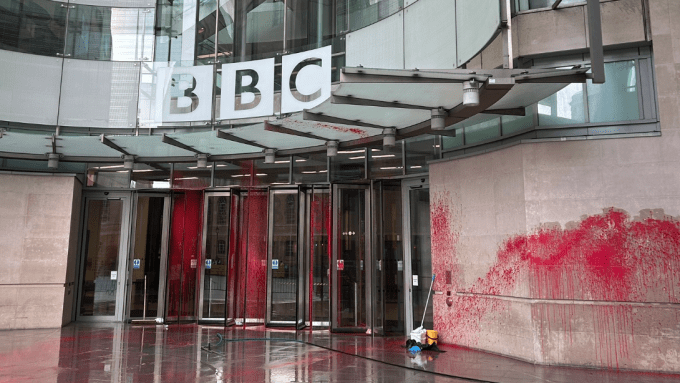
The BBC: Israel’s Propaganda Machine – Whitewashing War Crimes, Erasing Palestinian Humanity

Phalapoem editor, 01/02/2025

The BBC, once perceived as a beacon of balanced journalism, has once again revealed its deep-seated bias when reporting on Israel and Palestine. In its coverage of hostages and prisoners, the BBC has consistently given Israeli captives names, faces, and personal stories—while Palestinian captives , many of whom are children, remain nameless and voiceless.

This glaring double standard is not just an oversight; it is an intentional act of dehumanization. By selectively amplifying one side’s pain while erasing the suffering of the other, the BBC has aligned itself with the Israeli occupation, whitewashing its war crimes and enabling genocide in Gaza.

From the moment Israeli captives were taken, the BBC flooded its coverage with their names, ages, professions, and emotional interviews with their families. The world was told intimate details of their lives—their hobbies, their dreams, their last words before being kidnapped. The narrative was clear: these were innocent people who deserved empathy and urgent global intervention.

Yet, when it comes to Palestinian captives —who include thousands of children, journalists, doctors and activists—the BBC refuses to give them the same treatment. No names. No backstories. No emotional interviews with their grieving mothers.

Over 11,000 Palestinian hostages  languish in Israeli jails, many without charge or trial. Among them are children as young as 12 years old, kidnapped from their homes in night raids, tortured, and denied basic rights. Women detainees have reported sexual abuse, beatings, and starvation, yet the BBC remains silent. The same media that spent weeks covering the conditions of Israeli captives  refuses to acknowledge the horrors inside Israel’s detention centers.

Ignoring Israeli War Crimes

Israel’s mass arrests of Palestinians—including journalists, doctors, and rescue workers—are rarely, if ever, challenged by the BBC. Testimonies of sexual violence in Israeli prisons, including threats of rape against female detainees, have surfaced, yet the BBC has refused to report them. The physical and psychological torture inflicted on Palestinian hostages—including sleep deprivation, beatings, and solitary confinement—has been well-documented by human rights organizations. But to the BBC, these victims do not exist.

Instead, the BBC parrots Israeli military propaganda, painting all Palestinian captives  as “terrorists” while treating Israeli captives as innocent victims. This racist framing reinforces the lie that Palestinian lives are disposable and that Israel’s actions are justified.

While Gaza is starved under an Israeli siege, the BBC continues to downplay the humanitarian catastrophe. Instead of calling it genocide, the BBC uses soft, diluted language—“conflict,” “war,” “military operations”—as if this is an equal fight between two countries rather than the slaughter of an entire population who have been enduring the brutal Israeli occupation for more than seven decades.

Israeli war criminals responsible for leveling entire neighborhoods and starving children are never described as such by the BBC. Instead, their crimes are framed as “self-defense.” The dehumanization of Palestinians by the BBC is not just unethical—it is complicit in genocide.

The BBC: A Mouthpiece for Israeli Occupation

The BBC has chosen to be a friend of Israeli occupiers rather than a voice for truth. Its refusal to acknowledge the suffering of Palestinian captives, its whitewashing of Israeli war crimes, and its blatant racist double standards in covering hostages all contribute to the oppression of Palestinians.

By continuously erasing Palestinian humanity, the BBC is not just failing as a news organization—it is enabling apartheid, war crimes, and ethnic cleansing.

It is time to call the BBC what it truly is: a propaganda tool for Israel’s occupation, not a neutral source of news.

Posted in BBC, UK | Tagged , , , , , , , | Comments Off on The BBC: Israel’s Propaganda Machine – Whitewashing War Crimes, Erasing Palestinian Humanity

Israel’s War on Palestinian Joy: Silencing the Survivors of Torture and Abuse

Phalapoem editor, 01/02/2025

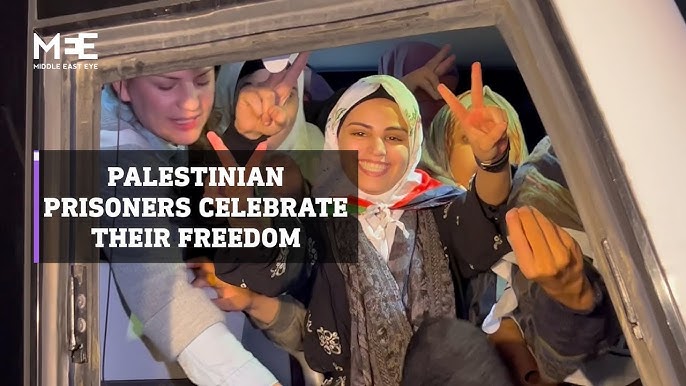
The Israeli occupation has long been synonymous with oppression, brutality, and the systematic dehumanization of Palestinians. But if there were ever a clearer display of its inhumanity, it is in its recent efforts to forbid Palestinians from celebrating the release of their own people—people who have endured the depths of cruelty in Israeli detention centers.

For months, Palestinian hostages —men, women, and children—have been subjected to the most horrific conditions imaginable: sexual violence, relentless torture, starvation, threats and daily degradation. Yet, even after enduring these atrocities, even after surviving a system designed to break their spirit, they are denied the most basic human right—to celebrate freedom.

Israeli prisons are not mere detention facilities; they are sites of systematic abuse. Testimonies from released Palestinian detainees have exposed an appalling reality:

Sexual Violence as a Weapon: Hostages, including women and children , have spoken of sexual assault and threats of rape used as tools of psychological destruction.

Torture Without Limits: Beatings, electrocution, stress positions, and sleep deprivation are routine methods used to extract confessions or simply inflict suffering.

Starvation and Medical Neglect: Hostages are deprived of food and medical treatment, leading to severe malnutrition and untreated illnesses.

Dehumanization as Policy: Forced to strip, humiliated, denied basic hygiene—Palestinian hostages are treated as less than human.

This level of brutality is not a coincidence; it is a deliberate part of Israel’s occupation machine, aimed at crushing Palestinian resistance and erasing their dignity.

Even Freedom Must Be Punished

For Palestinians, freedom is not just the physical release from a prison cell—it is survival, resilience, and defiance in the face of oppression. Yet, even this is something Israel cannot tolerate.

The occupation forces have violently cracked down on families and communities who dared to rejoice at the release of their loved ones. The same military that bombs homes and shoots children in the streets is now criminalizing joy, as if happiness itself is a threat to Israel’s apartheid system.

In contrast, Israeli prisoners—regardless of their crimes—are often welcomed home with public celebrations, political endorsements, and even government protection. The double standard could not be clearer.

By forbidding celebrations, Israel is trying to erase the suffering of these hostages, to suppress their stories, and to strip them of the dignity they reclaimed by surviving. But no amount of repression can erase the truth. These hostages were tortured. They were starved. They were brutalized. And now, they are home—not as broken souls, but as symbols of Palestinian endurance.

The Israeli occupation is built on violence, but it fears Palestinian resilience more than anything else. That is why it bombs schools, universities, hospitals, infrastructure, demolishes homes, and yes—bans celebrations. Because every smile, every chant, every embrace between a freed hostage and their family is a reminder that the occupation has failed.

The World Must Speak Out

The international community cannot continue to look away. Every moment of silence is complicity in the suffering of Palestinian hostages. The stories of their abuse must be heard, their resilience must be honored, and their right to celebrate must be defended.

The inhumanity of the Israeli occupation is on full display. The question is—will the world finally act?

Posted in Palestinian art & culture, Palestinian history, Palestinian Hostages in Israeli torture centres, Palestinian prisoners, Palestinian Prisoners | Tagged , , , , , , , , , , , , , | 1 Comment