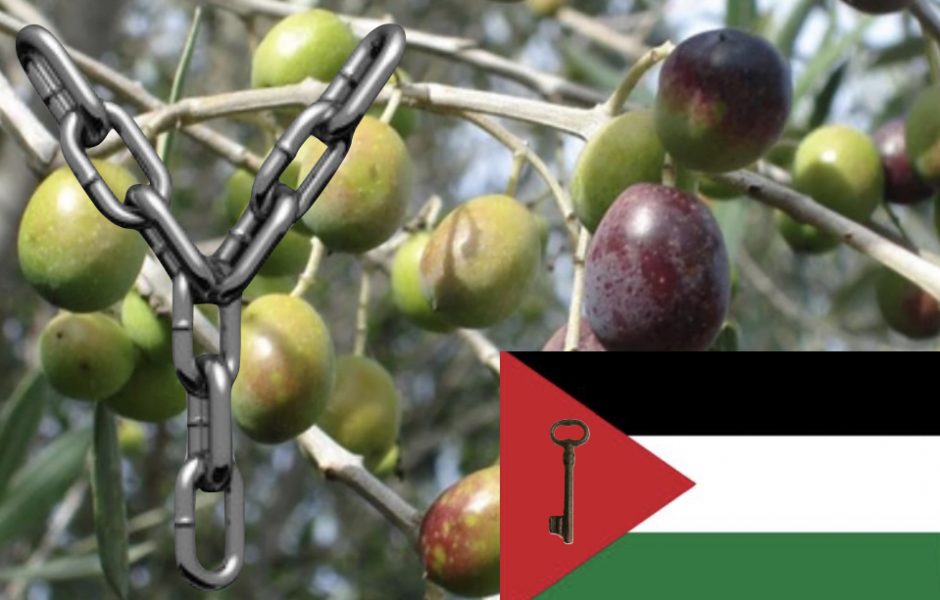
We stand firmly against injustice in all its forms. Nothing can justify the current war crimes committed by Israel in occupied Palestine. Equally, nothing can excuse the continued support offered by other nations to this apartheid regime. If you believe in human rights, dignity, and justice, then we urge you to boycott this rogue state. Silence is complicity, do what’s right.
Palestinian dates are more than just a sweet and nutritious fruit; they are a symbol of resilience, culture, and identity. Grown in the fertile lands of the Jordan Valley and along the edges of Palestine’s rich agricultural plains, Palestinian dates have become a vital part of the local economy and an enduring emblem of Palestinian heritage.
The Pride of Palestinian Agriculture
Among the most prized varieties of dates grown in Palestine are the Medjool dates, often referred to as the “king of dates” due to their large size, rich caramel-like flavor, and soft, chewy texture. These dates are cultivated using traditional methods passed down through generations, reflecting the deep connection of Palestinian farmers to their land.
Palestinian dates thrive in an ideal climate, with abundant sunshine and natural irrigation from the Jordan River. These factors contribute to their exceptional quality, making them highly sought after in international markets. Despite the challenges posed by limited access to resources and the impacts of occupation, Palestinian farmers have persevered, ensuring that their dates maintain their world-class reputation.
Cultural and Economic Significance
For Palestinians, dates are more than a crop—they hold cultural and spiritual significance. Traditionally served during Ramadan to break the fast, dates symbolize sustenance and community. They are also used in countless recipes, from sweet desserts like ma’amoul (date-filled pastries) to energy-packed snacks enjoyed year-round.
Economically, the cultivation and export of dates provide a crucial source of income for Palestinian families and communities. However, the industry faces significant obstacles, including restrictions on land access and the challenges of competing in international markets. Despite these hurdles, Palestinian dates have carved out a niche as a product of both quality and purpose.
A Symbol of Resistance
Buying Palestinian dates is not just a culinary choice; it is also an act of solidarity. By choosing Palestinian-grown dates, consumers around the world support farmers who continue to cultivate their lands against all odds. These purchases contribute to sustaining livelihoods, preserving agricultural traditions, and strengthening the Palestinian economy.
Taste the Story
Palestinian dates are a reminder of the resilience, determination, and creativity of the people who grow them. Whether enjoyed on their own, paired with nuts, or incorporated into recipes, each bite carries the story of a land and its people.
The next time you reach for a box of Medjool dates, consider choosing Palestinian dates—not just for their flavor but for the meaningful impact they represent. Supporting Palestinian agriculture helps ensure that this symbol of heritage and perseverance continues to thrive.
Let the sweetness of Palestinian dates remind us all of the strength and beauty of a people deeply rooted in their land.
Israel, going back decades, has played a duplicitous game. It signs a deal with the Palestinians that is to be implemented in phases. The first phase gives Israel what it wants — in this case the release of the Israeli hostages in Gaza — but Israel habitually fails to implement subsequent phases that would lead to a just and equitable peace. It eventually provokes the Palestinians with indiscriminate armed assaults to retaliate, defines a Palestinian response as a provocation and abrogates the ceasefire deal to reignite the slaughter.
If this latest three-phase ceasefire deal is ratified — and there is no certainty that it will be by Israel — it will, I expect, be little more than a presidential inauguration bombing pause. Israel has no intention of halting its merry-go-round of death.
The Israeli cabinet has delayed a vote on the ceasefire proposal while it continues to pound Gaza. At least 81 Palestinians have been killed in the last 24 hours.
The morning after a ceasefire agreement was announced, Israeli Prime Minister Benjamin Netanyahu accused Hamas of reneging on part of the deal “in an effort to extort last minute concessions.” He warned that his cabinet will not meet “until the mediators notify Israel that Hamas has accepted all elements of the agreement.”
Hamas dismissed Netanyahu’s claims and repeated their commitment to the ceasefire as agreed with the mediators.
The deal includes three phases. The first phase, lasting 42 days, will see a cessation of hostilities. Hamas will release some Israeli hostages – 33 Israelis who were captured on Oct. 7, 2023, including all of the remaining five women, those aged above 50, and those with illnesses – in exchange for up to 1,000 Palestinians imprisoned by Israel.
The Israeli army will pull back from the populated areas of the Gaza Strip on the first day of the ceasefire. On the 7th day, displaced Palestinians will be permitted to return to northern Gaza. Israel will allow 600 aid trucks with food and medical supplies to enter Gaza daily.
The second phase, which begins on the 16th day of the ceasefire, will see the release of the remaining Israeli hostages. Israel will complete its withdrawal from Gaza during the second phase, maintaining a presence in some parts of the Philadelphi corridor, which stretches along the eight-mile border between Gaza and Egypt. It will surrender its control of the Rafah border crossing into Egypt.
The third phase will see negotiations for a permanent end of the war.
But it is Netanyahu’s office that appears to have already reneged on the agreement. It released a statement rejecting Israeli troop withdrawal from the Philadelphi Corridor during the first 42-day phase of the ceasefire. “In practical terms, Israel will remain in the Philadelphi Corridor until further notice,” while claiming the Palestinians are attempting to violate the agreement. Palestinians throughout the numerous ceasefire negotiations have demanded Israeli troops withdraw from Gaza. Egypt has condemned the seizure of its border crossings by Israel.
The deep fissures between Israel and Hamas, even if the Israelis finally accept the agreement, threaten to implode it. Hamas is seeking a permanent ceasefire. But Israeli policy is unequivocal about its “right” to re-engage militarily. There is no consensus about who will govern Gaza. Israel has made it clear the continuance of Hamas in power is unacceptable. There is no mention of the status of the United Nations Relief and Works Agency for Palestine Refugees in the Near East (UNRWA), the U.N. agency that Israel has outlawed and that provides the bulk of the humanitarian aid given to the Palestinians, 95 percent of whom have been displaced. There is no agreement on the reconstruction of Gaza, which lies in rubble. And, of course, there is no route in the agreement to an independent and sovereign Palestinian state.
Israeli mendacity and manipulation is pitifully predictable.
The Camp David Accords, signed in 1979 by Egyptian president Anwar Sadat and Israeli prime minister Menachem Begin, without the participation of the Palestine Liberation Organization (PLO), normalized diplomatic relations between Israel and Egypt. But the subsequent phases, which included a promise by Israel to resolve the Palestinian question along with Jordan and Egypt, permit Palestinian self-governance in the West Bank and Gaza within five years, and end the building of Israeli colonies in the West Bank, including East Jerusalem, were never honored or take the 1993 Oslo Accords. The agreement, signed in 1993, which saw the PLO recognize Israel’s right to exist and Israel recognize the PLO as the legitimate representatives of the Palestinian people, and Oslo II, signed in 1995, which detailed the process towards peace and a Palestinian state, was stillborn. It stipulated that any discussion of illegal Jewish “settlements” was to be delayed until “final’ status talks, by which time Israeli military withdrawals from the occupied West Bank were to have been completed. Governing authority was to be transferred from Israel to the supposedly temporary Palestinian Authority. The West Bank was carved up into Areas A, B and C. The Palestinian Authority has limited authority in Areas A and B. Israel controls all of Area C, over 60 percent of the West Bank.
The right of Palestinian refugees to return to the historic lands seized from them in 1948 when Israel was created — a right enshrined in international law — was given up by the PLO leader Yasser Arafat, instantly alienating many Palestinians, especially those in Gaza where 75 percent are refugees or the descendants of refugees. Edward Said called the Oslo agreement “an instrument of Palestinian surrender, a Palestinian Versailles” and lambasted Arafat as “the Pétainof the Palestinians.”
The scheduled Israeli military withdrawals under Oslo never took place. There was no provision in the interim agreement to end Jewish colonization, only a prohibition of “unilateral steps.” There were around 250,000 Jewish colonists in the West Bank at the time of the Oslo agreement. They have increased to at least 700,000. No final treaty was ever concluded.
The journalist Robert Fisk called Oslo “a sham, a lie, a trick to entangle Arafat and the PLO into abandonment of all that they had sought and struggled for over a quarter of a century, a method of creating false hope in order to emasculate the aspiration of statehood.”
Israeli prime minister Yitzhak Rabin, who signed the Oslo agreement, was assassinated on Nov. 4, 1995 following a rally in support of the agreement, by Yigal Amir, a far-right Jewish law student. Itamar Ben-Gvir, now Israel’s National Security Minister, was one of many rightwing politicians who issued threats against Rabin. Rabin’s widow, Leah, blamed Netanyahu and his supporters — who distributed leaflets at political rallies depicting Rabin in a Nazi uniform — for her husband’s murder.
Israel has carried out a series of murderous assaults on Gaza ever since, cynically calling the bombardment “mowing the lawn.” These attacks, which leave scores of dead and wounded and further degrade Gaza’s fragile infrastructure, have names such as Operation Rainbow (2004), Operation Days of Penitence (2004), Operation Summer Rains (2006), Operation Autumn Clouds (2006) and Operation Hot Winter (2008). Israel violated the June 2008 ceasefire agreement with Hamas, brokered by Egypt, by launching a border raid that killed six Hamas members. The raid provoked, as Israel intended, a retaliatory strike by Hamas, which fired crude rockets and mortar shells into Israel. The Hamas barrage provided the pretext for a massive Israeli attack. Israel, as it always does, justified its military strike on the right to defend itself.
Operation Cast Lead (2008-2009), which saw Israel carry out a ground and aerial assault over 22 days, with the Israeli air force dropping over 1,000 tons of explosives on Gaza, killed 1,385 according to the Israeli human rights group B’Tselem — of whom at least 762 were civilians, including 300 children. Four Israelis were killed over the same period by Hamas rockets and nine Israeli soldiers died in Gaza, four of whom were victims of “friendly fire.” The Israeli newspaper Haaretz would later report that “Operation Cast Lead” had been prepared over the previous six months.
Israeli historian Avi Shlaim, who served in the Israeli military, wrote that:
the brutality of Israel’s soldiers is fully matched by the mendacity of its spokesman…their propaganda is a pack of lies…It was not Hamas but the IDF that broke the ceasefire. It did so by a raid into Gaza on 4 November that killed six Hamas men. Israel’s objective is not just the defense of its population, but the eventual overthrow of the Hamas government in Gaza by turning the people against their rulers.
These series of attacks on Gaza were followed by Israeli assaults in November 2012, known as Operation Pillar of Defense and in July and August 2014 in Operation Protective Edge, a seven week campaign that left 2,251 Palestinians dead, along with 73 Israelis, including 67 soldiers.
These assaults by the Israeli military were followed in 2018 by largely peaceful protests by Palestinians, known as The Great March of Return, along Gaza’s fenced-in barrier. Over 266 Palestinians were gunned down by Israeli soldiers and 30,000 more were injured. In May 2021, Israel killed over 256 Palestinians in Gaza following attacks by Israeli police on Palestinian worshippers at the Al-Aqsa Mosque compound in Jerusalem. Further attacks on worshippers at Al-Aqsa mosque took place in April 2023.
And then the breaching of the security barriers on Oct. 7, 2023 that enclose Gaza, where Palestinians had languished under a blockade for over 16 years in an open air prison. The attacks by Palestinian gunmen left some 1,200 Israeli dead— including hundreds killed by Israel itself — and gave Israel the excuse it had long sought to lay waste to Gaza, in its Swords of Iron War.
This horrific saga is not over. Israel’s goals remain unchanged – the erasure of Palestinians from their land. This proposed ceasefire is one more cynical chapter. There are many ways it can and, I suspect, will fall apart.
But let us pray, at least for the moment, that the mass slaughter will stop.
The catastrophic humanitarian crisis made by Israel in Gaza has drawn starkly contrasting responses from the British public and the UK government. While widespread protests, petitions, and vocal outcries highlight a deep sense of solidarity with the Palestinian people among British citizens, the government’s unwavering support for Israel has raised serious ethical and political concerns.
The Public’s Growing Solidarity with Gaza
British public opinion has increasingly leaned towards a critical view of Israel’s genocide in Gaza. Massive protests in cities like London, Manchester, and Birmingham have seen hundreds of thousands taking to the streets, calling for an immediate ceasefire and an end to the siege of Gaza. These demonstrations, often led by grassroots organizations and human rights advocates, reflect a broad coalition of people—Muslims, Christians, Jews, and secular activists—united in their demand for justice and accountability.
Social media has amplified the public’s voice, with millions sharing images, videos, and personal stories from Israeli war on Gaza that underscore the ongoing genocide. Public outrage has been fueled by reports of deliberate Israeli killing of tens of thousands of civilian, Israeli targeting of hospitals, schools, and refugee camps, and the Israeli calculated and deliberate plans of starvation and dire humanitarian conditions resulting from the siege. A YouGov poll in late 2023 found that a significant majority of Britons supported an immediate ceasefire and wanted their government to take a more balanced and humane approach to the crisis.
The UK Government’s Controversial Stance
In stark contrast, the UK government has maintained steadfast support for Israel, framing its actions as a defense against terrorism. Sunak’s and Starmer’s administrations have resisted calls for a ceasefire, instead emphasizing Israel’s “right to self-defense.” This position, widely criticized as gainer international law, one-sided and dismissive of the catastrophic loss of innocent Palestinian lives, has alienated many Britons who see it as an endorsement of collective punishment and apartheid policies.
Reasons Behind the UK Government’s Stance
1. Historical and Political Alliances: The UK has long-standing ties with Israel, shaped by shared geopolitical interests and historical alliances. These bonds have been reinforced through defense agreements, trade relations, and political cooperation, making it politically costly for the UK government to criticize Israeli policies openly.
2. Influence of Lobbying Groups: Pro-Israel lobbying organizations, such as the Conservative Friends of Israel, wield considerable influence in British politics. These groups play a pivotal role in shaping parliamentary discourse and framing the narrative around Israel as a key ally and a bulwark of democracy in the Middle East.
3. US Alignment: The UK often aligns its foreign policy with the United States, Israel’s staunchest ally regardless of the grave concerns of ongoing breach by Israeli apartheid all aspect of Palestinian human rights. Washington’s shameless support for Israel places additional pressure on the UK government to maintain a similar stance, even in the face of domestic opposition which would question the credibility of so called democracy in these countries.
4. Framing of Security: The government’s false narrative has leaned heavily on the framing of Palestinian resistance, a perspective that has overshadowed calls for addressing the root causes of the conflict, including decades of occupation, hundreds of massacres, ethnic cleansing, and apartheid policies. This false and dirty security-focused narrative serves to justify support for illegal Israeli occupation, despite the abhorrent and disproportionate and indiscriminate impact on Palestinian civilians who combine to suffer under Israeli racist rules.
5. Media Representation: Much of the mainstream British media and mainly BBC has echoed the government’s shameful narrative, emphasising unjustified Israel’s security concerns (as the case with all colonialist countries) while downplaying or misrepresenting the scale of suffering in Gaza and West Bank. This racist and biased coverage has provided the government with a degree of insulation from British public criticism, though alternative media like Al Jazeera and social platforms have increasingly countered this zionist narrative.
Public Backlash and Calls for Change
The disconnect between the UK government’s stance and the sentiments of its citizens has led to mounting calls for accountability. Prominent figures, human rights organizations, and members of Parliament have condemned the government’s position, accusing it of complicity in war crimes. The Labour Party, under Keir Starmer, has faced internal divisions, with many party members and supporters demanding a stronger stand against Israeli aggression.
This growing dissent has also led to a resurgence of interest in boycott, divestment, and sanctions (BDS) campaigns targeting companies and institutions complicit in Israeli apartheid. Grassroots activism, coupled with increasing international pressure, suggests that the British government’s position may become increasingly untenable if public outrage continues to grow.
The British public’s overwhelming solidarity with Palestinians highlights a deep humanitarian impulse that contrasts sharply with the government’s political calculus. As the genocide in Gaza unfolds, the UK government’s unwillingness to confront Israeli apartheid not only undermines its moral standing but also risks alienating an electorate that demands justice, accountability, and a commitment to human rights. The question remains: will public pressure be enough to shift the UK’s stance, or will political interests continue to outweigh the cries for justice?
Israel's Border Police was deployed at the #Nova site before Hamas stumbled on the festival, causing the eruption of a major battle. While some ravers were indeed killed by the Palestinian resistance – whether by intent or in the chaos of battle – the evidence now suggests that… pic.twitter.com/9NRCJPlnaX
Background:
Israeli Occupational forces (IOF) killed his wife, daughter, a son and grandson. The next day Wael Al-Dahdouh, Al Jazeera ‘s journalist returned to work. A few weeks later, IOF  injured him and killed his colleague, Samir Abu Daqa, Jazeera’s journalist. The next day Wael returned to work. A few days later, IOF  killed his eldest  son. The next day Wael returned to work. Wael is of the great men of our time.


Through the crucible of grief, Wael stood tall,
IOF's cruelty, a tragic downfall.
Wife, daughter, son, and grandson, taken away,
Yet, the next day, back to work, he'd sway.

A journalist for Al Jazeera, the pen his might,
A few weeks later, more darkness in sight.
Injured he was, colleague Samir met his end,
Yet, undeterred, Wael's resolve wouldn't bend.

Days pass again, IOF's relentless hand,
Took his eldest son from the family strand.
Yet, Wael, resilient, a spirit unbowed,
Returned to work, despite the shroud.

One of our time, a great man indeed,
In the face of adversity, his courage agreed.
Wael's story, a testament, resounding and clear,
A symbol of strength, in a world severe.
The complex history of Zionist movements reveals a strategic vision aimed at establishing a Jewish homeland in Palestine. These movements, often characterized as political forces, implemented well-thought-out strategies to secure control over the land. Below is a concise list of key Zionist organizations and their roles in shaping the territorial landscape of the region. The following eight Zionist organizations played integral roles in the strategic pursuit of territorial objectives in Palestine, contributing to the establishment of a Jewish homeland in Palestine and financing the systematic killing of Palestinians and dispossessing their homes and lands.
▪ Lovers of Zion (חובבי ציון)
Emerging in Russia in 1881 as a response to restrictions imposed on Jewish communities, the Lovers of Zion aimed to combat assimilation and promote the return to Zion. They laid the foundation for political Zionism and contributed significantly to the establishment of Jewish colonies in Palestine.
▪ Jewish Colonization Association (ייִק”אַ)
Established in 1891, the JCA, led by Baron Maurice de Hirsch, focused on relocating oppressed Jews to various parts of the world, including Palestine. It played a pivotal role in managing existing colonies, purchasing lands, and establishing new Jewish settlements, contributing substantially to the Zionist cause.
▪ World Zionist Organization (ההסתדרות הציונית העולמית)
Founded in 1897 after the First Zionist Congress, the WZO aimed to establish a national home for the Jewish people in Palestine. It played a crucial role in the creation of strategic institutions, including the Jewish National Fund and the Jewish Colonial Trust, setting the stage for long-term Zionist objectives.
▪ Halutzim (Pioneers)
During the Second Aliyah (1904–1914), the Halutzim, or pioneers, migrated to Palestine to become agricultural workers, aligning their endeavors with the goal of territorial control. They laid the foundation for Zionist terrorist gangs, such as Hashomerand Haganah, which later integrated into the Israeli Defense Forces (IDF).
▪ Keren KayemethLeIsrael (KKL) – Jewish National Fund(קרן קיימת לישראל)
Established in 1901, KKL focused on acquiring and developing lands in Palestine. By the end of 1947, it possessed a substantial portion of the land area in Palestine, contributing significantly to the Zionist colonization effort.
▪ Keren Hayesod (קרן היסוד)
Established in 1920, Keren Hayesod (translated as The Foundation Fund) played a vital role in financing immigration and settlement activities in Palestine. It became the primary source of funds for the Jewish Agency, contributing extensively to the development of agricultural settlements, infrastructure, and various industries.
▪ Jewish National Council (הוועד הלאומי)
Founded in 1920, the Jewish National Council supported Zionist presence in Palestine until the establishment of the interim government in 1948. It collaborated closely with the Jewish Agency, representing Jewish settlers and outlining comprehensive political, economic, and military programs.
▪ Jewish Agency for Israel (הסוכנות היהודית לארץ ישראל)
Established in 1929, the Jewish Agency became a quasi-government for Jewish settlers in Palestine during the British Mandate. Its goals included increasing Jewish immigration, purchasing land, encouraging agricultural settlement, and preserving Hebrew language and heritage.
[Scene: A vast hall of marble and glass — the European Commission in Brussels. Outside, rain falls softly. Inside, the floor reflects both the light above and the moral darkness beneath. Handala stands barefoot, facing the wall. Ursula enters, papers in hand, her face polished with diplomacy.]
Ursula von der Leyen:
Who let this child in here? You shouldn’t be in these halls, little one. This is where adults make decisions.
Handala (without turning):
Adults? You mean those who speak of human rights while choosing who gets to be human?
Ursula:
We defend democracy, freedom, and security. The European Union stands for peace.
Handala:
Peace has a strange meaning here. You send weapons to the illegal occupier and silence to the occupied. Tell me, Madam President — when you say “security,” do you mean for those who have walls, or for those who have none left?
Ursula (measured):
Israel has the right to defend itself.
Handala:
And Gaza has the right to exist. Or does existence itself threaten your alliances?
Ursula:
You don’t understand politics, child. The world is complex — history, law, responsibility—
Handala (interrupting):
History? You should know it well. Germany once said it was only following orders too.
Law? You helped write it — then watched it burn with every bomb dropped on Gaza’s children.
Responsibility? You owe it not to the past, but to the living.
Ursula (coldly):
We have condemned the humanitarian situation. We call for aid, for restraint—
Handala:
Condemned? You condemned words while others condemned children. You called for “aid” after you helped starve them. Restraint, Madam President, is a word without meaning to a mother who buries her child under concrete.
Ursula (defensive):
We must be careful with language. The term “genocide” must be determined by courts.
Handala:
So justice must wait until every witness is dead? You once said Europe had learned from its crimes. Tell me, when did forgetting become your form of remembrance?
Ursula (quietly):
I have seven children. I know what loss means.
Handala (turns slightly, still not showing his face):
Then every time you see their faces, remember the children you refused to see. Their names could fill every corridor of this building — and still, you’d call it politics.
Ursula:
You don’t understand the weight of leadership.
Handala:
No. I understand its cowardice.
You lead nations but cannot lead your conscience.
(Silence. The sound of distant thunder. Handala begins to walk toward the exit, still facing away.)
Ursula (softly):
Where are you going?
Handala:
To where Europe’s values are buried — among the ruins you refused to see. When you are ready to face them, you’ll find me there, still turned away, waiting for justice to look me in the eye.
This morning, I watched a child plant a sapling beside your roots. His small hands pressed the soil with care, his face shining with a quiet pride he could not yet name. The air was cool, filled with the scent of wild thyme and the distant hum of the land awakening. You stood above him like a guardian, ancient, patient, eternal, as if blessing him with your shadow.
In that moment, I understood what you have been trying to tell us all along: that hope does not grow from words alone, but from hands that touch the earth. That every seed we plant is a promise, a promise that life continues, that Palestine endures.
The children of this land carry your story in their hearts. They grow among your branches, learning the language of the soil, the rhythm of the wind. They know that every olive they pick, every sapling they nurture, is an act of remembrance and of defiance. They have inherited both your resilience and your grace.
You, dear tree, have seen centuries pass, empires rise and fall, seasons of struggle and silence. Yet here you are, still alive, still giving. And now the children of Palestine carry your legacy forward. In their laughter, in their songs, in the gardens they plant beside their homes, they build tomorrow with faith that no storm can wash away.
One day, this young sapling will stand tall beside you. Its roots will intertwine with yours, its leaves will dance in the same sun. And long after we are gone, it will tell our story of endurance, of love, of belonging, just as you have done for generations.
I wept until my tears were dry
I prayed until the candles flickered
I knelt until the floor creaked
I asked about Mohammed and Christ
Oh Jerusalem, the fragrance of prophets
The shortest path between earth and sky
Oh Jerusalem, the citadel of laws
A beautiful child with fingers charred
and downcast eyes
You are the shady oasis passed by the Prophet
Your streets are melancholy
Your minarets are mourning
You, the young maiden dressed in black
Who rings the bells in the Nativity
On Saturday morning?
Who brings toys for the children
On Christmas eve?
Oh Jerusalem, the city of sorrow
A big tear wandering in the eye
Who will halt the aggression
On you, the pearl of religions?
Who will wash your bloody walls?
Who will safeguard the Bible?
Who will rescue the Quran?
Who will save Christ?
Who will save man?
Oh Jerusalem my town
Oh Jerusalem my love
Tomorrow the lemon trees will blossom
And the olive trees will rejoice
Your eyes will dance
The migrant pigeons will return
To your sacred roofs
And your children will play again
And fathers and sons will meet
On your rosy hills
My town
The town of peace and olives.
People often ask me what it feels like to live under Israeli occupation.
They ask whether it’s possible to feel anything other than hatred toward those who punish us collectively, humiliate us at checkpoints on daily basis, shoot indiscriminately our children, steal our land, demolish our houses, control our movement, even our breath.
I never know how to give a simple answer, because nothing about this life is simple.
But I can tell you what I feel.
Imagine waking up each morning with the quiet relief that you survived the night, that you were not arrested, injured, tortured, raped or shot while you slept.
For many Palestinians, this is not an abstract fear but a daily reality shaped by brutal military occupation, constant raids, thousands of checkpoints, and systemic restrictions on movement and safety.
What does it mean to begin a day under this weight?
And how do you end it, knowing that tomorrow may bring the same uncertainty , the same struggle, the same need to simply endure?
When you wake up every morning not knowing if your home, your family, or your dignity will survive the day, emotions don’t behave the way they do in peaceful places.
I have known fear, fear that crawls under your skin and stays there forever.
I have known humiliation, quiet, sharp, unforgettable.
I have known grief that does not end, because every day brings a new funeral, a new loss, a new hole in someone’s life.
And yes, I have known hatred.
Not because I was taught it.
Not because my people are “born with it,” as the occupiers like to say.
But because when someone takes your land, dehumanises your existence, and decides your rights for you, hatred is not a decision or a plan, it’s a natural reaction and wound.
A wound that bleeds every time you try to live a normal life.
This might surprise people, but hatred is not the only companion of an occupied heart.
Sometimes I feel sorrow, deep, crushing sorrow for what we’ve lost and witnessed.
Sometimes I feel angry for the constant military support our occupiers receive from those who pretend to care about human rights.
Sometimes I feel confused about the future of humanity in the face of selective treatment.
Sometimes I feel sad for the endless suffering of Palestinians.
Sometimes I feel hopeless for for the world’s inability to put an end to the illegal occupation of my people.
Sometimes I feel numb, as if emotions have tired themselves out.
Sometimes I feel hope, fragile and trembling, for a future I’ve never seen but cannot stop imagining.
Sometimes I even feel compassion for individuals who are caught in the same system, even if they stand on the oppressive side.
Sometimes I feel nobody cares but
sometimes I feel that millions of people around the world support our cause.
The truth is: the human heart is capable of many feelings, even under a boot.
But they are never simple.
They are never pure.
They are tangled in pain, layered with memories, shaped by survival.
Imagine waking up every morning with the feeling that you are still not imprisoned or shot or tortured? This is the feeling of every Palestinian being oppressed by Israelis. How to begin the day and how to end it?
If there is one feeling that defines life under occupation, it is not hatred.
It is desperation.
Desperation is what grows in you when you realise your freedom will not come through negotiation.
When every path to dignity is blocked.
When every door closes no matter how peacefully you knock.
People like to debate the actions of the oppressed.
They judge the symptoms while ignoring the sickness.
But what happens when a person, or a nation, reaches the point where fear is no longer heavier than despair?
Desperation does not justify everything.
But it explains everything.
And explanations matter, especially to those who prefer to look at consequences rather than causes.
I am responsible for my actions, this is true.
But the world forgets that someone else is responsible for the conditions that shaped those actions.
Occupation is not just the presence of soldiers.
It is an apartheid system, a brutal structure that controls your body, your choices, your future.
When the entire population of Palestine is humiliated, enclosed, impoverished, displaced, and denied justice for more than seven decades…
When people are made to feel invisible…
When people are locked in enclaves and separated by walls..
When people are treated like animals…
When people are disrespected and abused…
When the perpetrators are perceived as victims and the victims as perpetrators…
When the world allows your suffering to become normal…
Then the occupying power cannot wash its hands of the consequences.
The chain of responsibility begins long before the desperate moment.
Occupation plants the seed.
Oppression waters it.
Desperation is the fruit.
Judge the fruit if you must,
but do not ignore the tree that grew it.
Can We Ever Feel Something Other Than Pain?
Yes.
But not like this, not while the injustice continues.
I have seen glimmers of what peace could look like.
Children still laugh.
Old people still dream.
Families still sit together, imagining a life where we do not need permission for basic human existence.
I believe that someday we could feel hope without pain attached to it.
We could feel trust.
We could feel forgiveness , not forced, not demanded, but genuine.
But this can only happen when the Israeli occupation ends.
When we are given not charity, not pity, but dignity.
When we are allowed to stand equal, not tolerated as lesser beings.
Only then will the heart have space for emotions other than anger, survival, or grief.
I do not wake up choosing hatred.
I wake up choosing to survive.
If the world wants to understand us, it must understand our pain, not dismiss it, not sanitize it, not demonise it , not ban it, not blame it.
Because until justice arrives, until freedom is real, an occupied heart will continue to feel what any human heart would feel under such conditions.
Not because we are a people of hatred,
but because we are a people of Israeli-made wounds,
and wounds demand to be felt before they can ever hope to heal.
Watermelon and Palestinian Identity: The watermelon serves as a symbolic representation of Palestine due to its color alignment with the Palestinian flag, which is characterized by red, black, white, and green. Its role as a symbol of Palestinian nationalism and resistance gained prominence following the Six-Day War in 1967, a pivotal moment when Israel seized control of the West Bank and Gaza. Shortly after that, Israel prohibited the waving and display of the Palestinian flag in Gaza and the West Bank. To circumvent this restriction, Palestinians adopted the watermelon, as its cut-open form displays the national colors. Since then, the watermelon has retained its significance, becoming a timeless representation of Palestinian identity and unwavering resilience. Cultivated locally in Gaza and the West Bank, watermelons have become a popular fruit among Palestinians. The watermelon has emerged as a prominent symbol for pro-Palestinian demonstrators, experiencing a resurgence on social media, particularly amid the ongoing Israel-Hamas war which began on October 2023.
Pre-Oslo Restrictions on Palestinian Flag: In 1980, Israeli authorities closed down an exhibition at the 79 Gallery in Ramallah, featuring the artwork of Palestinian artist SlimanMansour and others. Additionally, before the so-called Oslo Accords (1993), Palestinians faced punishment for possessing a Palestinian flag or any item with similar colors to the Palestinian flag. As a child, I vividly recall the hardships of having a Palestinian flag at home, as Israeli soldiers would conduct house searches, subjecting the entire family to harassment, punishment, and arbitrary arrest. This serves as a poignant illustration of the harsh reality of the Israeli occupation and its intimidating impact. The ban on the Palestinian flag was eventually lifted in 1993, a development associated with the Oslo Accords.
Global Flag Solidarity Sparks Israeli Crackdown: In 2023, during the war on Gaza, where massive genocides were committed against the Gazan people, resulting in the deaths of approximately 12,000 children and 10,000 elderly individuals, there was a resurgence in many countries worldwide, with people holding Palestinian flags everywhere to express support for the Palestinian population and condemn the genocide. This has prompted Israel to crack down on the display of the Palestinian flag. As a result, the Israeli Knesset preliminarily approved a draft law on Wednesday, prohibiting the raising of the Palestinian flag in the 1948 territories. The bill, presented by Almog Cohen of the “Jewish Power” party, led by extremist National Security Minister Itamar Ben Gvir, received 54 votes in favor and 16 against. According to Haaretz, if the law passes three readings, individuals waving the Palestinian flag could face penalties of up to one year in prison. The move reflects heightened tensions and restrictions on expressions of Palestinian identity within the Israeli political landscape.
The Palestinian Identity Shines Through: As the watermelon continues to symbolize Palestinian resilience, the symbolic power of the fruit and the determination of the Palestinian people persist despite the challenges. It serves as a reminder that even in the face of adversity, the pursuit of justice and identity remains unwavering. The evolving narratives of symbolism and suppression tell a broader story of a people committed to asserting their presence, rights, and aspirations. The Palestinian identity will undoubtedly stand out against Zionist brutality, which fears the Palestinian flag and persists in obliterating Palestinian culture with brutal and fascist measures. May the vibrant colors of freedom and peace flourish for all Palestinians.