We stand firmly against injustice in all its forms. Nothing can justify the current war crimes committed by Israel in occupied Palestine. Equally, nothing can excuse the continued support offered by other nations to this apartheid regime. If you believe in human rights, dignity, and justice, then we urge you to boycott this rogue state. Silence is complicity, do what’s right.
This fact-based video describing the history of oppression and racism against Palestinians by Israel was taken down on Instagram after getting 12 million views.
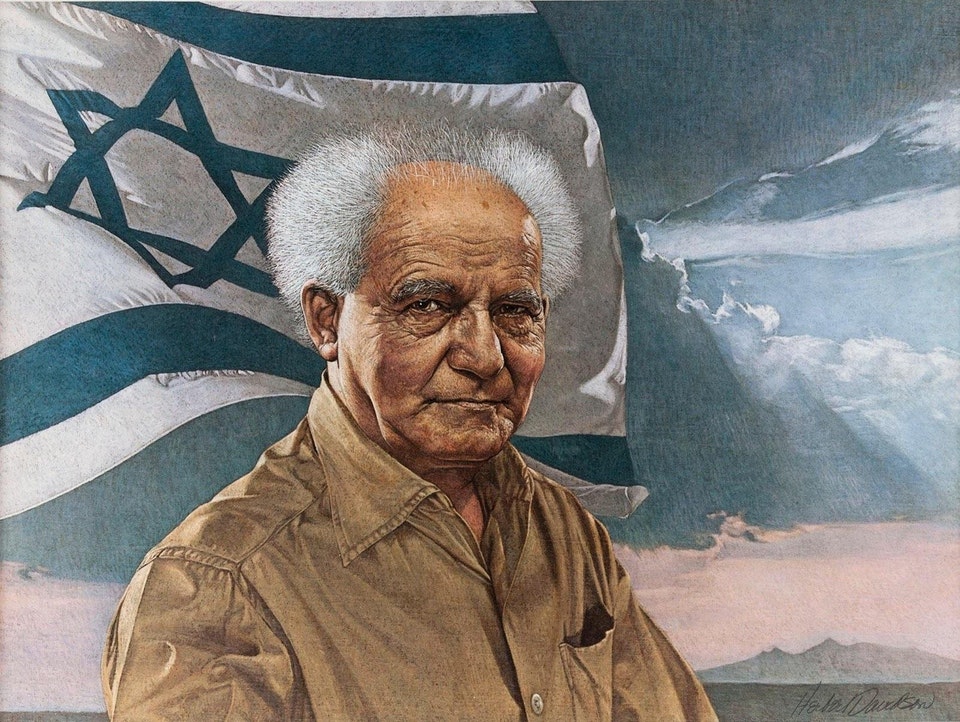
“If I were an Arab leader, I would never sign an agreement with Israel. It is normal; we have taken their country. It is true God promised it to us, but how could that interest them? Our God is not theirs. There has been Anti-Semitism, the Nazis, Hitler, Auschwitz, but was that their fault? They see but one thing: we have come and we have stolen their country. Why would they accept that?”Davi Ben-Gurion (the first Israeli Prime Minister): Quoted by Nahum Goldmann in Le Paraddoxe Juif (The Jewish Paradox), pp121.
“Let us not ignore the truth among ourselves … politically we are the aggressors and they defend themselves… The country is theirs, because they inhabit it, whereas we want to come here and settle down, and in their view we want to take away from them their country. … Behind the terrorism [by the Arabs] is a movement, which though primitive is not devoid of idealism and self sacrifice.” — David Ben Gurion. Quoted on pp 91-2 of Chomsky’s Fateful Triangle, which appears in Simha Flapan’s “Zionism and the Palestinians pp 141-2 citing a 1938 speech.
“We must do everything to insure they (the Palestinians) never do return.” David Ben-Gurion, in his diary, 18 July 1948, quoted in Michael Bar Zohar’s Ben-Gurion: the Armed Prophet, Prentice-Hall, 1967, p. 157.
Ben Gurion also warned in 1948: Assuring his fellow Zionists that Palestinians will never come back to their homes: “The old will die and the young will forget.”
“We should prepare to go over to the offensive. Our aim is to smash Lebanon, Trans-Jordan, and Syria. The weak point is Lebanon, for the Moslem regime is artificial and easy for us to undermine. We shall establish a Christian state there, and then we will smash the Arab Legion, eliminate Trans-Jordan; Syria will fall to us. We then bomb and move on and take Port Said, Alexandria and Sinai.” David Ben-Gurion May 1948, to the General Staff. From Ben-Gurion, a Biography, by Michael Ben-Zohar, Delacorte, New York 1978.
“If I knew that it was possible to save all the children of Germany by transporting them to England, and only half by transferring them to the Land of Israel, I would choose the latter, for before us lies not only the numbers of these children but the historical reckoning of the people of Israel.” Ben-Gurion (Quoted on pp 855-56 in Shabtai Teveth’s Ben-Gurion in a slightly different translation).
“It’s not a matter of maintaining the status quo. We have to create a dynamic state, oriented towards expansion.” –Ben Gurion
“Every school child knows that there is no such thing in history as a final arrangement — not with regard to the regime, not with regard to borders, and not with regard to international agreements.” — Ben Gurion, War Diaries, 12/03/1947 following Israel’s “acceptance” of the U.N. Partition of 11/29/1947 (Simha Flapan, “Birth of Israel,” p.13)
“We walked outside, Ben-Gurion accompanying us. Allon repeated his question, What is to be done with the Palestinian population? ‘Ben-Gurion waved his hand in a gesture which said ‘ Drive them out! ‘ “Yitzhak Rabin, leaked censored version of Rabin memoirs, published in the New York Times, 23 October 1979.
Partition: “after the formation of a large army in the wake of the establishment of the state, we will abolish partition and expand to the whole of Palestine “ — Ben Gurion, p.22 “The Birth of Israel, 1987” Simha Flapan.
“The acceptance of partition does not commit us to renounce Transjordan. One does not demand from anybody to give up his vision. We shall accept a state in the boundaries fixed today — but the boundaries of Zionist aspirations are the concerns of the Jewish people and no external factor will be able to limit them.” P. 53, “The Birth of Israel, 1987” Simha Flapan
October, 1936, during the Jewish Agency Executive meeting Ben-Gurion arguing in favor of transfer as a policy, he said “We are not a state and Britain will not do it for us…” although “there is nothing wrong in the idea.”
“If it was permissible to move an Arab from the Galilee to Judea, why it is impossible to move an Arab from Hebron to Transjordan, which is much closer? There are vast expanses of land there and we are over crowded….Even the High Commission agrees to a transfer to Transjordan if we equip the peasants with land and money. If the Peel Commission and the London Government accept, we’ll remove the land problem from the agenda.”
The Arabs, Ben-Gurion claimed, would not become landless as a result of Zionist land acquisition; they would be transferred to Transjordan.
October 29, 1936 the 21 member of the Jewish Agency Executive endorsed the proposal of a transfer of displaced Arab farmers to Transjordan. Only two of the four non-Zionist members opted to dissent.
Flapan, Zionism and the Palestinians, citing protocols of the Executive meeting, p. 261
12 July 1937, Ben-Gurion entered in his diary: “The compulsory transfer of the Arabs from the valleys of the proposed Jewish state could give us something which we never had, even when we stood on our own feet during the days of the First and Second Temple” – a Galilee free from Arab population.
Ben-Gurion went so far to write: “We must prepare ourselves to carry out” the transfer [emphasis in original]
27 July 1937, Ben-Gurion wrote in a letter to his 16 year old son Amos: “We have never wanted to dispossess the Arabs [but] because Britain is giving them part of the country which had been promised to us, it is fair that the Arabs in our state be transferred to the Arab portion”
5 October 1937, Ben-Gurion wrote in a letter to his 16 year old son Amos: “We must expel the Arabs and take their places…. And, if we have to use force-not to dispossess the Arabs of the Negev and Transjordan, but to guarantee our own right to settle in those places- then we have force at our disposal.”
“It is very possible that the Arabs of the neighboring countries will come to their aid against us. But our strength will exceed theirs. Not only because we will be better organized and equipped, but because behind us there stands a still larger force, superior in quantity and quality …the whole younger generation of Jews from Europe and America.” Ben-Gurion, Zichronot [Memoirs], Vol. 4, p.297-299, p. 330-331. See also Teveth, Ben-Gurion and the Palestinian Arabs, p. 182-189
Ben-Gurion in an address to the central committee of the Histadrut on 30 December 1947: “In the area allocated to the Jewish State there are not more than 520,000 Jews and about 350,000 non-Jews, wmostly Arabs. Together with the Jews of Jerusalem, the total population of the Jewish State at the time of its establishment will be about a million, including almost 40 percent non-Jews. Such a [population] composition does not provide a stable basis for a Jewish State. This [demographic] fact must be viewed in all its clarity and acuteness. With such a [population] composition, there cannot even be absolute certainty that control will remain in the hands of the Jewish majority…. There can be no stable and strong Jewish State so long as it has a Jewish majority of only 60 percent.”
On the 6th of February 1948, during a Mapai Party Council, Ben-Gurion responded to a remark from a member of the audience that “we have no land there” [in the hills and mountains west of Jerusalem] by saying: “The war will give us the land. The concepts of “ours” and “not ours” are peace concepts, only, and in war they lose their whole meaning”. (Ben-Gurion, War Diary, Vol. 1, entry dated 6 February 1948. p.211)
Addressing the Mapai Council the following day, Ben-Gurion declared: “From your entry into Jerusalem, through Lifta, Romema… there are no Arabs. One hundred percent Jews. Since Jerusalem was destroyed by the Romans, it has not been so Jewish. In many Arab neighborhoods in the west one sees not a single Arab. I do not assume that this will change… What had happened in Jerusalem… is likely to happen in many parts of the country …in the six, eight or ten months of the campaign there will certainly be great changes in the composition of the population in the country.” (Ben-Gurion, War Diary, Vol. 1, entry dated 7 February 1948. p. 210-211).
And two months later, Ben-Gurion speaking to the Zionist Actions Committee on 6 April, Ben-Gurion declared: “We will not be able to win the war if we do not, during the war, populate upper and lower, eastern and western Galilee, the Negev and Jerusalem area….I believe that war will also bring in its wake a great change in the distribution of the Arab population.” [Ben-Gurion, Behilahem Yisrael, Tel Aviv, Mapai Press, 1952, pp. 86-87].
Ben-Gurion wrote in his diary on 12 July 1937: “the compulsory transfer of the Arabs from the valleys of the projected Jewish State…. We have to stick to this conclusion the same way we grabbed the Balfour Declaration, more than that, the same way we grabbed at Zionism itself.” (Ben-Gurion, Zichronot [Memoirs], Vol. 4, p. 299)
The first terrorist Hagana gang was established in 1920 as the Jewish community’s primary paramilitary organization in Palestine, focused on protecting Jewish colonies. Influenced by Orde Wingate, the Hagana transitioned into a more offensive force. Wingate trained Hagana troops in retaliatory tactics, primarily against targets like snipers or thieves, with a focus on intimidating Palestinian communities near Jewish settlements. This training involved joint attacks with British forces on Palestinian villages, teaching the Hagana how to conduct “punitive missions”.
During World War II, Hagana members gained further military experience by volunteering for the British war effort, while those remaining in Palestine focused on monitoring and infiltrating Palestinian villages. This period saw the emergence of systematic intelligence gathering, with the creation of detailed village files containing information like village layouts and potential for collaboration.
A historian named Ben-Zion Luria proposed the creation of a detailed registry of all Arab villages. This archive, known as “The Village Files,” became a comprehensive repository of information about Palestinian villages. The Hagana collected detailed information on the topography, demographics, and sociopolitical dynamics of each village. This included data on access roads, land quality, water sources, income sources, religious affiliations, and the names of village leaders (mukhtars).
In 1947, the Hagana updated the Village Files to include lists of “wanted” individuals in each village. These lists, based on involvement in the Palestinian national movement or resistance against the British and Zionists, were used to identify and often execute individuals. The terrorist Haganagangs established training centers, like the one in Shefeya, to train operatives in espionage tactics, including blending in with the local Palestinian population. These operatives gathered information by exploiting traditional Arab hospitality, even staying as guests in the homes of village leaders (mukhtars).
By the late 1940s, under the leadership of figures like David Ben-Gurion, the Hagana shifted towards a more proactive and aggressive approach, moving away from solely retaliatory tactics. This was influenced by the British disarmament campaign against Jewish forces and a growing desire to establish a Jewish state, even if it meant settling for a smaller territory. The Hagana’s focus turned towards intimidation and offensive operations aimed at maximizing damage and expelling Palestinian populations.
This shift culminated in Plan Dalet, a comprehensive plan for the takeover of Palestine, involving the systematic destruction and depopulation of Palestinian villages and urban areas. The implementation of Plan Dalet, marked by operations like Nachshon, involved the use of increasingly aggressive tactics such as mass expulsions, massacres, and psychological warfare. While there was initial hesitation among some troops accustomed to the previous strategy of retaliation, the Hagana leadership actively encouraged a more ruthless and systematic approach to achieve their objectives.
Tell them, we did not live silent. We lit up the sky. We laughed. We took care of each other. Tell them, we were broken. But we did not live silent. We reached the impossible. And it was impossible. If I die, tell them, we did not live silent. We sang. We taught. We learned. We… pic.twitter.com/469iMHFQAR
The Biden administration is already undermining a long-sought UN resolution calling for a ceasefire in Gaza, leading some to ask, “What the hell is the point of the UN or the UN Security Council?”
ASSAL RAD
REUTERSUS Representative to the UN Linda Thomas-Greenfield is seen on the day of a vote on a Gaza resolution for an immediate ceasefire at UN headquarters in New York City, March 25, 2024. / Photo: Reuters
After vetoing three separate United Nations Security Council resolutions demanding a ceasefire in Gaza, the United States finally abstained from voting in the latest ceasefire resolution, allowing its passage.
The resolution signifies the appearance of progress on the US position and spurred backlash from Israel (the country’s Prime Minister Benjamin Netanyahu promptly cancelled a planned delegation to the US after it refrained from using its veto power a fourth time. But US President Joe Biden’s administration has quickly moved to undermine the significance of the resolution.
Hours after the resolution passed, White House spokesperson John Kirby stated that the US abstention “does not represent a shift in our policy.”
And in a State Department press briefing following the UNSC vote, spokesperson Matthew Miller claimed “it’s a non-binding resolution,” making the US position clear and suggesting that the ceasefire resolution is the opinion of the UN body, rather than a substantive rule.
In a critical exchange with Miller, Associated Press reporter Matt Lee raisedthe question many observers have had about Israel’s war on Gaza: “What the hell is the point of the UN or the UN Security Council?”
Experts and commentators, such as former UN official and human rights attorney Craig Mokhiber, swiftly expressed their criticism of the US for undermining the resolution, which is already weak for only demanding a “ceasefire for the month of Ramadan” that apparently leads “to a lasting sustainable ceasefire.”
Mokhiber made headlines in October 2023 after resigning from his post as director of the New York office of the UN High Commissioner for Human Rights, citing the UN’s failure to prevent “a text-book case of genocide” in Gaza.
While the language of the resolution was watered down, its passage was met with applause by the UN body because of the desperate need to address the humanitarian crisis in Gaza, which includes the fastest acceleration of a faminethat has ever been seen, according to International Rescue Committee President David Miliband.
UN Secretary-General Antonio Guterres made clear that the resolution was not simply a non-binding declaration, that it “must be implemented” and failure to do so would be “unforgivable.” However, when asked by reporters if he thought the resolution would prompt Israel to announce a ceasefire, spokesperson Miller replied, “I do not.”
There is no doubt that the passage of the UN ceasefire resolution is significant. It gives further legal basis for Israel’s accountability over its actions in Gaza and legal merit to accusations of complicity for countries—like the United States—that continue to arm and support Israel’s “plausibly genocidal” war.
Like the ruling of the International Court of Justice in January, the UN ceasefire resolution adds to mounting evidence and legal obligations of Israel and its supporters to stop the war on Gaza, which has already killed over 32,000 Palestinians with many thousands unaccounted for and still buriedunder the rubble.
AFPA cat approaches a woman mourning by the bodies of her relatives who were killed during Israeli bombardment the previous night, at Al Najar Hospital in Rafah in southern Gaza on March 26, 2024 (AFP/Mohammed Abed).
At the same time, critics are right to question the point of these measures when the reality on the ground does not change for Palestinians.
Israel has ignored international law for decades with its continuing occupation of Palestinian land, apartheid, expansion of settlements and land seizure in the occupied West Bank, blockade of Gaza, permitting settler violence, war crimes, and a long list of other crimes.
Now, Israel has taken its disdain for international law and human rights to the greatest extreme, with language matched by actions that are genocidal and its deliberate restrictions on aid into Gaza creating a man-made famine.
So, what is the point of the United Nations or the Security Council? With its creation in the wake of World War II, the most basic principles of the UN were to protect future generations from the scourge of war and assert faith in fundamental human rights for the peoples of all nations.
While the international body can declare these laws and propose needed measures, it is up to states to implement them.
While Israel itself has shown a complete disregard for the international system, it is the responsibility of other nations—especially its supporters and backers—to hold it accountable.
Much can be said of Western hypocrisy and the double standards that are fairly commonplace in power politics, but the absolute contempt the Biden administration has shown for the international system it boasts about, in order to hold Israel above the law, has reached new levels of dishonesty.
The Biden administration’s willingness to isolate the US on the global stage, destroy any vestige of US credibility, and essentially ignore the international community shows a dangerously zealous face of US foreign policy.
Despite assertions from international bodies like the UN Security Council, World Health Organization, and the International Court of Justice, the testimony of UN experts, the evidence from international aid and human rights organisations like Doctors Without Borders, Oxfam International, and Human Rights Watch, and the witness accounts of journalists and aid workers on the ground in Gaza, the US continues to defend Israel’s actions and deny any wrongdoing.
By using the United Nations as a tool of its own political agenda, rather than a tool for international law and justice, the United States has rendered the body meaningless.
The Biden administration’s willingness to isolate the US on the global stage, destroy any vestige of US credibility, and essentially ignore the international community shows a dangerously zealous face of US foreign policy. The mask is truly off.
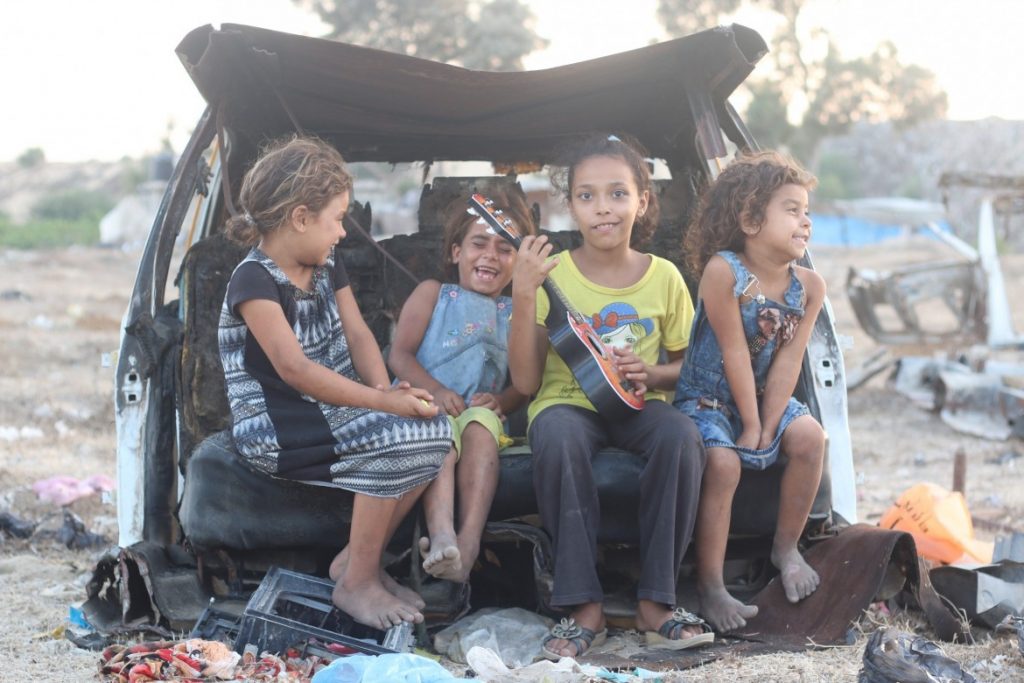
In the world's embrace, children find their place,
Amidst chaos and strife, they radiate grace.
To music's sweet tune, they rest and they rise,
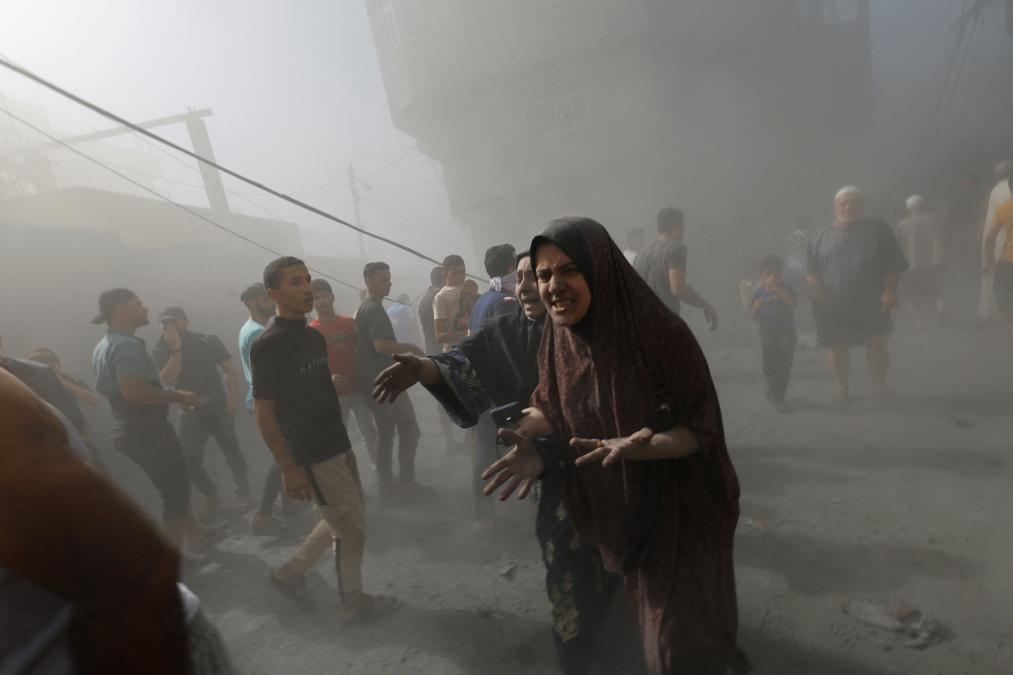
While echoes of gunfire pierce through our skies.
Yet they play, they laugh, they sing love's refrain,
Defying the darkness, they kindle hope's flame.
Let their joy be our compass, their laughter our guide,
In their innocence, may our courage reside.
The Israeli army has executed thirteen children by direct shooting in the Shifa Medical Complex and its environs in Gaza City, the Euro-Med Human Rights Monitor revealed in a statement issued Tuesday.
This is a war crime and a crime against humanity that is part of the genocide that the Palestinian people have been living through in the Gaza Strip for the past six months, the statement reads.
According to the Euro-Med, the Israeli army has been conducting for over a week systematic and horrifying military operations inside and around Al-Shifa Hospital.
“These crimes include extrajudicial executions and deliberate killings of Palestinian civilians.”
The Euro-Med field team received identical testimonies about the killings and executions of Palestinian children between the ages of 4 and 16.
Some of the casualties occurred during an Israeli army siege while their families were inside their homes, and others occurred when the victims attempted to escape down routes that the Israeli army had predetermined after being forcibly evacuated from their homes and places of residence.
Living close to Al-Shifa Hospital, Palestinian Islam Ali Salouha told Euro-Med that Israeli forces killed his son Ali, 9, and Saeed Muhammad Sheikha, 6, in front of their families and fellow locals. They had targeted them specifically with live bullets.
Euro-Med draws attention to the need to protect Palestinian children, who are more vulnerable to the ongoing Israeli crimes in the Gaza Strip and who are no longer afforded any protection under international law.
The damaged gate of Al Aqsa University, which was destroyed by the Israeli army, stands in Khan Younis in the southern Gaza Strip on April 14, 2024 [File: Reuters/Doaa Rouqa]
We have come together as Palestinian academics and staff of Gaza universities to affirm our existence, the existence of our colleagues and our students, and the insistence on our future, in the face of all current attempts to erase us.
The Israeli occupation forces have demolished our buildings but our universities live on. We reaffirm our collective determination to remain on our land and to resume teaching, study, and research in Gaza, at our own Palestinian universities, at the earliest opportunity.