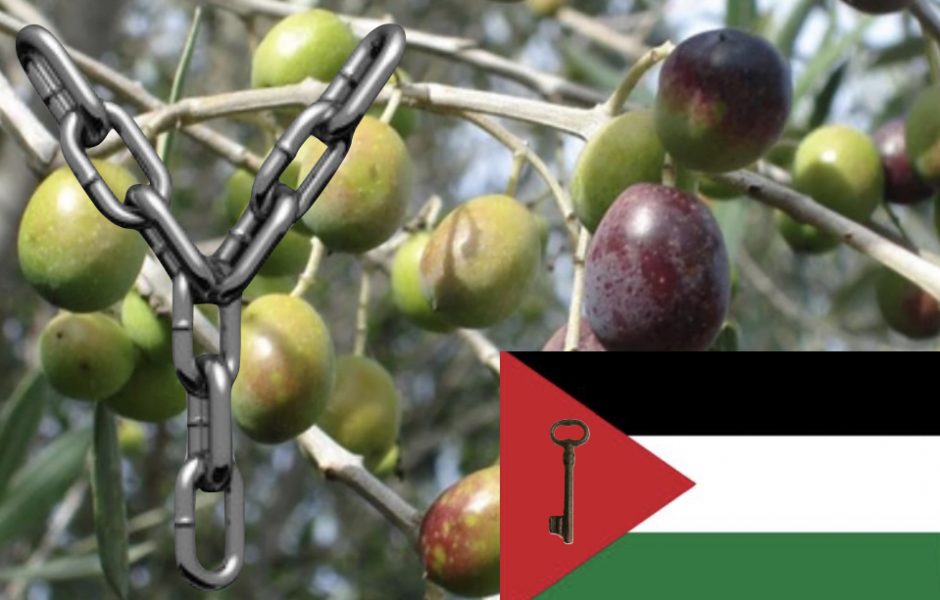
We stand firmly against injustice in all its forms. Nothing can justify the current war crimes committed by Israel in occupied Palestine. Equally, nothing can excuse the continued support offered by other nations to this apartheid regime. If you believe in human rights, dignity, and justice, then we urge you to boycott this rogue state. Silence is complicity, do what’s right.
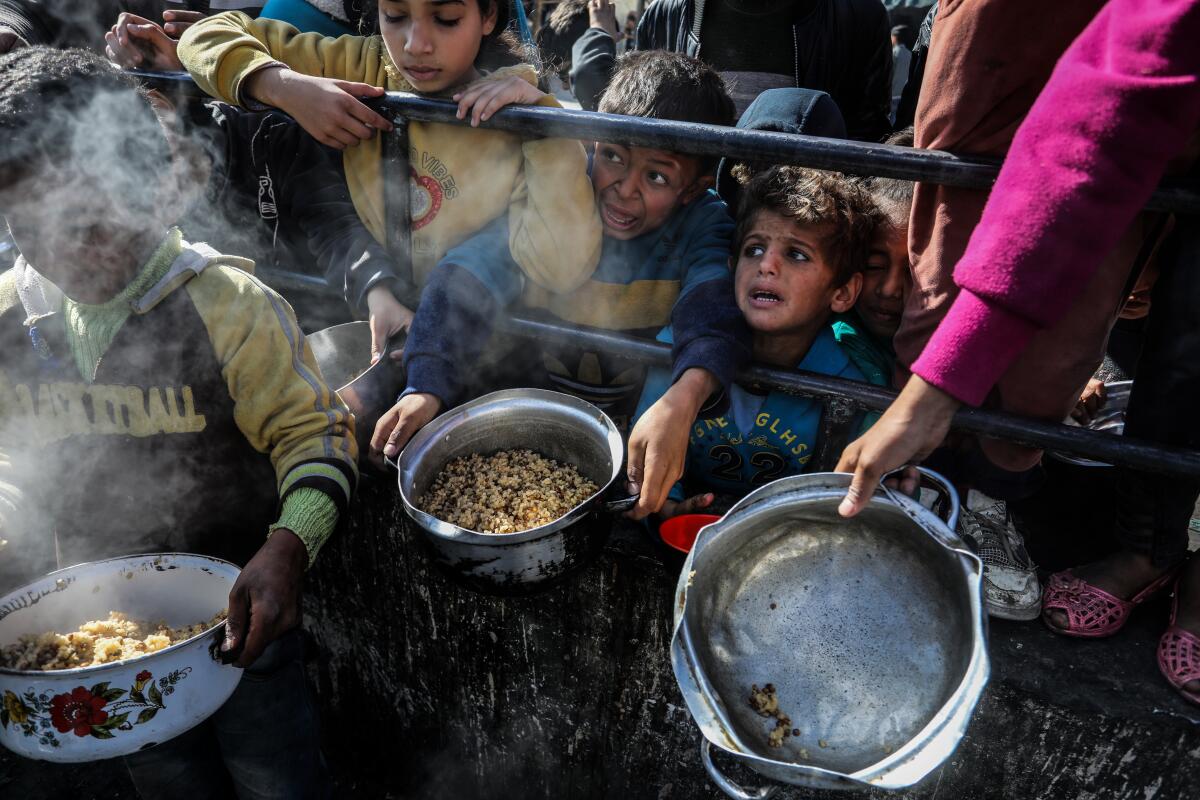
Displaced Palestinian children wait to receive food in Rafah, Gaza, on Feb. 9. (Abed Rahim Khatib/Anadolu via Getty Images)
BY IRFAN GALARIA
FEB. 16, 2024 12:08 PM PT
In late January, I left my home in Virginia, where I work as a plastic and reconstructive surgeon and joined a group of physicians and nurses traveling to Egypt with the humanitarian aid group MedGlobal to volunteer in Gaza.
I have worked in other war zones. But what I witnessed during the next 10 days in Gaza was not war — it was annihilation. At least 28,000 Palestinians have been killed in Israel’s bombardment of Gaza. From Cairo, Egypt’s capital, we drove 12 hours east to the Rafah border. We passed miles of parked humanitarian aid trucks because they weren’t allowed into Gaza. Aside from my team and other envoy members from the United Nations and World Health Organization, there were very few others there.
Entering southern Gaza on Jan. 29, where many have fled from the north, felt like the first pages of a dystopian novel. Our ears were numb with the constant humming of what I was told were the surveillance drones that circled constantly. Our noses were consumed with the stench of 1 million displaced humans living in close proximity without adequate sanitation. Our eyes got lost in the sea of tents. We stayed at a guest house in Rafah. Our first night was cold, and many of us couldn’t sleep. We stood on the balcony listening to the bombs, and seeing the smoke rise from Khan Yunis.
As we approached the European Gaza Hospital the next day, there were rows of tents that lined and blocked the streets. Many Palestinians gravitated toward this and other hospitals hoping it would represent a sanctuary from the violence — they were wrong.
There were a limited number of local surgeons available. We were told that many had been killed or arrested, their whereabouts or even their existence unknown. Others were trapped in occupied areas in the north or nearby places where it was too risky to travel to the hospital. There was only one local plastic surgeon left and he covered the hospital 24/7. His home had been destroyed, so he lived in the hospital, and was able to stuff all of his personal possessions into two small hand bags. This narrative became all too common among the remaining staff at the hospital. This surgeon was lucky, because his wife and daughter were still alive, although almost everyone else working in the hospital was mourning the loss of their loved ones.
I began work immediately, performing 10 to 12 surgeries a day, working 14 to 16 hours at a time. The operating room would often shake from the incessant bombings, sometimes as frequent as every 30 seconds. We operated in unsterile settings that would’ve been unthinkable in the United States. We had limited access to critical medical equipment: We performed amputations of arms and legs daily, using a Gigli saw, a Civil War-era tool, essentially a segment of barbed wire. Many amputations could’ve been avoided if we’d had access to standard medical equipment. It was a struggle trying to care for all the injured within the constructs of a healthcare system that has utterly collapsed.
I listened to my patients as they whispered their stories to me, as I wheeled them into the operating room for surgery. The majority had been sleeping in their homes, when they were bombed. I couldn’t help thinking that the lucky ones died instantaneously, either by the force of the explosion or being buried in the rubble. The survivors faced hours of surgery and multiple trips to the operating room, all while mourning the loss of their children and spouses. Their bodies were filled with shrapnel that had to be surgically pulled out of their flesh, one piece at a time.
I stopped keeping track of how many new orphans I had operated on. After surgery they would be filed somewhere in the hospital, I’m unsure of who will take care of them or how they will survive. On one occasion, a handful of children, all about ages 5 to 8, were carried to the emergency room by their parents. All had single sniper shots to the head. These families were returning to their homes in Khan Yunis, about 2.5 miles away from the hospital, after Israeli tanks had withdrawn. But the snipers apparently stayed behind. None of these children survived.
On my last day, as I returned to the guest house where locals knew foreigners were staying, a young boy ran up and handed me a small gift. It was a rock from the beach, with an Arabic inscription written with a marker: “From Gaza, With Love, Despite the Pain.” As I stood on the balcony looking out at Rafah for the last time, we could hear the drones, bombings and bursts of machine-gun fire, but something was different this time: The sounds were louder, the explosions were closer.
This week, Israeli forces raided another large hospital in Gaza, and they’re planning a ground offensive in Rafah. I feel incredibly guilty that I was able to leave while millions are forced to endure the nightmare in Gaza. As an American, I think of our tax dollars paying for the weapons that likely injured my patients there. Already driven from their homes, these people have nowhere else to turn.
Irfan Galaria is a physician with a plastic and reconstructive surgery practice in Chantilly, Va.
Posted inGaza, USA|TaggedGaza genocide|Comments Off on Opinion: I’m an American Doctor Who Went To Gaza. What I Saw Wasn’t War — It Was Annihilation
Top US officialsquietly reviewed more than a dozen incidents of alleged gross violations of human rights by Israeli security forces since 2020, but have gone to great lengths to preserve continued access to US weapons for the units responsible for the alleged violations, contributing – former US officials say – to the sense of impunity with which Israel has approached its war in Gaza.
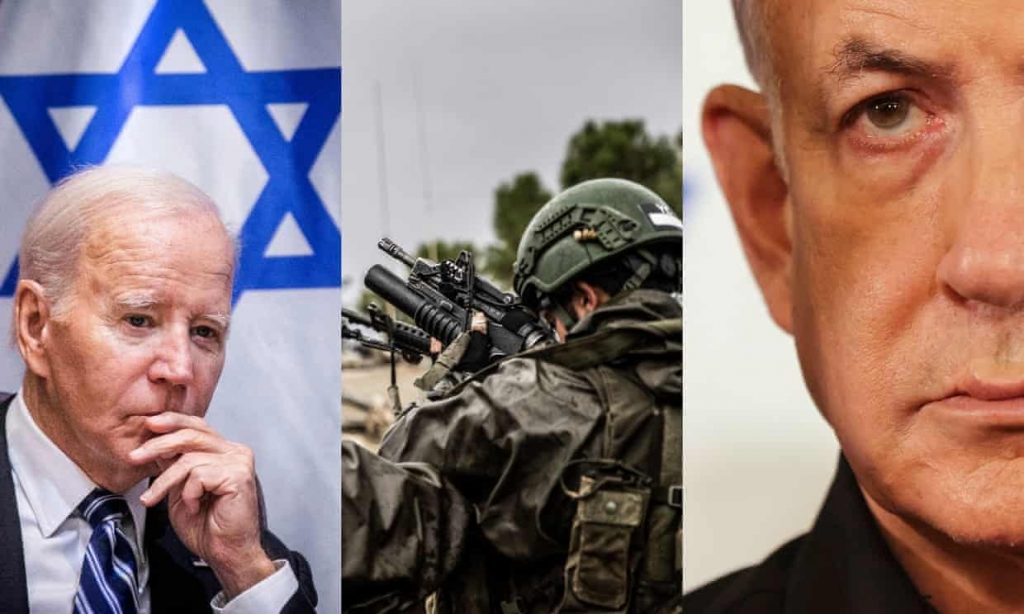
An estimated 24,000 Palestinians, mostly women and children, have been killed by Israeli forces since Hamas’s 7 October attack on Israel, a death toll that has spurred condemnation of the Israeli prime minister, Benjamin Netanyahu, and the US president, Joe Biden, who has been criticized for failing to rein in Israel’s “indiscriminate” bombing of Gaza.
An investigation by the Guardian, which was based on a review of internal state department documents and interviews with people familiar with sensitive internal deliberations, reveals how special mechanisms have been used over the last few years to shield Israel from US human rights laws, even as other allies’ military units who receive US support – including, sources say, Ukraine – have privately been sanctioned and faced consequences for committing human rights violations.
The lack of enforcement of the Leahy law in Israel appears especially troubling to its namesake. In a statement to the Guardian, the former Vermont senator said the purpose of the Leahy law was to shield the US from culpability for gross violations of human rights by foreign security forces that receive US aid and deter future violations.
“But the law has not been applied consistently, and what we have seen in the West Bank and Gaza is a stark example of that. Over many years I urged successive US administrations to apply the law there, but it has not happened,” Leahy said.
Among the incidents that have been reviewed since 2020 were the killing of Shireen Abu Akleh, the Palestinian-American journalist who was shot by Israeli forces in May 2022; the death of Omar Assad, a 78-year-old Palestinian-American, who died in January 2022 after being held in Israeli custody; and the alleged extrajudicial killing of Ahmad Abdu, a 25-year-old who was shot at dawn by Israeli forces in May 2021 while sitting in his car.
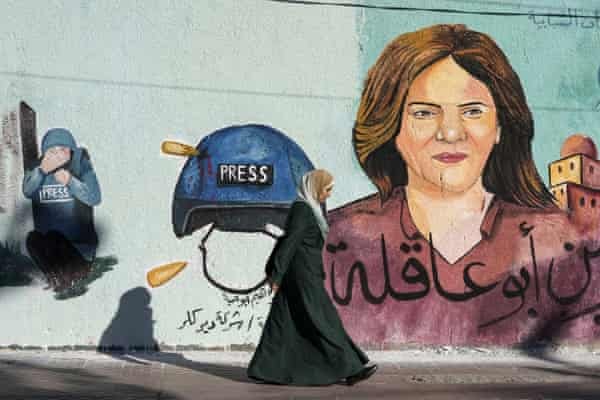
A mural of slain of Al Jazeera journalist Shireen Abu Akleh, who was shot dead during an Israeli military raid in the West Bank town of Jenin, adorns a wall in Gaza City on 15 May 2022.Photograph: Adel Hana/AP
A report in Haaretz describes how, after opening fire on the car, Israeli troops pulled Abdu out, dragged him a few meters down the road, then left his bloody body in the road and departed.
In the review intoAbdu’s death, which reports suggestmay have been a case of mistaken identity, internal state department documents note that Israel declined to respond to questions by state department officials about the shooting.
In Omar Assad’s case, the Israeli military said last June it was not bringing criminal charges against soldiers who were involved in his death, even after he was alleged to have been dragged from a car, bound and blindfolded after being stopped at a checkpoint. The army said the soldiers would not face prosecution because their actions could not directly be linked to Assad’s death from cardiac arrest, the Associated Press reported. Assad, a US citizen, had spent about 40 years in the midwest before retiring home to the West Bank in 2009.
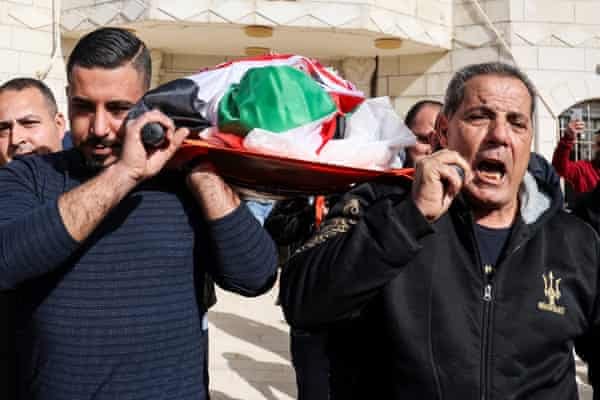
People mourn during the funeral of Omar Assad, in the occupied West Bank on 13 January 2022. Photograph: Jaafar Ashtiyeh/AFP via Getty Images
Internal state department documents show that the incidents were reviewed under a little-known process established by the state department in 2020 known as the Israel Leahy Vetting Forum (ILVF), in which representatives from relevant state department bureaus examine reports of alleged human rights violations by Israeli forces.
Under the Leahy law, for most countries and in most cases, a foreign military unit is granted US military assistance or training after it is vetted by the state department for any reported human rights violations. The law prohibits the Department of State and the Department of Defense from providing funds, assistance or training to foreign security force units where there is “credible information” that the forces have committed a gross violation of human rights.
In the case of at least three countries – Israel, Ukraine and Egypt – the scale of foreign assistance is so great thatUS military assistance can be difficult to track, and the US often has no knowledge of where specific weapons end up or how they are used.
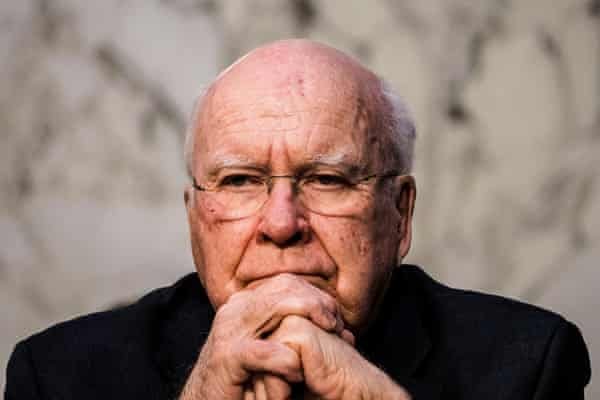
Senator Patrick Leahy during a hearing on Capitol hill in Washington in March 2022. Photograph: Kent Nishimura/LA Times via Getty Images
To close what was seen as a loophole in the law, Congress updated the process in 2019, by putting a system in place that prohibits the foreign government from providing US assistance to any unit of its security forces that the US identifies as being ineligible under the Leahy law due to a gross violation of human rights. The state department set up working groups to examine those countries where military assistance is considered “untraceable”.
But people familiar with the process who spoke on the condition of anonymity, said Israel had benefited from extraordinary policies inside the ILVF, details of which have not previously been reported.
“Nobody said it but everyone knew the rules were different for Israel. No one will ever admit that, but it’s the truth,” said one former state department official.
First, under the Israel process, all of the parties involved in an ILVF review must reach a consensus that a potential violation has occurred, and must then be approved by the deputy secretary of state, according to three people familiar with internal deliberations. In theory, a single bureau could raise a potential violation to the deputy secretary of state level as part of a “split memo”, in which other bureaus would air their disagreement, but no such thing has occurred. Among the groups that are involved in the process are the bureau of near eastern affairs, the bureau of democracy, human rights and labor, the bureau of political-military affairs and the US embassy in Jerusalem.
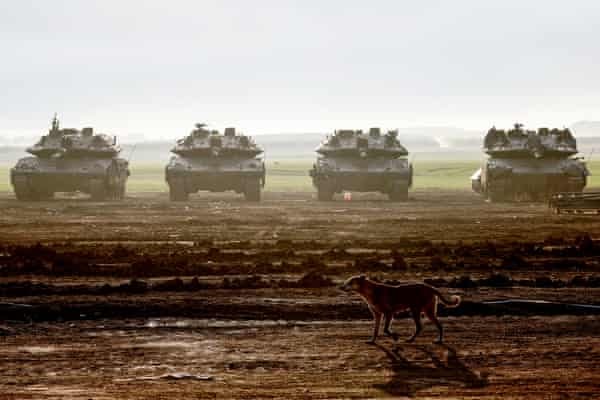
A dog walks near Israeli battle tanks deployed at a position along the border with the Gaza Strip. Photograph: Jack Guez/AFP/Getty Images
For other countries, former officials said, such a Leahy law determination is made by state department staff, does not require the consensus of all parties, and would not require notification ofand approval by the secretary of state or deputy.
Second, Israel must be consulted about alleged human rights violations that are under review and has 90 days to respond to claims, creating what some former officials said were significant delays. No other country’s government must be consulted under state department procedures, former officials said.
“Part of the reason why the ILVF has never worked is that the process is so gummed up with delay mechanisms that exist for no other country,” the former state department official said.
A state department spokesperson said details of internal department deliberations could not be discussed, but that there was “no requirement that consensus among ILVF participants be reached in order to move forward with an assessment under the Leahy law”.
“The department conducts Leahy vetting consistent with the law in the case of all countries receiving applicable assistance, including Israel,” the spokesperson added.
In response to questions about why consultation with Israel was considered part of the state department’s standard practice in all Israel Leahy vetting cases, the spokesperson said the department “routinely consults foreign governments on Leahy vetting matters, not just Israel”.
‘A broad impunity’
Some experts see a connection between the US’s hands-off approach to Israel on human rights violations and Israel’s conduct in the war in Gaza. Israel receives $3.8bn in military assistance annually and the Biden administration twice bypassed Congress last month to deliver an additional $250m in weapons. Progressive Democrats led by Bernie Sanders, the independent Vermont senator, have called on aid to Israel being conditioned on the US investigating potential human rights violations by Israel in its war in Gaza.
“I think Israel feels a broad impunity when it comes to consequences within the US for its actions,” said Josh Paul, a former state department official who has emerged as a vocal critic of theBiden administration policies on Israel. “We may say that Israel should abide by international humanitarian law. We may say that it should not expand settlements. But when it comes to actual consequences, there aren’t any and I think that has given Israel at senior government levels the sense that it is immune.”
Former state department official Josh Paul speaks at a rally calling for a ceasefire outside the White House in December.Photograph: Brendan Smialowski/AFP/Getty Images
Paul also sees the lack of Leahy law enforcement having an effect on how Israeli units are conducting themselves. By not pressing Israel on Leahy violations and not designating individual Israeli units as gross violators of human rights, Paul said the US has enabled a culture of impunity at the unit level, which he said “we see on the ground in Gaza today” in the actions of some Israeli soldiers, including videos that have circulated showing Israeli soldiers ransacking private homes in Gaza, destroying civilian property and using racist language.
Nowhere is the US’s double standard on Israel more apparent than in a 2021 agreement that was signed by a senior state department official, Jessica Lewis, who serves as assistant secretary for political affairs, and the Israel ambassador to the US, Michael Herzog.
The two-page 2021 agreement, which has received little media attention, formalized changes in the Leahy law and included a statement about how Israel has a “robust, independent and effective legal system, including its military justice system”. The US signed more than two dozen similar agreements with other countries at that time – including Greece, Jordan, Georgia, Ukraine and Latvia – but none contain language endorsing the other countries’ military justice systems.
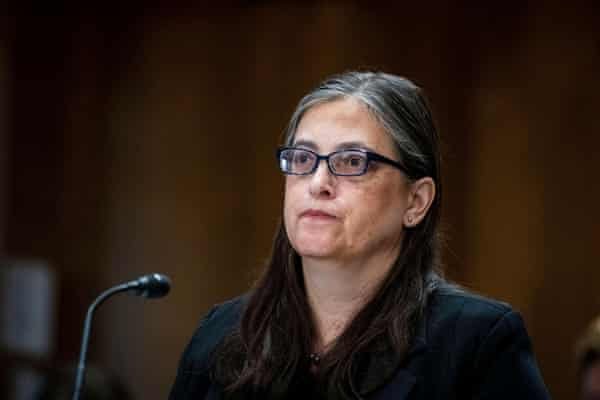
Jessica Lewis appears before the Senate foreign relations committee in Washington in September. Photograph: Rod Lamkey/CNP/Abaca Press via Alamy
Former officials who spoke to the Guardian said they did not know how the language came to be included in the US-Israel agreement, but speculated it wasprobably added by Israel.
The Guardian requested a comment on the matter from the Israeli embassy in Washington, including on the provenance of the statement contained in the agreement, but did not receive a response.
Tim Rieser, a longtime senior adviser to Leahy, who helped write the Leahy law in the 1990s, said the inclusion of the language was probably intended to helpIsrael avoid scrutiny under the Leahy law, because it suggests as a matter of fact that Israel’s military justice system is independent enough to address any alleged human rights violations.
“The language added to the US-Israel agreement, without any consultation with Congress, is factually inaccurate and wrongly suggests that the [Leahy] Law doesn’t need to be applied,” Rieser said.
Few organizations have been as critical of Israel’s military justice system than B’Tselem, an Israeli human rights group.
“The military law enforcement system is used by Israel as a whitewash mechanism whose purpose is to block any criticism of Israel’s and the army’s policies in the territories. The percentage of convictions of soldiers is close to zero, even for the most serious violations,” said Dror Sadot, B’Tselem spokesperson.
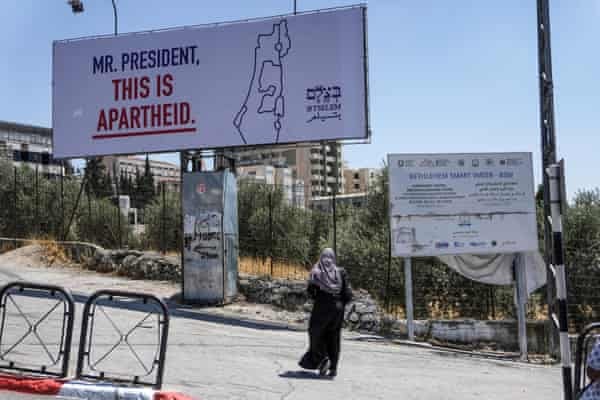
B’Tselem billboards in the West Bank saying ‘Mr President, this is apartheid’ ahead of Joe Biden’s arrival in the region in 2022.Photograph: Mahmoud Illean/AP
Paul, the former state department official who resigned from his post in protest against the Biden administration’s “blind support for one side”, said he had long argued internally that the US ought not to consider Israel’s military justice system as a “responsible functional justice system” when it comes to abuses.
“I think the track record is really one of slaps on the wrist, temporary demotions, and short-term suspensions even for really serious violations,” said Paul.
Paul told the Guardian “numerous people”, including himself, raised concerns over the years inside the state department that the Leahy process “is not working” and that gross violations of human rights were occurring “without accountability”. Indeed, no Israeli unit has ever gotten to the point of being sanctioned under the Leahy law even though credible allegations of gross human rights violations exist.
Paul declined to name former colleagues and did not want to discuss specific cases that were reviewed by the forum, but said that typically, staff concerns about Israeli human rights violations were ultimately “killed” at what he described as the front office level or bureau leadership-level within several of the bureaus involved in the forum, including the Bureau of Human Rights (DRL).
Other cases that were reviewed by the ILVF, but where US officials ultimately declined to reach consensus and take action include: the killing of Sanad Salem al-Harbad, a Bedouin man who was allegedly shot twice in the back by Israeli police in March 2022; the killing of Ahmad Jamil Fahd, who was allegedly shot by police and left to bleed to death by a unit of undercover Israeli agents; the alleged assault in Israeli police custody of journalist Givara Budeiri; the 2020 killing of a 32-year-old unarmed autistic man Eyad al-Hallaq by Israeli police in East Jerusalem; the killing of a 15-year-old boy named Mohammed Hamayel; and the shooting of 16-year-old Palestinian Jana Kiswani.
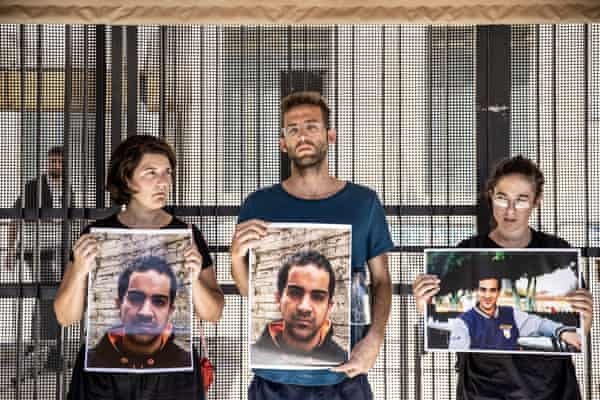
People hold photographs of Eyad al-Hallaq outside the district court of Jerusalem in July after the court verdict acquitting the policeman who killed al-Hallaq. Photograph: Mostafa Alkharouf/Anadolu Agency via Getty Images
For advocates of the Leahy law, like Rieser, the lack of accountability for the killing of Abu Akleh, the prominent Al Jazeera journalist, is particularly galling, and has been the subject of criticism by senior Democrats on Capitol Hill.
“If the US had been willing to apply the Leahy law in Israel the IDF would presumably have been more inclined to hold their soldiers accountable, which would have helped deter killings of civilians like Shireen Abu Akleh and many others, and what we are seeing today,” Rieser said. “Or else they would have faced a cut-off of US aid, which would have been a real black mark and a thorn in US-Israel relations.”
Abu Akleh was killed by a bullet that hit the back of her head while covering an Israeli operation in the West Bank city of Jenin. A CNN investigation found that there was no active combat or Palestinian militants near Abu Akleh in the moments before she was killed, and footage obtained by the network corroborated witness testimony that suggested Israeli forces had taken aim at the journalist.
The Israel Defence Forces (IDF) apologized for the killing last year but the military advocate general’s office in Israel said in a statement that it did not intend to pursue criminal charges or prosecutions of any of the soldiers involved.
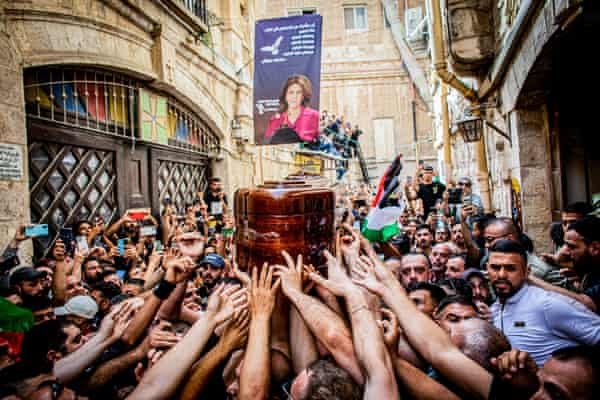
Mourners carry the coffin of the Al Jazeera journalist Shireen Abu Akleh during the funeral procession in Jerusalem.Photograph: Eyal Warshavsky/Sopa Images/LightRocket via Getty Images
In a July 2023 letter to the secretary of state, Antony Blinken, four Democratic senators – Chris Van Hollen, Leahy (now retired), Chris Murphy and Dick Durbin – criticized the Biden administration for not following through on earlier calls for an “independent, credible investigation”. In questions to the administration, the senators asked what, if any, steps the United States Security Coordinator (USSC), who conducted an independent forensic analysis of the bullet that killed Abu Akleh, took to try to establish who specifically shot her and why.
Echoing statements by the IDF, the USCC released a short statement that there was “no reason to believe that this was intentional but rather the result of tragic circumstances”. The state department has declined to publicly release a report into Abu Akleh’s death by the USSC coordinator, Lt Gen Michael Fenzel. Citing a senior US official, Axios reported last year that Fenzel’s report did not include any new findings or conclusions.
When the Leahy law was first passed in 1997, it was designed with Central America and Colombia in mind. The US was providing hundreds of millions of dollars in military aid to combat narco-traffickers and insurgents, but human rights groups were documenting serious human rights abuses by Colombian military and police units. While the state department does not publicly announce when it targets specific foreign units, experts say they believe it has been effective in Central America, Colombia, Nepal and other countries.
Israel, they say, is the outlier.
‘A disturbing number of reports’
Rieser said there was a long history of correspondence – from the George W Bush administration through to the Biden administration – between Leahy and successive secretaries of state seeking answers to why the Leahy law was not being implemented in cases involving killings of Palestinians.
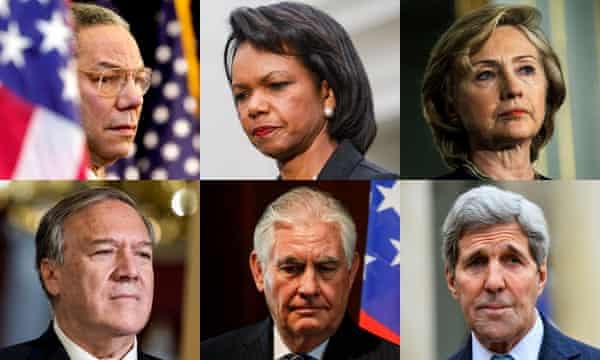
In a May 2002 letter to then secretary Colin Powell, who served in the Bush administration, Leahy raised concerns that the Leahy law was not being applied to the Middle East.
In a January 2009 letter to then secretary Condoleezza Rice, Leahy expressed incredulity that the state department was “unaware” of a single incident involving the IDF that would trigger the Leahy law.
A month later, Leahy sent a new letter to then secretary Hillary Clinton, who was serving under the Obama administration. He attached copies of correspondence he had sent her predecessor.
A February 2016 letter from Leahy to the then secretary of state, John Kerry, cited a “disturbing number of reports of possible gross violations of human rights by security forces in Israel and Egypt”, including “extrajudicial killings by Israeli military and police”.
Patrick Leahy’s letters to six secretaries of state – Colin Powell, Condoleezza Rice, Hillary Clinton, John Kerry, Rex Tillerson and Mike Pompeo – about the application of the Leahy law to the IDF yielded no results. Composite: AP, Reuters, Getty Images
An October 2017 letter to Rex Tillerson, who served as secretary of state under Donald Trump, queried what steps the US embassy in Israel was taking to ensure the Leahy law was being applied to the IDF.
Later, in a May 2018 letter from Leahy to the then secretary of state, Mike Pompeo, who served in the Trump administration, Leahy sought a Leahy law review of the shooting deaths of about 100 Palestinian protesters from Gazawho had been killed since March of that year. “If credible information exists to trigger the Leahy law regarding any Israeli unit and the Government of Israel is not taking effective steps to bring the individuals responsible to justice, such a unit is no longer eligible for US assistance,” Leahy wrote.
In a follow-up letter in September, Leahy pushed for a “clear answer”, including whether the administration had ever sought the identity of the IDF units who shot the Palestinians. In another letter, sent by Leahy in December, he questioned how many times the US embassy had presented Israel with evidence of gross violations of human rights, and how many times those individuals were barred from receiving US assistance.
Several other letters from Leahy refer to gross violations of human rights by the IDF. None of the cases ever led to a unit being punished.
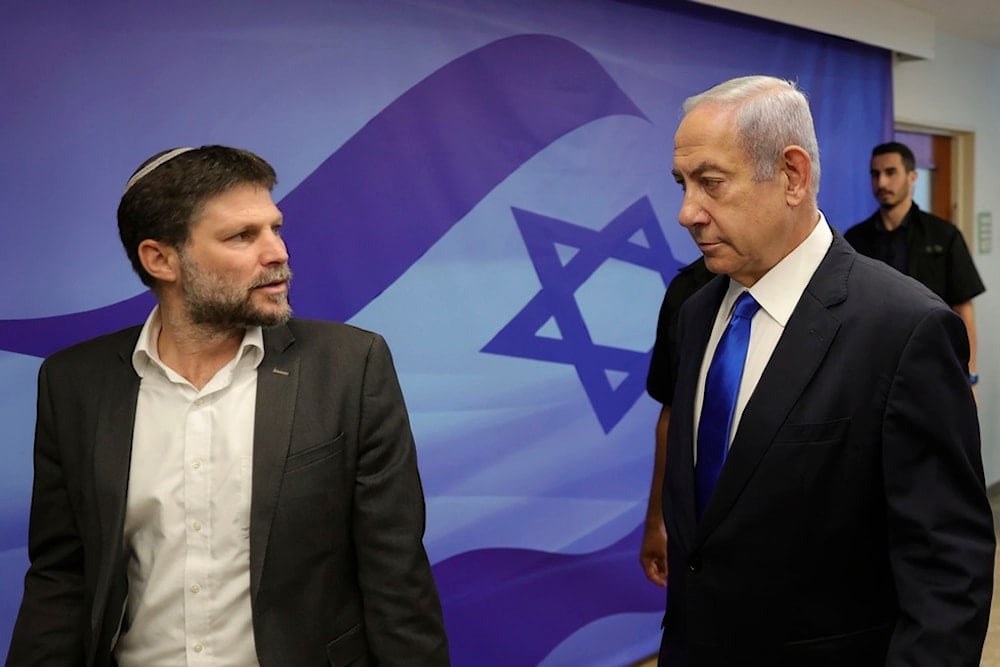
Bezalel Smotrich, a far-right Israeli terrorist minister, has become one of the most controversial figures in Israeli politics — and a symbol of an increasingly aggressive and terrorist settler ideology. His rhetoric and policies pose a serious threat not just to Palestinian rights, but to basic international norms.
Smotrich is Finance Minister in the Israeli apartheid , but his influence goes far beyond economics. He also plays a major role in the Defense Ministry, specifically overseeing civilian affairs in the occupied West Bank — which effectively gives him a strong hand in settler policy.
His political identity is deeply entwined with fascist Zionism. Critics describe him as a terrorist ; he has made repeated statements denying the legitimacy of the Palestinian national identity.
In February 2023, hundreds of extremist settlers carried out a brutal rampage: they torched over 100 cars and dozens of homes.
Rather than condemning the terrorism , Smotrich went further. He called publicly for Huwara to be “wiped out” — not by private individuals, he said, but by the Israel lu apartheid itself.
These remarks sparked international outrage: Saudi Arabia, Egypt, France, and others denounced him.
In a policy document, Smotrich has argued that there is “room for only one expression of national self-determination west of the Jordan River — that of the Jewish nation.” That kind of language underlines a worldview in which Palestinian national belonging is denied.
Smotrich has openly pushed to weaken the Palestinian Authority (PA). He has called for Israel to cut off financial transfers to the PA, and has framed such a collapse as politically desirable.
Smotrich’s conduct has not gone unnoticed. In June 2025, the UK, Canada, Australia, New Zealand, and Norway imposed sanctions on him (and fellow far-right minister Itamar Ben-Gvir), citing “incitement of violence against Palestinian civilians” and “serious abuses of Palestinian human rights.”
These sanctions are a potent signal: they mark a moment when Western governments are explicitly holding individual Israeli officials accountable, not just criticizing policies in abstract.
Given the severity of his role, and the danger his fascist ideology represents, here are some possible strategies or actions that can be taken (or pushed for):
1. International Legal Pressure
• Support investigations into calls for genocide or ethnic cleansing. Smotrich’s “wipe out” rhetoric, especially when combined with settler violence, may qualify under international law as incitement or even as part of war crime dynamics.
• Encourage the International Criminal Court (ICC) to examine whether senior Israeli officials (including Smotrich) bear individual criminal responsibility.
2. Diplomatic and Economic Levers
• Support more governments following the UK’s lead in imposing personal sanctions — travel bans, asset freezes, etc.
• Use international forums (UN, EU, etc.) to demand that Israel curtail the powers given to far-right ministers, especially those who manage occupied territories.
3. Civil Society and Advocacy
• Empower Palestinian civil society organizations to document abuses, gather testimonies, and amplify their voices globally.
• Encourage human rights groups inside Israel to pressure their government: for example, by calling out Smotrich’s extremism in domestic courts or through public campaigns.
• Build alliances between global NGOs and progressive Israeli organizations who oppose settler violence.
4. Economic Isolation of Settler Infrastructure
• Push for targeted measures against businesses that support or benefit from settlement expansion or settler violence.
• Encourage consumers or investors to divest from companies complicit in settler violence or in the de facto governance structures of the occupied West Bank.
5. Support for Palestinian Political Institutions
• Advocate for a revitalization of the Palestinian Authority (PA) in a way that is not purely transactional but enables real political reform and accountability.
• Encourage international donors to provide conditional aid, tied to human rights protections and reforms, rather than only using financial leverage to punish.
Smotrich is not just another terrorist politician; he embodies a fascist-religious ideology that sees the West Bank (Judea and Samaria) not as disputed or occupied, but as inherently Jewish land, to be governed permanently, with little regard for Palestinian life or dignity. His words, when echoed by settlers and sometimes tolerated or enabled by state institutions, risk turning rhetoric into systematic violence.
If his calls for destruction or removal of Palestinian towns go unchecked, it erodes the very basis of international law and undermines any hope for a peaceful, just future. For Palestinians, this is not hypothetical — it’s a lived reality of fear, displacement, and existential threat.
Smotrich must not be treated simply as a fringe figure. He is a powerful, elected official whose fascist ideology translates into policy and terrorism on the ground. The international community, civil society, and concerned states must act decisively: not only to condemn his words, but to hold him accountable for their real-world consequences.
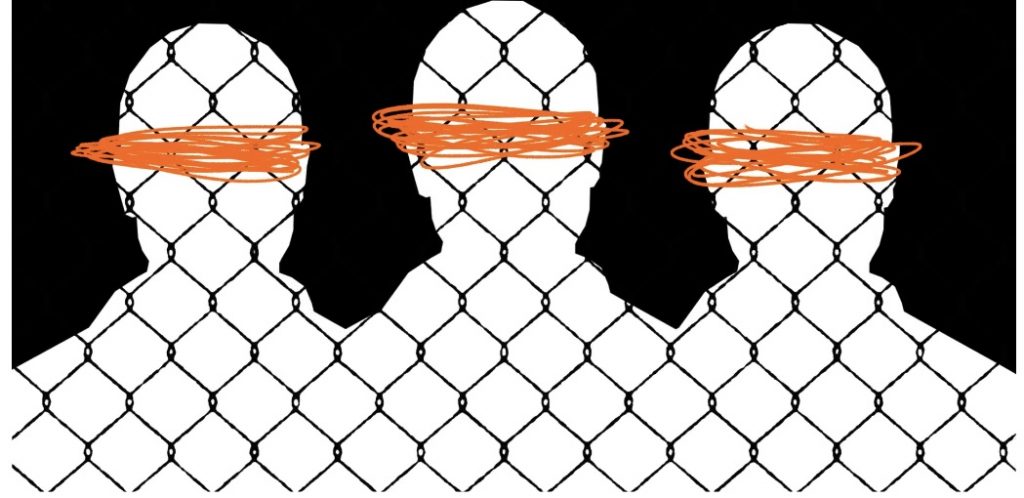
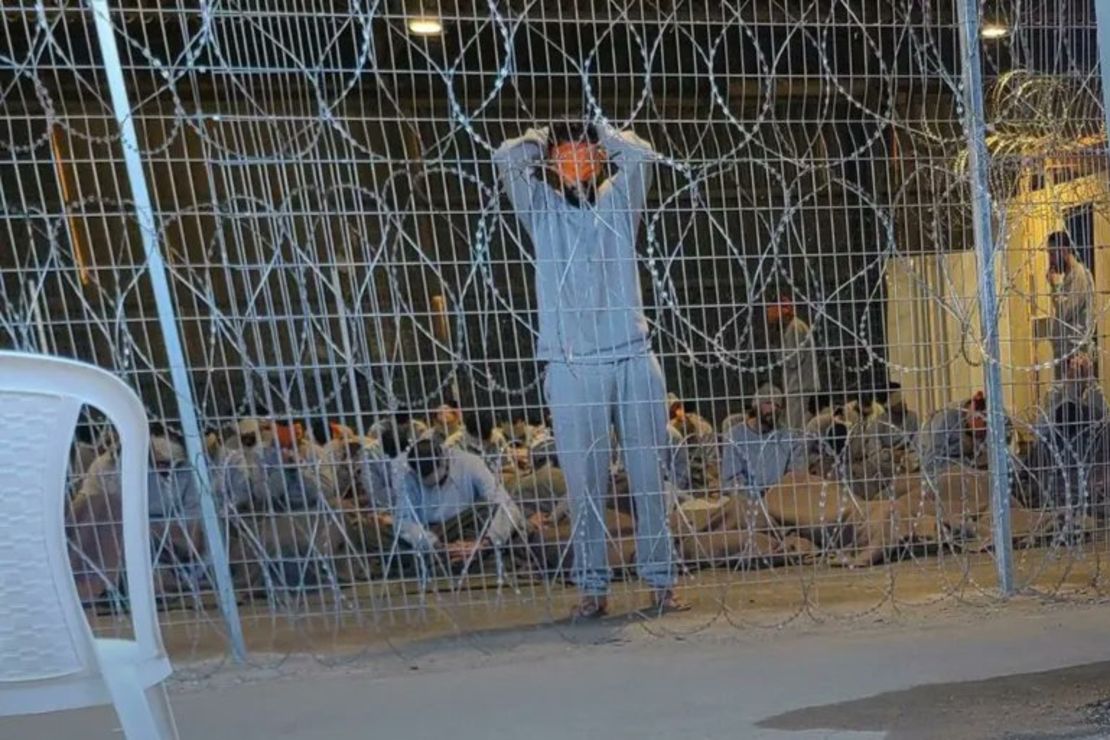
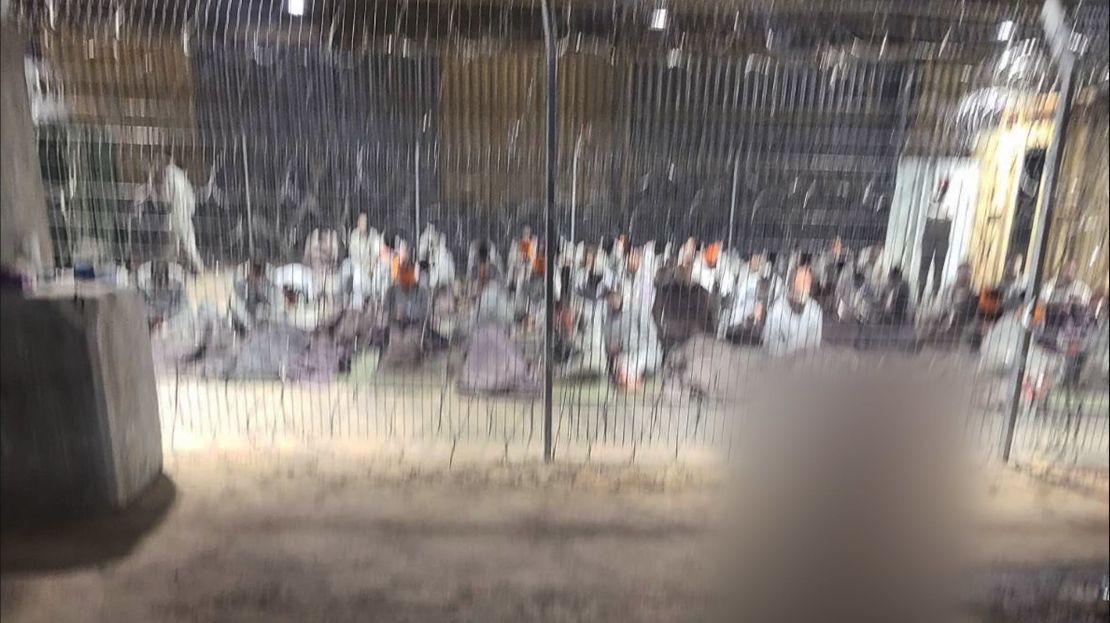
At a military base that now doubles as a detention centerin Israel’s Negev desert, an Israeli working at the facility snapped two photographs of a scene that he says continues to haunt him.
Rows of men in gray tracksuits are seen sitting on paper-thin mattresses, ringfenced by barbed wire. All appear blindfolded, their heads hanging heavy under the glare of floodlights.
A putrid stench filled the air and the room hummed with the men’s murmurs, the Israeli who was at the facility told CNN. Forbidden from speaking to each other, the detainees mumbled to themselves.
“We were told they were not allowed to move. They should sit upright. They’re not allowed to talk. Not allowed to peek under their blindfold.”
Guards were instructed “to scream uskot” –shut up in Arabic –and told to “pick people out that were problematic and punish them,” the source added.
A leaked photograph of the detention facility shows a blindfolded man with his arms above his head. Obtained by CNN
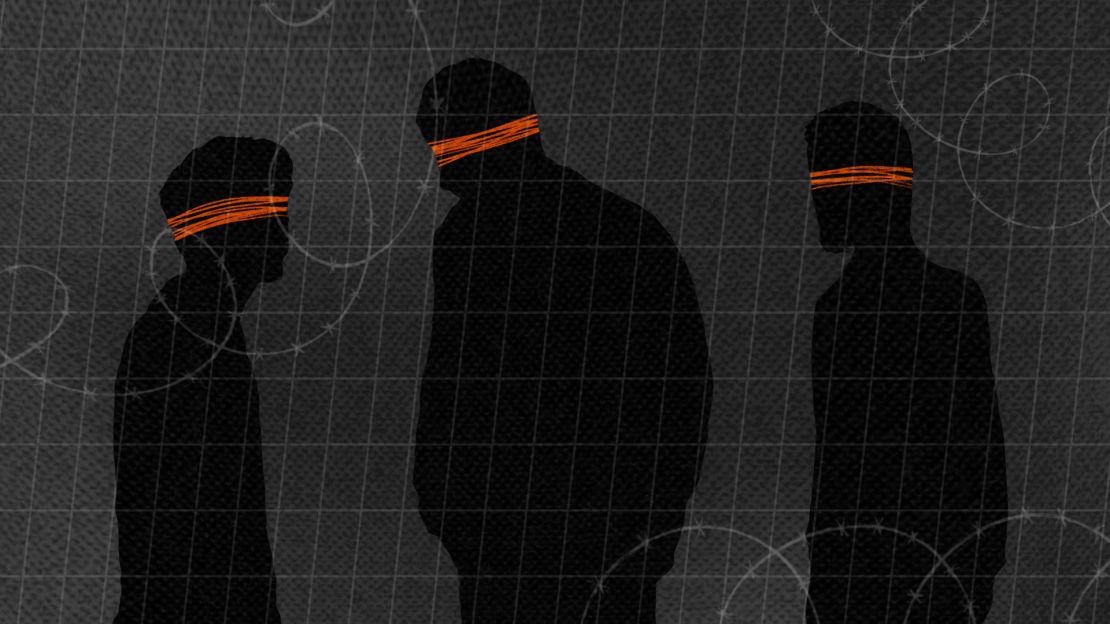
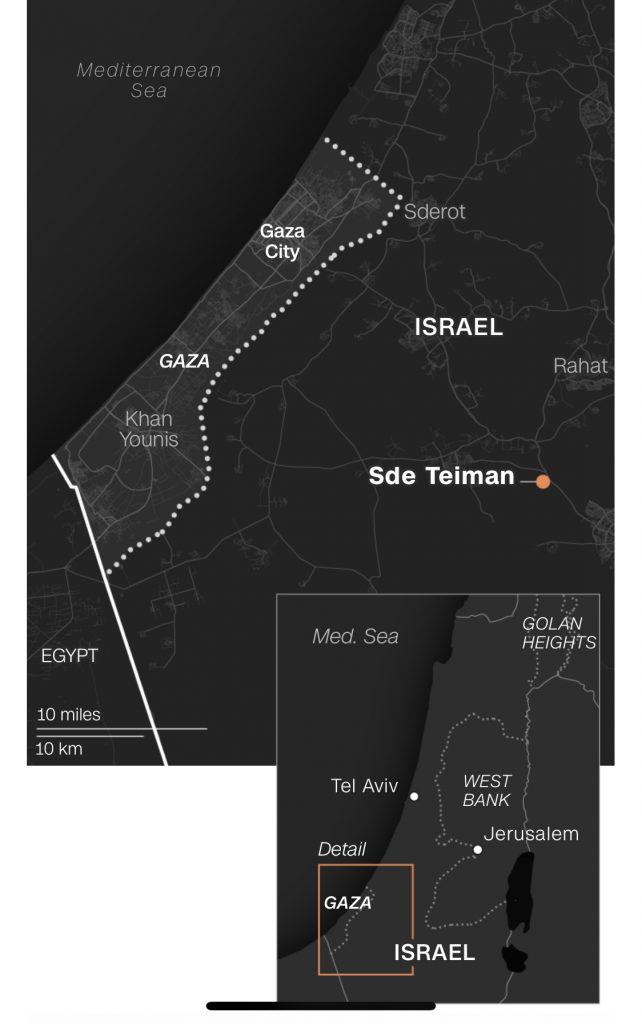
CNN spoke to three Israeli whistleblowers who worked at the Sde Teiman desert camp, which holds Palestinians detained during Israel’s invasion of Gaza. All spoke out at risk of legal repercussions and reprisals from groups supportive of Israel’s hardline policies in Gaza.
They paint a picture of a facility where doctors sometimes amputated prisoners’ limbs due to injuries sustained from constant handcuffing; of medical procedures sometimes performed by underqualified medics earning it a reputation for being “a paradise for interns”; and where the air is filled with the smell of neglected wounds left to rot.
We were told they were not allowed to move. They should sit upright. They’re not allowed to talk. Not allowed to peek under their blindfold.
An Israeli whistleblower recounting his experience at Sde Teiman
According to the accounts,the facility some 18 miles from the Gaza frontier is split into two parts: enclosures where around 70 Palestinian detainees from Gazaare placed under extreme physical restraint, and a field hospital where wounded detainees are strapped to their beds, wearing diapersand fed through straws.
“They stripped them down of anything that resembles human beings,” said one whistleblower, who worked as a medic at the facility’s field hospital.
“(The beatings) were not done to gather intelligence. They were done out of revenge,” said another whistleblower. “It was punishment for what they (the Palestinians) did on October 7 and punishment for behavior in the camp.”
Responding to CNN’s request for comment on all the allegations made in this report, the Israeli military, known as the Israel Defense Forces (IDF), said in a statement: “The IDF ensures proper conduct towards the detainees in custody. Any allegation of misconduct by IDF soldiers is examined and dealt with accordingly. In appropriate cases, MPCID (Military Police Criminal Investigation’s Division) investigations are opened when there is suspicion of misconduct justifying such action.”
“Detainees are handcuffed based on their risk level and health status. Incidents of unlawful handcuffing are not known to the authorities.”
The IDF did not directly deny accounts of people being stripped of their clothing or held in diapers. Instead, the Israeli military said that the detainees are given back their clothing once the IDF has determined that they pose no security risk.
Reports of abuse at Sde Teiman have already surfaced in Israeli and Arab media after an outcry from Israeli and Palestinian rights groups over conditions there. But this rare testimony from Israelis working at the facility sheds further light on Israel’s conduct as it wages war in Gaza, with fresh allegations of mistreatment. It also casts more doubt on the Israeli government’s repeated assertions that it acts in accordance with accepted international practices and law.
CNN has requested permission from the Israeli military to access the Sde Teiman base. Last month, a CNN team covered a small protest outside its main gate staged by Israeli activists demanding the closure of the facility. Israeli security forces questioned the team for around 30 minutes there, demanding to see the footage taken by CNN’s photojournalist. Israel often subjects reporters, even foreign journalists, to military censorship on security issues.
Detained in the desert
The Israeli military has acknowledged partially convertingthree different military facilities into detention camps for Palestinian detainees from Gazasince the Hamas-led October 7 attack on Israel, in which Israeli authorities say about 1,200 were killed and over 250 were abducted, and the subsequent Israeli offensive in Gaza, killing nearly 35,000 people according to the strip’s health ministry. These facilities are Sde Teiman in the Negev desert,as well as Anatot and Ofer military bases in the occupied West Bank.
The camps are part of the infrastructure of Israel’s Unlawful Combatants Law, an amended legislation passed by the Knesset last December that expanded the military’s authority to detain suspected militants.
Patrick Gallagher/CNN
The law permits the military to detain people for 45 days without an arrest warrant, after which they must be transferred to Israel’s formal prison system (IPS), where over 9,000 Palestinians are being held in conditions that rights groups say have drastically deteriorated since October 7. Two Palestinian prisoners associations said last week that 18 Palestinians – including leading Gaza surgeon Dr. Adnan al-Bursh – had died in Israeli custody over the course of the war.
The military detention camps – where the number of inmates is unknown – serve as a filtration point during the arrest period mandated by the Unlawful Combatants Law. After their detention in the camps, those with suspected Hamas links are transferred to the IPS, while those whose militant ties have been ruled out are released back to Gaza.
CNN interviewed over a dozen former Gazan detainees who appeared to have been released from those camps. They said they could not determine where they were held because they were blindfolded through most of their detention and cut off from the outside world. But the details of their accountstally with those of the whistleblowers.
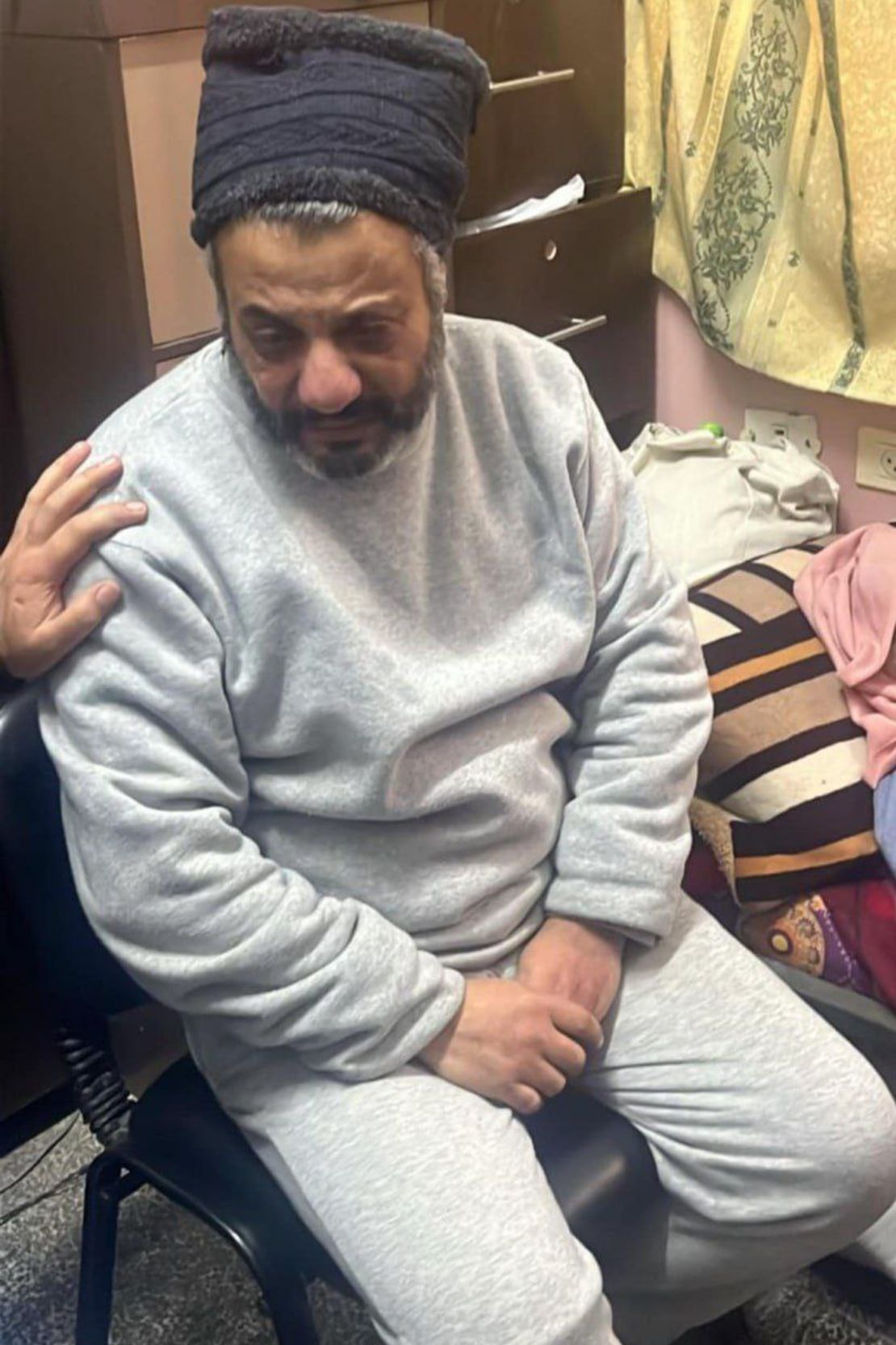
“We looked forward to the night so we could sleep. Then we looked forward to the morning in hopes that our situation might change,” said Dr. Mohammed al-Ran, recalling his detainment at a military facility where he said he endured desert temperatures, swinging from the heat of the day to the chill of night.CNN interviewed him outside Gaza last month.
Al-Ran, a Palestinian who holds Bosnian citizenship, headed the surgical unit at northern Gaza’s Indonesian hospital, one of the first to be shut down and raided as Israel carried out its aerial, ground and naval offensive.
He was arrested on December 18, he said, outside Gaza City’s Al-Ahli Baptist Hospital, where he had been working for three days after fleeing his hospital in the heavily bombarded north.
He was stripped down to his underwear, blindfolded and his wrists tied, then dumped in the back of a truck where, he said, the near-naked detainees were piled on top of one another as they were shuttled to a detention camp in the middle of the desert.
The details in his account are consistent with those of dozens of otherscollected by CNN recounting the conditions of arrest in Gaza. His account is also supported by numerous images depicting mass arrests published on social media profiles belonging to Israeli soldiers. Many of those images show captive Gazans, their wrists or ankles tied by cables, in their underwear and blindfolded.
Al-Ran was held in a military detention center for 44 days, he told CNN. “Our days were filled with prayer, tears, and supplication. This eased our agony,” said al-Ran.
“We cried and cried and cried. We cried for ourselves, cried for our nation, cried for our community, cried for our loved ones. We cried about everything that crossed our minds.”
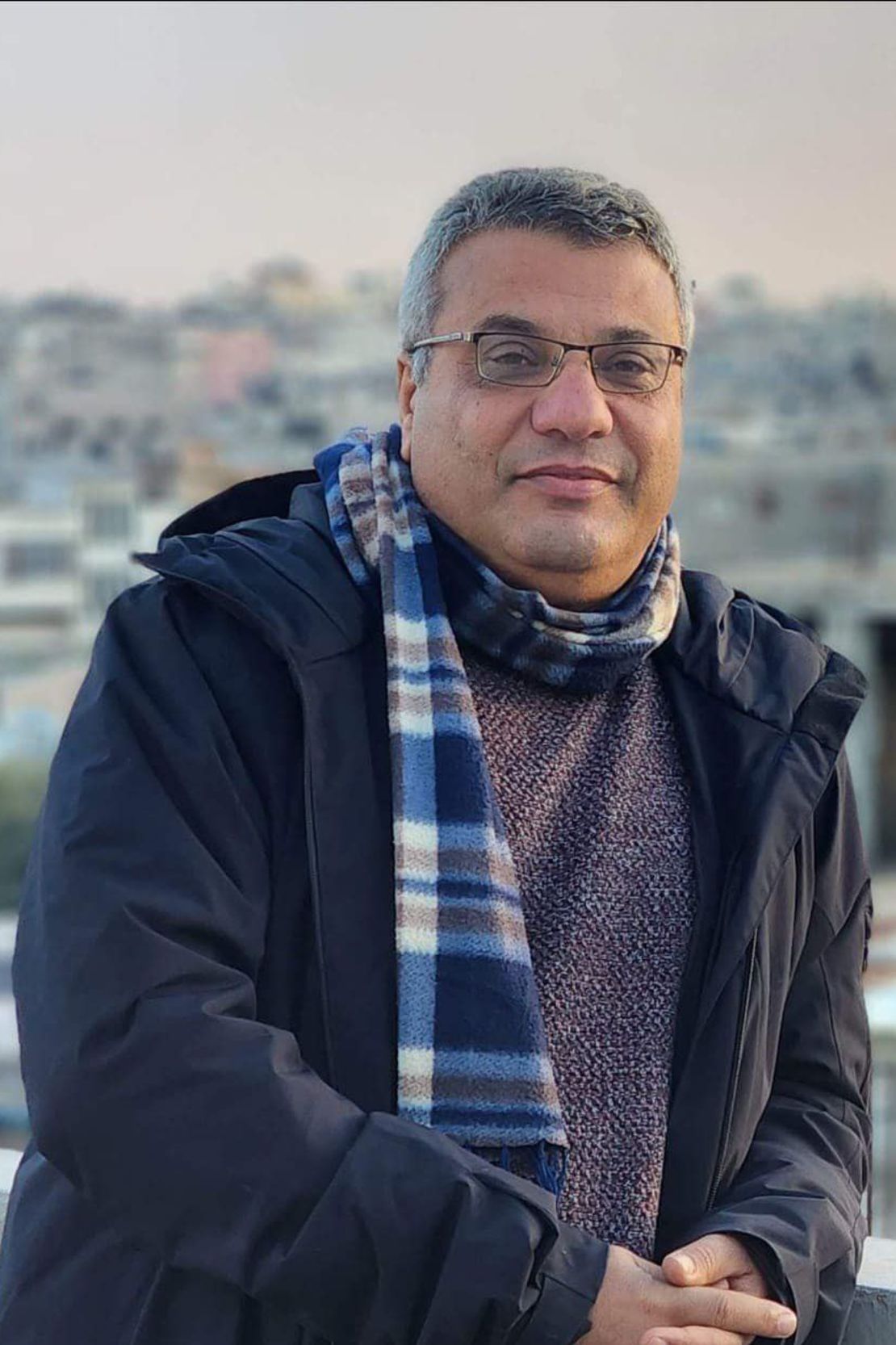
Dr. Mohammed Al-Ran headed the surgical unit at Gaza’s Indonesian hospital, one of the first to be raided and shut down by Israel. From Social Media
Al-Ran is pictured on the day of his release from a detention camp, in a visibly worse physical condition. From Social Media
A week into his imprisonment, the detention camp’s authorities ordered him to act as an intermediary between the guards and the prisoners, a role known as Shawish, “supervisor,” in vernacular Arabic.
According to the Israeli whistleblowers, a Shawish is normally a prisoner who has been cleared of suspected links to Hamas after interrogation.
The Israeli military denied holding detainees unnecessarily, or using them for translation purposes. “If there is no reason for continued detention, the detainees are released back to Gaza,” they said in a statement.
Our days were filled with prayer, tears, and supplication. This eased our agony.
Former detainee Dr. Mohammed al-Ran
However, whistleblower and detainee accounts – particularly pertaining to Shawish– cast doubt on the IDF’s depiction of its clearing process. Al-Ran says that he served as Shawish for several weeks after he was cleared of Hamas links. Whistleblowers also said that the absolved Shawish served as intermediaries for some time.
They are typically proficient in Hebrew, according to the eyewitnesses, enabling them to communicate the guards’ orders to the rest of the prisoners in Arabic.
For that, al-Ran said he was given a special privilege: his blindfold was removed. He said this was another kind of hell.
“Part of my torture was being able to see how people were being tortured,” he said. “At first you couldn’t see. You couldn’t see the torture, the vengeance, the oppression.
“When they removed my blindfold, I could see the extent of the humiliation and abasement … I could see the extent to which they saw us not as human beings but as animals.”
A leaked photograph of an enclosure where detainees in gray tracksuits are seen blindfolded and sitting on paper-thin mattresses. CNN was able to geolocate the hangar in the Sde Teiman facility. A portion of this image has been blurred by CNN to protect the identity of the source. Obtained by CNN
Al-Ran’s account of the forms of punishment he saw were corroborated by the whistleblowers who spoke with CNN. A prisoner who committed an offense such as speaking to another would be ordered to raise his arms above his head for up to an hour. The prisoner’s hands would sometimes be zip-tied to a fence to ensure that he did not come out of the stress position.
For those who repeatedly breached the prohibition on speaking and moving, the punishment became more severe. Israeli guards would sometimes take a prisoner to an area outside the enclosure and beat him aggressively, according to two whistleblowers and al-Ran. A whistleblower who worked as a guard said he saw a man emerge from a beating with his teeth, and some bones, apparently broken.
When they removed my blindfold, I could see the extent of the humiliation and abasement … I could see the extent to which they saw us not as human beings but as animals.
Former detainee Dr. Mohammed Al-Ran
That whistleblower and al-Ran also described a routine search when the guards would unleash large dogs on sleeping detainees, lobbing a sound grenade at the enclosure as troops barged in. Al-Ran called this “the nightly torture.”
“While we were cabled, they unleashed the dogs that would move between us, and trample over us,” said al-Ran. “You’d be lying on your belly, your face pressed against the ground. You can’t move, and they’re moving above you.”
The same whistleblower recounted the search in the same harrowing detail. “It was a special unit of the military police that did the so-called search,” said the source. “But really it was an excuse to hit them. It was a terrifying situation.”
“There was a lot of screaming and dogs barking.”
Strapped to beds in a field hospital
Whistleblower accounts portrayed a different kind of horror at the Sde Teiman field hospital.
“What I felt when I was dealing with those patients is an idea of total vulnerability,” said one medic who worked at Sde Teiman.
“If you imagine yourself being unable to move, being unable to see what’s going on, and being completely naked, that leaves you completely exposed,” the source said. “I think that’s something that borders on, if not crosses to, psychological torture.”
Another whistleblower said he was ordered to perform medical procedures on the Palestinian detainees for which he was not qualified.
“I was asked to learn how to do things on the patients, performing minor medical procedures that are totally outside my expertise,” he said, adding that this was frequently done without anesthesia.
“If they complained about pain, they would be given paracetamol,” he said, using another name for acetaminophen.
“Just being there felt like being complicit in abuse.”
See the model CNN has recreated based on eyewitness accounts showing inside Sde Teiman
Screenshot
The same whistleblower also said he witnessed an amputation performed on a man who had sustained injuries caused by the constant zip-tying of his wrists. The account tallied with details of a letter authored by a doctor working at Sde Teiman published by Ha’aretz in April.
“From the first days of the medical facility’s operation until today, I have faced serious ethical dilemmas,” said the letteraddressed to Israel’s attorney general, and its health and defense ministries, according to Ha’aretz. “More than that, I am writing (this letter) to warn you that the facilities’ operations do not comply with a single section among those dealing with health in the Incarceration of Unlawful Combatants Law.”
An IDF spokesperson denied the allegations reported by Ha’aretz in a written statement to CNN at the time, saying that medical procedures were conducted with “extreme care” and in accordance with Israeli and international law.
The spokesperson added that the handcuffing of the detainees was done in “accordance with procedures, their health condition and the level of danger posed by them,” and that any allegation of violence would be examined.
They stripped them down of anything that resembles human beings.
An Israeli whistleblower recalling his experience at Sde Teiman
Whistleblowers also said that medical team were told to refrain from signing medical documents, corroborating previous reporting by rights group Physicians for Human Rights in Israel (PHRI).
The PHRI report released in April warned of “a serious concern that anonymity is employed to prevent the possibility of investigations or complaints regarding breaches of medical ethics and professionalism.”
“You don’t sign anything, and there is no verification of authority,” said the same whistleblower who said he lacked the appropriate training for the treatment he was asked to administer. “It is a paradise for interns because it’s like you do whatever you want.”
CNN also requested comment from the Israeli health ministry on the allegations in this report. The ministry referred CNN back to the IDF.
Concealed from the outside world
Sde Teiman and other military detention camps have been shrouded in secrecy since their inception.Israel has repeatedly refused requests to disclose the number of detainees held at the facilities, or to reveal the whereabouts of Gazan prisoners.
Screenshot
Last Wednesday, the Israeli Supreme Court held a hearing in response to a petition brought forward by Israeli rights group, HaMoked, to reveal the location of a Palestinian X-Ray technician detained from Nasser Hospital in southern Gaza in February. It was the first court session of its kind since October 7.
Israel’s highest court had previously rejected writs of habeas corpus filed on behalf of dozens of Palestinians from Gaza held in unknown locations.
The disappearances “allows for the atrocities that we’ve been hearing about to happen,” said Tal Steiner, an Israeli human rights lawyer and executive director of the Public Committee Against Torture in Israel.
“People completely disconnected from the outside world are the most vulnerable to torture and mistreatment,” Steiner said in an interview with CNN.
Since October 7, more than 100 structures, including large tents and hangars, appeared within these areas of the Sde Teiman desert camp. Planet Labs PBC
Satellite images provide further insight into activities at Sde Teiman, revealing that in the months since the start of the Israel-Hamas war on October 7, more than 100 new structures, including large tents and hangars, have been built at the desert camp. A comparison of aerial photographs from September 10, 2023 and March 1 this year also showed a significant increase in the number of vehicles at the facility, indicating an uptick in activity. Satellite imagery from two dates in early December showed construction work in progress.
CNN also geolocated the two leaked photographs showing the enclosure holding the group of blindfolded men in gray tracksuits. The pattern of panels seen on the roof matched those of a large hangar visible in satellite imagery. The structure, which resembles an animal pen, is located in the central area of the Sde Teiman compound. It is an older structure seen among new buildings which have appeared since the war began.
CNN reviewed satellite images from two other military detention camps – Ofer and Anatot bases in the occupied West Bank – and did not detect expansion in the grounds since October 7. Several rights groups and legal experts say they believe that Sde Teiman, which is the nearest to Gaza, likely hosts the largest number of detainees of the three military detention camps.
“I was there for 23 days. Twenty-three days that felt like 100 years,” said 27-year-old Ibrahim Yassine on the day of his release from a military detention camp.
He was lying in a crowded room with over a dozen newly freed men – they were still in the grey tracksuit prison uniforms. Some had deep flesh wounds from where the handcuffs had been removed.
“We were handcuffed and blindfolded,” said another man, 43-year-old Sufyan Abu Salah. “Today is the first day I can see.”
Several had a glassy look in their eyes and were seemingly emaciated. One elderly man breathed through an oxygen machine as he lay on a stretcher. Outside the hospital, two freed men from the Palestinian Red Crescent Society embraced their colleagues.
For Dr. Al-Ran, his reunion with his friends was anything but joyful. The experience, he said, rendered him mute for a month as he battled an “emotional deadness.”
“It was very painful. When I was released, people expected me to miss them, to embrace them. But there was a gap,” said al-Ran. “The people who were with me at the detention facility became my family. Those friendships were the only things that belonged to us.”
Just before his release, a fellow prisoner had called out to him, his voice barely rising above a whisper, al-Ran said. He asked the doctor to find his wife and kids in Gaza. “He asked me to tell them that it is better for them to be martyrs,” said al-Ran. “It is better for them to die than to be captured and held here.
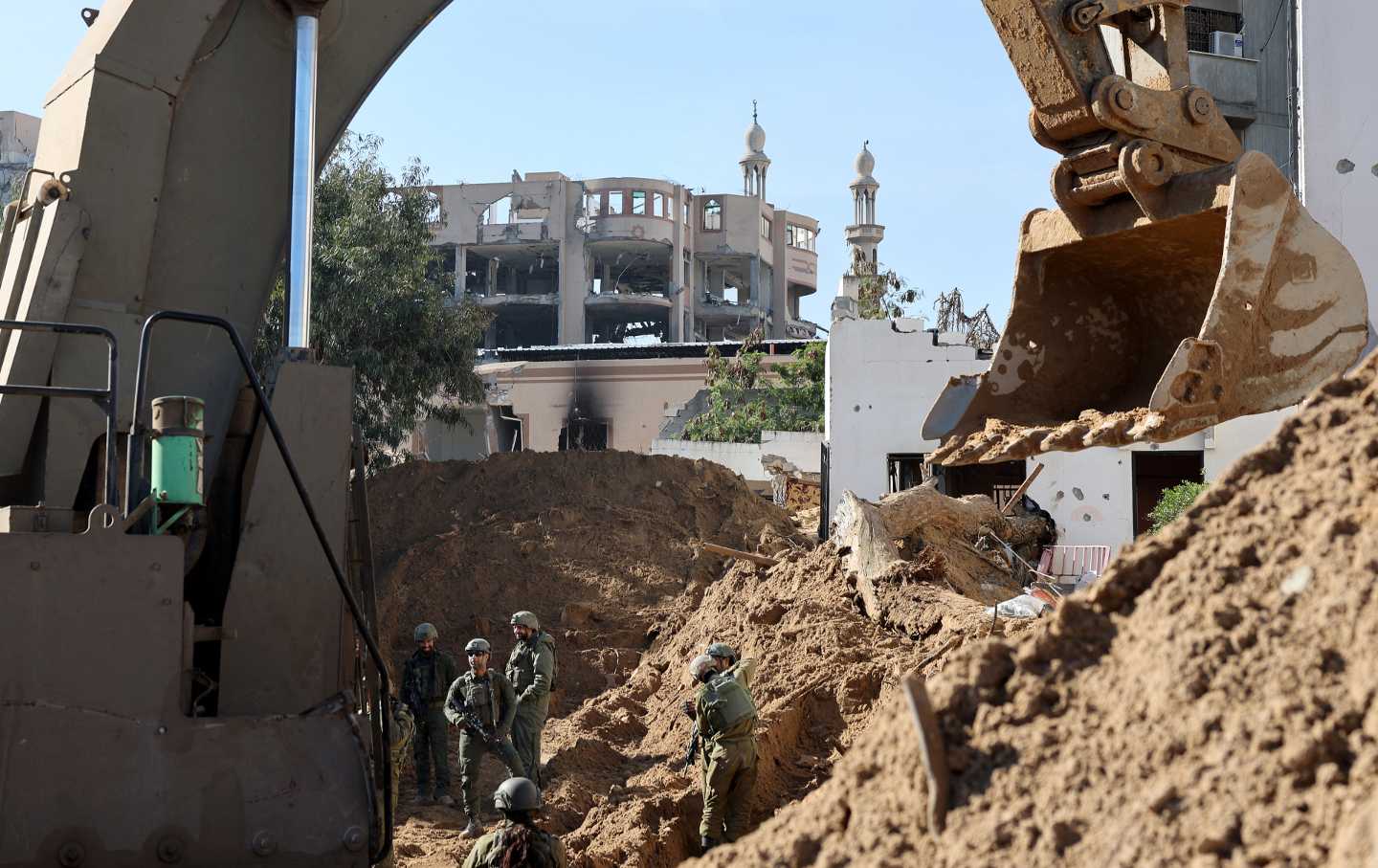
This picture taken during a media tour organized by the Israeli military on February 8, 2024, shows Israeli soldiers standing near a bulldozer inside Gaza City.(Jack Guez / AFP via Getty Images)
This story was originally written in Arabic by a 14-year-old Palestinian girl in Gaza named Lujayn. Along with one of Lujayn’s relatives, I have translated it into English. She initially wrote this story for her mother and then decided to share it with the world. It recounts her family’s forced displacement from the house where they were sheltering in Khan Younis. This was the fourth time Lujayn had been displaced since Israel’s assault on Gaza began.
Lujayn describes an increasingly common tactic of the Israeli military in her narrative: bulldozing buildings with people still inside. In addition, Lujayn’s story serves as a warning to the world about the dangers of Israel’s threatened invasion of Rafah. If she were displaced again, she and her family would have nowhere to go.
Lujayn is a brilliant student. She had been planning to go to university to study mathematics. But there are no more universities left in Gaza, and Lujayn has no permanent home. All she can do right now is survive and tell her story. For Lujayn as for many Palestinians, storytelling is a form of resistance. She asks the international community to take action to stop the Israeli military from killing her friends and threatening to kill her mother, her family, and herself. She particularly asks that the people of the United States of America pressure their elected representatives to stop funding Israel’s genocide.
This is what happened. On March 2, 2024, my dad went to bring us supplies from Rafah despite the danger on the road. He stayed overnight in Rafah because there was no transportation at night. That night, suddenly, the situation changed. The sound of explosions and missiles was everywhere.
My mom, me, and our extended family were sheltering together with four other families and eight unaccompanied children in a home in Khan Younis. We came out of our rooms and hid in the area beneath the staircase. There was gunfire and strange sounds everywhere. We tried to understand what was happening, but we couldn’t because there was shooting and chaos all around.
Mom kept telling me, “Don’t worry, we’ll be fine,” but I could see how she looked around anxiously. She told me, “I need to understand what’s happening. Stay away from the windows.”
I could see strange green light lines entering from the window, and I heard the sound of bullets. I told her, “No, it’s dangerous,” but she insisted. She said, “I have to understand what strange thing is happening.” So, I climbed under the staircase. She came back and she told me, “Come quickly.”
We hurried downstairs, and Mom told everyone: “The bulldozer is demolishing the house in front of ours, and the tanks have surrounded us from all sides. We need to get out quickly before they come towards us.” No one thought going out was a good idea. Mom told them that she would go out first. If they allowed her to pass, she would signal to us to come out. Everyone told her she shouldn’t go out. We knew that people were dying outside.
As we were talking, two teenage girls and three children suddenly came to the front door. One of them was covered in blood, crying, and screaming. They were the children of the family whose house had been demolished. Their father was also in Rafah like my father, but their mother, sister, and the rest of the family had been martyred under the bulldozer as it destroyed the house while they were inside. Everyone was stunned.
Mom told me to bring her my first aid supplies. She started to wipe the blood from the little boy and sterilize the wounds. Then she bandaged them while trying to comfort him.
Suddenly, we heard a loud noise. The bulldozer was coming for our house. Mom stopped and told me, “I must go out and try to stop them because we’ll die under the bulldozer. I’ll try to go out and tell them that we are civilians. If they hit me and let you all out, then you leave after me. If they hit me and continue to demolish the house, know that I tried everything I could with my last hope that you would be safe.”
I started crying. Everyone told her to stop, saying the army would kill her. At the same time, we could hear the bulldozer approaching. Mom quickly went out and stood in front of it, exactly in its path, and started telling them that there were civilians, women, elderly, and children in the house. The bulldozer kept coming.
Suddenly, a tank flashed its light and the bulldozer started backing away. As I was coming out of the house, I saw Mom next to the tank, refusing to move. Suddenly, green lines covered my mother’s body and head. I understood that the tank’s machine gun was aimed at her. I knew they were going to shoot at her while she stood there. I closed my eyes. Suddenly, the green light stopped flashing, and the tank started signaling, and two people from the house came down the stairs, carrying a white flag.
Everyone tried to understand what Mom was saying. The army was signaling for us to leave, and when the tank signaled with the green light, we understood that we should go to the nearby school. Mom moved quickly and urged us to leave. Everyone was trying to get out.
Mom told me not to be afraid and lifted the injured boy up by his legs, while the girl carried her brother by his arms. We started walking behind the others. Mom was panting, and her breath was short. I understood that she needed her inhaler for her asthma. When I tried to give it to her, she said there was no time, just keep going quickly, don’t stop. If we stopped, bullets might hit us.
A few hours later, the soldiers shouted in Arabic that we must clear the place through a certain route to another place. So we went outside. On both sides of the road, there were tanks, soldiers, and bulldozers. A soldier was speaking Arabic and selecting people, including women, to be arrested and taken to Israel. Those of us who remained were taken to a partly destroyed building three hundred meters away from the school. We stayed outside from nine or ten in the morning until eight at night, waiting in front of the entrance to the building.
Everyone started getting hungry and thirsty, especially the children. Suddenly the soldiers brought water bottles and started handing them out. Mom told us that we shouldn’t accept water from the occupation army, and that we would leave soon. She asked everyone to be patient, and added that if anyone couldn’t bear it, they could drink.
The little boy with us asked why. She told him it was because the soldiers were taking pictures of themselves while pretending to be kind to show the world how well they were treating people, but in reality they were demolishing houses on people’s heads and trampling them with their bulldozer at dawn. She was right. One of the soldiers was taking pictures, and we refused to take water from them.
I stood in front of the building’s entrance. I couldn’t even sit down when a soldier told me to sit and aimed his rifle at me. Mom came and stood in front of me, speaking forcefully in Arabic and English, telling him not to scare her daughter, as there was no room. There were elderly people next to me and if I sat so close to them, I might hurt them. For a moment, he aimed his weapon at her. She remained standing between me and him, the distance being approximately a meter and a half.
I was scared, but even more than that I was amazed and asked myself where Mom got this strength from.
Everyone was afraid, and most were crying, but she stood still, speaking and comforting me. The soldier left, and Mom sat me down. It was around eight in the evening. She placed me and the others with me in the middle, while she stood at the end near the soldiers. She told me: “If they let us go together, it would be good, but if they didn’t let me go with you, take the money and the phone. You’ll definitely find Dad outside.” She instructed the others where to go.
They separated us and took us for inspection. Strangely, they let us pass without any searching. We kept walking until we reached the last tank. Mom was holding my hand in one of her hands and the hands of the two little children in her other hand. Suddenly, the army was gone, and it was dark. Mom switched on the flashlight, and we saw Dad come running towards us from a distance. The father of the little children from the house we’d seen bulldozed was also approaching us, running. Dad hugged me tightly. Then I felt Mom stopping as if she had been waiting for this moment to catch her breath. I couldn’t believe we had made it out alive.
After this experience, Mother, I have to tell you something. I learned two things that I won’t forget. First, we must not let go of our strength, courage, and faith in God’s will at any moment. Second, we don’t turn our backs on those in need, no matter what. You didn’t leave the boy or his sisters alone. You carried their brother with them. You stayed by their side and told me: “They have no one else but us.” I won’t forget any of this. I’ve become certain that the occupation can never destroy our faith, our strength, our courage, our goodness, or our compassion.
I don’t know if the war will stop while we’re still alive, but what matters is that there are many people resisting with what is more important than weapons. Every day, a father walks under bombardment to feed us. A mother stands against bulldozers and tanks hoping to protect her daughter, knowing that even if she dies, what matters is that her daughter will live. A grandson carries his grandmother and never thinks of leaving her behind for even a moment. A sister pulls her brother out from under the rubble, away from death, and tries to save him.
Mom, this is my country, this is my people. Every generation of Palestinians will pass these lessons onto the next.
For more than seven decades, Palestinians have lived under fascist policies of ethnic cleansing, brutal occupation, dispossession, and recurring military assaults. Yet the devastation unleashed on Gaza in the past two years has pushed the crisis into an unprecedented humanitarian abyss. Entire neighborhoods erased, tens of thousands of civilians killed, starvation used as a weapon, and a population trapped with nowhere safe to go. Despite this, many Western governments continue to extend political, military, and diplomatic support to Israel — even as global legal institutions warn that the threshold for genocide and apartheid have been crossed.
Israel’s genocide in Gaza has brought catastrophic consequences. Families are wiped out in an instant. Children grow up surrounded by rubble instead of schools. Hospitals, aid convoys, journalists, and UN shelters have all come under fire. The term genocide is no longer whispered; it is openly confirmed by jurists, UN experts, and international courts. Aid organizations describe Israeli systematic deprivation of food, water, medicine, and electricity — conditions that is in fact Israeli engineered starvation.
And yet, the governments that proclaim their commitment to human rights and rule of law are often the very ones supplying weapons, shielding Israel from accountability, or parroting narratives that minimize Palestinian suffering. This hypocrisy has created a dangerous precedent: a message to the world that some lives are valued less, that international law is optional, and that a rouge state can commit genocide without facing real consequences.
The question now is no longer whether the situation is unjust — that is the one fact the world agrees on. The real question is: Who can stop this?
And when will the silence finally break?
Complicity is not only about what governments endorse — it’s also about what they choose to ignore. Western leaders have watched Gaza’s civilian population face starvation, industrial-scale displacement, and relentless bombardment, yet many have continued to offer political cover. Arms continue to flow. Vetoes continue to block humanitarian aid. Diplomatic gestures continue to shield Israel from meaningful accountability.
The consequences of this are enormous:
1. The collapse of the credibility of Western democracies
How can nations that champion universal human rights justify supporting policies that inflict such destruction on civilians?
2. The weakening of international law
If the Geneva Conventions cannot protect Palestinians, can they protect anyone?
The emboldening of apartheid states that believe force is the quickest route to political goals
When accountability disappears, impunity becomes the norm.
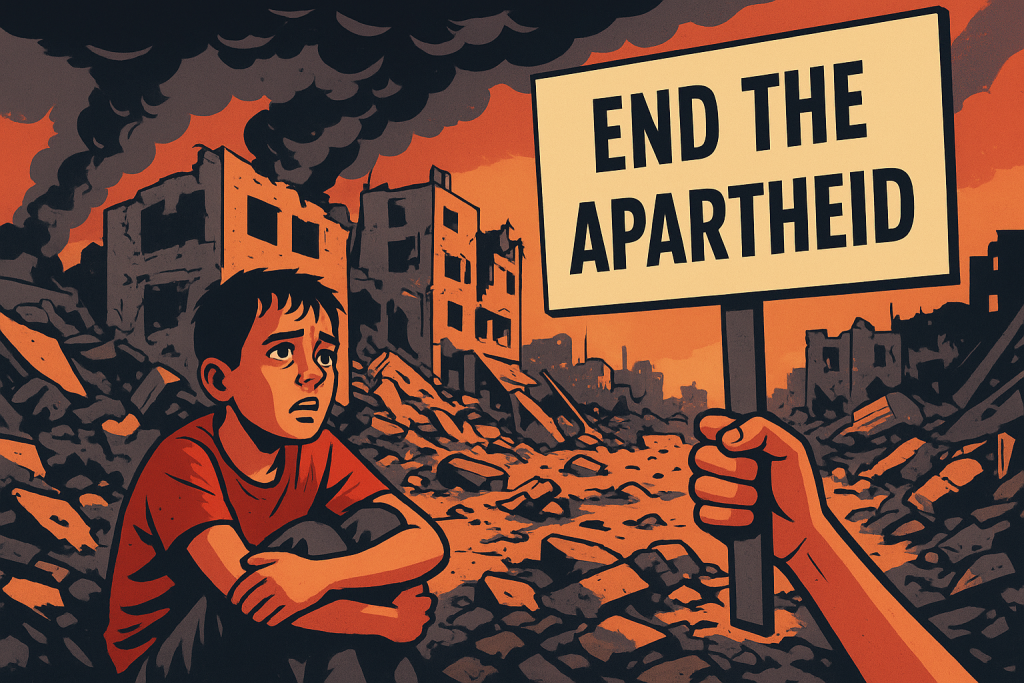
Will the Apartheid End?
Many human rights organizations — including Amnesty International, Human Rights Watch, and Israeli groups like B’Tselem — now classify Israel’s system of rule as apartheid. Ending it will require:
• International pressure
Just as global pressure helped dismantle South African apartheid, coordinated sanctions, arms embargoes, and diplomatic isolation can change political behavior.
• Legal accountability
International courts must be allowed to investigate and prosecute serious violations, without political interference.
• A shift in public opinion
Around the world, millions are already protesting, demanding their governments stop enabling mass suffering.
• Regional and global leadership
Nations in the Global South are increasingly speaking out, challenging the double standards that prevent justice for Palestinians.
Who Can Stop the Killing?
Ultimately, several actors hold real power:
1. The International Community
States can impose consequences — sanctions, embargoes, recognition of Palestinian rights — if they choose political courage over selective morality.
2. International Legal Institutions
The International Criminal Court (ICC) and the International Court of Justice (ICJ) have already taken significant steps. Their rulings must be respected and enforced.
3. Israeli Society
Peace will be impossible without voices within Israel challenging policies that perpetuate occupation, inequality, and endless conflict.
4. Global Civil Society
Movements around the world — activists, journalists, humanitarian workers — are holding governments accountable when leaders fail to do so.
A Future Without Endless War
The killing will not stop by accident. It will stop only when enough pressure forces a political transformation — one that recognizes Palestinians as equal human beings entitled to dignity, safety, and self-determination.
History shows that systems built on inequality cannot endure forever. Apartheid ended in South Africa. Colonialism collapsed across the world. Walls come down. Regimes change. Justice, however delayed, can arrive — but not without the people who demand it.
The question is no longer whether the world knows what is happening in Gaza.
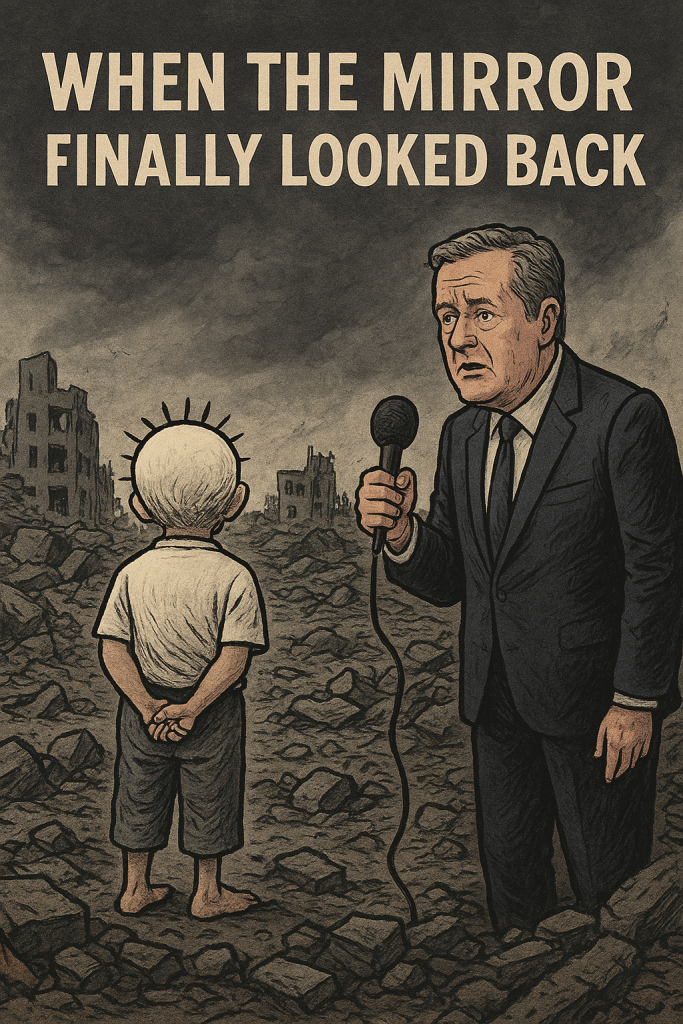
*[Scene: A grey, bombed-out landscape. Rubble and silence. Handala stands with his back turned, barefoot as always, facing the ruins of Gaza. Piers Morgan appears, looking weary, holding a microphone that no longer broadcasts lies but trembles with truth.]
Piers Morgan:
You’re… Handala, aren’t you? The boy from Naji al-Ali’s drawings. The symbol of resistance.
Handala (without turning):
You needed fifteen months of genocide to recognize me, Mr. Morgan. I have been standing here since 1948. The question is — where have you been?
Piers:
I was… reporting. Asking questions. Seeking balance.
Handala:
Balance? Between the boot and the neck? Between the bomb and the body? You called it “proportional.”
Piers (defensive):
I believed Israel had the right to defend itself.
Handala:
And the children buried beneath these stones — did they not have that right too? You said their deaths were collateral. Tell me, Mr. Morgan — when the truth bleeds, do your ratings rise or your conscience?
Piers (pauses):
I admit I was wrong. I see now what Israel is doing — the starvation, the destruction, the… genocide and apartheid.
Handala:
Genocide does not begin when you name it. It begins when you look away. When you interrupt the truth and give comfort to lies.
Piers:
You’re right. But it’s never too late to be on the right side of history.
Handala:
History doesn’t need spectators who arrive after the funeral. It needs witnesses who refuse to be silent at the first scream.
Piers:
Then what should I do now? Speak louder? Condemn more clearly?
Handala (turns slightly, for the first time — his face unseen):
Don’t speak louder. Speak truer. The world has enough noise. What it lacks is courage.
Piers (softly):
Do you forgive me?
Handala:
Forgiveness is not mine to give. It belongs to those you refused to hear when they were alive.
Piers (looks down):
And if I stand with them now?
Handala:
Then you must never again confuse neutrality with morality. Remember: silence feeds the illegal and criminal occupier. Doubt feeds denial.
Piers:
You think I can change minds?
Handala:
You changed yours, didn’t you? That’s a start. Just remember — truth delayed is truth denied.
(Handala begins to walk toward the horizon, still facing away. The rubble glows faintly in dawn light.)
Piers (calling out):
Where are you going?
Handala:
To where every child of Gaza goes — toward the sunrise that the world still owes us.
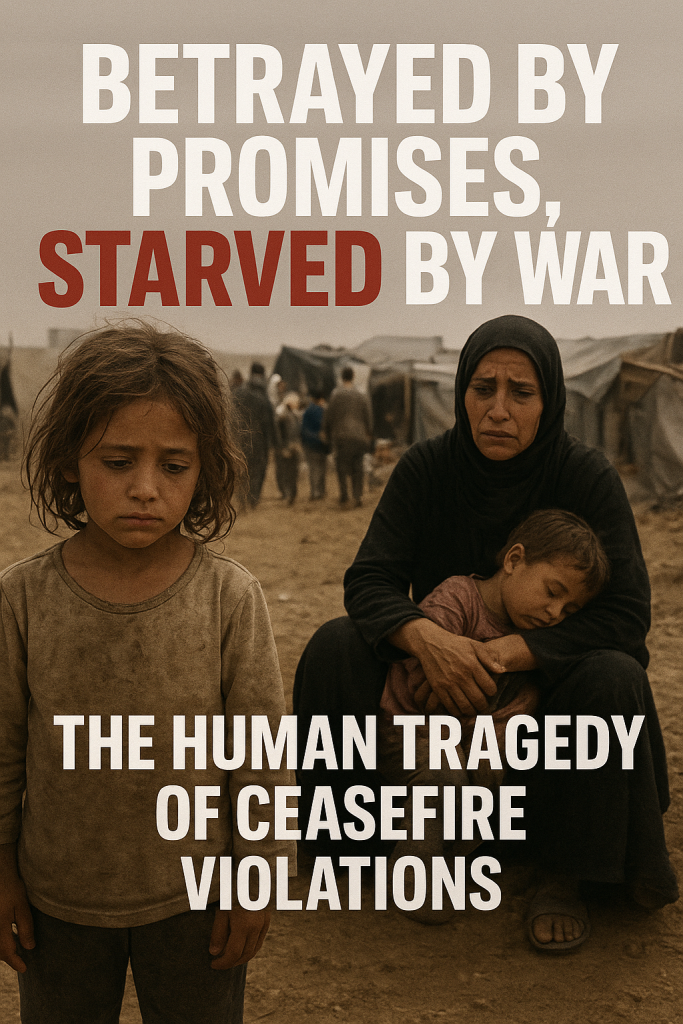
In a genocide where humanity is already hanging by a thread, one side continues to trample on every fragile hope for peace. Ceasefires—a sliver of relief for civilians—are being shattered, and the cost is horrendous: 246 innocent lives brutally extinguished, families ripped apart, and communities left in terror.
Even more horrifying is the deliberate blockade of humanitarian aid. Two million displaced people, starving, sick, and exhausted, remain trapped with no escape. Borders promised to be reopened for relief supplies remain shut, turning the most basic human right—access to food, water, and medical care—into a cruel illusion. Children grow weaker with each passing day, parents watch helplessly as hope dies, and entire communities face the slow agony of neglect.
This is not collateral damage. It is a conscious choice: to violate ceasefires, to ignore international law, to deny the desperate pleas of those who have already lost everything. Every broken promise by the apartheid is a betrayal not just of agreements, but of humanity itself.
The world cannot stay silent. Aid must flow. Lives cannot wait for diplomacy to catch up to morality. Accountability is urgent. Those who exploit ceasefires as mere political tools, while civilians starve and die, must face the full weight of international scrutiny.
For the two million displaced, for the children who go to bed hungry, for the families crushed under the weight of violence and broken promises—this is not a war over politics. This is a genocide over life itself. And humanity demands that it end.