We stand firmly against injustice in all its forms. Nothing can justify the current war crimes committed by Israel in occupied Palestine. Equally, nothing can excuse the continued support offered by other nations to this apartheid regime. If you believe in human rights, dignity, and justice, then we urge you to boycott this rogue state. Silence is complicity, do what’s right.
For decades, the word security has served as a political shield—invoked to rationalise walls, raids, land theft, assassinations, torture, imprisonment, blockades, and discrimination. Yet when the state demanding security is also an occupying power, its claim deserves scrutiny. Can a government that maintains brutal military rule over another people truly present itself as a victim in need of protection?
Occupation is not a defensive act; it is a mm illegal structure of control. International law—most clearly the Fourth Geneva Convention—prohibits the permanent seizure of land and the transfer of an occupier’s population into occupied territory. Still, large-scale settlement construction continues, carving up territory, isolating communities, and tightening the machinery of apartheid.
The daily reality at hundreds checkpoints, where residents queue for hours to pass through metal gates, is not about keeping anyone safe. It is about reminding a population who holds the power. Administrative detention, demolition orders, and collective punishments all flow from the same premise: that one group’s security justifies another’s subjugation.
Beyond the statistics of demolished homes and confiscated land lies a deeper wound—the erosion of dignity. Children learn early that armed soldiers control the rhythm of their days. Parents rebuild what bulldozers destroy, only to see it flattened again. “Security” becomes the occupier’s justification for acts that would never be accepted within its own borders and against its citizens.
Such a system does not create safety. It breeds resentment and despair, ensuring that fear persists on both sides of the wall. No society can live indefinitely with its foot on another’s neck without losing its moral balance.
History’s verdict on systems of domination is consistent. Colonial regimes and apartheid governments once claimed they were defending civilisation or order. None survived unchanged. Power maintained by injustice eventually collapses under its own contradictions, leaving behind a legacy of shame and loss.
When the present conflict is studied in future classrooms, historians will not quote the slogans of security; they will examine the testimonies of those who endured occupation—the families displaced, the children starved and imprisoned without trial, the civilians killed in the name of calm. The question will not be whether the occupier was threatened, but what it became in the pursuit of control.
Real security cannot be built on domination. It rests on justice, equality, and the recognition of shared humanity. Lasting peace will not come from more walls or checkpoints or land theft or genocide or starvation but from a political settlement that ends dispossession and grants every person equal rights under the law.
A state that seeks security while denying another people their freedom is chasing a mirage. True safety will come only when both occupier and occupied are liberated—from fear, from vengeance, and from the cycle of oppression that binds them.
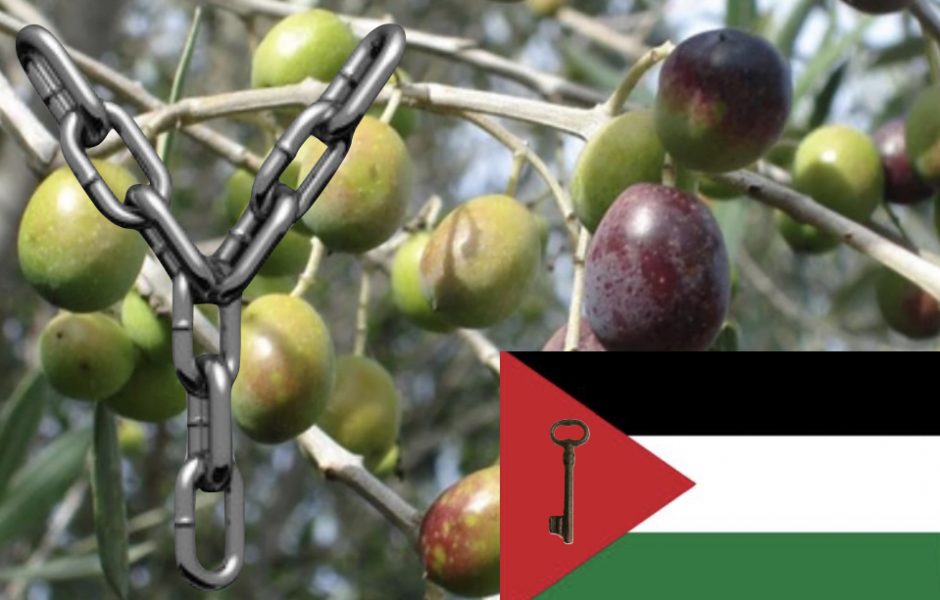
How many storms have passed over your branches, how many seasons of silence have you endured? Your bark bears the story of centuries — carved by wind, scarred by fire, yet still you rise against the sky of Palestine. You stand where the soil remembers every footstep, every prayer whispered into the dust.
When I touch your trunk, it feels like touching the heartbeat of my homeland — steady, patient, eternal. You have seen generations come and go: farmers who sang to you at dawn, children who climbed your limbs with laughter, and mothers who pressed your oil into bread and hope. You have also witnessed exile, the quiet ache of absence, and the longing that lives in every stone of this land.
Even when the fields were taken and the hills grew silent, you refused to die. Each spring you bloom again, small white blossoms trembling in defiance — a soft, living protest written in petals. You remind us that to belong is not a privilege, but a birthright; that roots, once deep, cannot be erased by borders or time.
You are more than a tree — you are Palestine itself: wounded, beautiful, unyielding. In your shadow, I remember who we are — a people who endure, who rebuild, who love their land even in absence.
Palestinians are exposed to sexual assaults that amount to rape by the Israeli occupation forces. The victims of these assaults vary among women, men, and children, and rape incidents are always shrouded in some kind of secrecy. Which makes it difficult to reach specific numbers, with testimonies appearing from time to time, at a time when 40% of Palestinian children have been subjected to sexual assault in Israeli prisons, and it does not seem that the matter is limited to mere “individual cases,” but may extend to being a “systematic” method. With the existence of fatwas “allowing Israeli soldiers to rape Palestinian women during war”! Years after the incident, a Palestinian woman tells the testimony of her rape. “I resisted him, but he was stronger than me. He did what he wanted. He raped me. I kept hitting him and screaming, but no one heard me.”
This is how a Palestinian woman tells the testimony of her rape at the end of October 2017, years after she was raped. The late disclosure of her rape shows the sensitivity of the issue, and the tendency of many not to disclose it or report it officially. This makes it very difficult to obtain specific numbers regarding these cases.
The incident occurred when soldiers from the Israeli occupation police prevented the woman from entering Jerusalem, and took her to a security headquarters, where one of the soldiers harassed her, and his attempts continued for hours without being able to rape her, before another came to rape her after a fight.
Contrary to what many people tend to think, this woman resorted to reporting officially after one of her relatives convinced her to do so, but the Israeli Investigation Unit closed the file more than once “without completing the investigation,” under the pretext that the perpetrator was unknown, while the victim’s lawyer stated that the investigating authorities did not enable him to obtain video recordings from the surveillance cameras located at the police station, nor did it show the victim photos of the police officers who were present during the commission of the crime, to identify the perpetrator.
A look at rape incidents in the archives of the Israeli Military Prosecution.
Since its establishment, the Israeli occupation army has sanctified important values, including: respect for humanity and maintaining the purity of weapons. These values are based on a Jewish heritage that extends back many years.
These words were said by Gadi Eizenkot, Chief of Staff of the Israeli occupation army, in a letter he circulated to recruits in Israel at the end of March 2016, and a response came that was not from an Arab, but from his fellow Israeli, Amir Oren, a senior correspondent and columnist in the Haaretz newspaper. The Israeli army, who was provoked by Eizenkot’s words, especially “the purity of weapons,” considered that his words were a “big mistake,” and pointed to what he described as “a history of corruption and rot that lies behind the legacy of battles.”
Oren devoted an article, dating back to April 3, 2016, in which he refuted Eisenkot’s words, using the archives of the Israeli military prosecution, which included many war crimes that included the liquidation of prisoners and cases of rape, which Israel overlooked, without punishing the perpetrators, as happened with the Palestinian woman. Which was previously talked about.
Oren said: “In most of the operations and crimes, Israel did not release anyone because it simply did not arrest them or try them. Instead of the ‘revolving door’ policy, Israel opened the door through general amnesty laws,” explaining: “When the major wars (1948-1967) ended, feelings of Victory, all those who participated in it were declared heroes, and war crimes were silenced under the slogan “In war we fight, and inside we pardon and forgive.”
Oren cited a number of rape incidents in the files of the Israeli military prosecution, which ended by closing the files without punishing the perpetrators, including rapes that occurred in Acre on the night of May 29, 1948, and another incident in which a Palestinian citizen submitted an invitation in which he said: “Four Israeli soldiers… “They broke into his house, took him out, and raped his wife.” The commander of the city of Ramla ordered an investigation into that incident, but the investigation was also closed.
While another rape crime occurred, in November 1948, at the headquarters of the Israeli 11th Battalion, when four Israeli soldiers met an Arab convoy, which was traveling near the town of Tarshiha, and they stopped two girls, one of whom raped the first, and the rest tried to rape the second, and the soldiers claimed in the investigation “The two girls initially resisted the rape, but then agreed to it and even helped carry out the rape.” This prompted the Public Prosecutor to prosecute the soldiers, but only a few days passed until the general amnesty decision came into effect and the four soldiers were released.
These rape incidents included the rape of young girls who did not exceed the age of 18, including the rape of a 16-year-old girl by soldiers, in front of her parents, in the village of “Iraq Suwaidan,” in November 1948. The military prosecution ordered an investigation into the incident, but the commander of the southern region refused to provide a car for the investigators. The investigation was not conducted in the first place.
Oren narrates another rape incident: “On the day Israel was established, three Israeli military policemen raped a 12-year-old girl in the city of Jaffa. They were tried 10 days after the crime. They were convicted of committing a “disgraceful act” and were sentenced to only three months in prison. But the Chief of Staff ordered that the punishment not be carried out.”
The chief rabbi of the occupation army issued a fatwa permitting the rape of Palestinian women! Israeli soldiers may rape Palestinian and non-Jewish women in the event of war. This is how Eyal Karim, the chief rabbi of the Israeli occupation army, issued a fatwa in a series of exciting fatwas issued by the man, which also permitted the torture of Palestinian detainees to extract confessions, and the killing of injured Palestinians. These fatwas also reinforce what Arwin’s article pointed out about war crimes and rape incidents that have passed. In the end, it went unnoticed, without the perpetrators being punished.
Karim’s statements sparked controversy, and Eisenkot said that they were “incompatible with the values of the Israeli army,” but that did not prevent Karim from retaining his position, after he said in July 2016 that his statements “were limited only to ancient times,” which confirms also, the war crimes committed by the Israeli occupation army in 1948, which Oren mentioned, citing the archives of the Israeli military prosecution.
It seems that officials in Israel are always complaining, at least in the media, about the fact that the Israeli occupation army rapes Palestinian women, which was also evident to a number of Israeli officials, led by Israeli Prime Minister Benjamin Netanyahu, from the Israeli Film Society’s screening of a film called “Libestika” is available in a number of countries around the world, including America and Germany.
What disturbed Netanyahu was the content of the film, which was taken from a true story of two Palestinian girls who were raped in 1994, during the intifada, by a soldier from the Israeli occupation army, to tell of the tragedies they were exposed to, which also included the social “shame” that may befall some Palestinian victims. Therefore, in statements in February 2011, Netanyahu considered showing the film a provocation to him and the Israeli occupation army, demanding that it be stopped.
Testimonies of forced nudity, sexual harassment, and threats of rape. We have several documented and horrific testimonies of Palestinian female prisoners detained in Israeli prisons or freed, all of whom confirm that Israeli interrogators harass the female prisoners and threaten them with rape if they do not make the confessions required of them. This is what Abdel Nasser Farawneh, a researcher specializing in prisoners’ affairs and director of the Statistics Department at the Palestinian Ministry of Prisoners and Ex-Prisoners, says in statements dating back to 2012. In addition to the cases of rape that we reviewed in the report, some Palestinian women freed from captivity narrate the sexual assaults they were subjected to, Forced nudity, sexual harassment, and threats of rape from Israeli occupation soldiers in Israeli prisons.
Among these cases, the liberated prisoner A. H., who said that she was “subjected to two attempted rapes and severe torture, the effects of which remain on her body to this day, despite the passage of many years since her liberation,” while “Sh. A: “The (Israeli) investigator forced me to lift the shawl from my head, played with my hair, and threatened me with rape if I did not confess.” R. spoke. A. about forced nudity and says: “From the moment I was arrested from home, the soldiers conducted a strip search on the ground. Then I was transferred, handcuffed with iron chains, to the Al-Maskobiyya detention center in Jerusalem for investigation, and there I was strip-searched again.”
This is similar to what another prisoner was subjected to. She pointed out that female soldiers harassed her and searched her naked in front of the soldiers. She says: “At the moment of my arrest, there were four female soldiers who brought me in and strip-searched me. One of the soldiers was in the room, and when I refused to take off my clothes in front of him, they beat me severely and stripped me.” I took my clothes off by force, while the soldier looked at me while I was naked.”
She added, crying: “There was a dirty female soldier named Nietzsche who assaulted me and sexually harassed me more than once. She used to come with three female soldiers and take me from my room in the evening under the pretext that they suspected me and wanted to search me. However, she was forcefully sexually assaulting me, and this situation was repeated over and over again, and every time I felt extremely humiliated and cruel, and this situation still continues to this day, whenever I remember it, it makes me feel frustrated and psychologically weak.”
Sexual torture is systematic in the occupation prisons, and 40% of detained children were not spared from it. Israeli authorities engage in systematic sexual torture. Thus concluded an investigation by the Public Committee against Torture in Israel. The investigation was conducted by Daniel Washett, a member of the committee. The investigation came to light in November 2015. It came under the title “Sexual Torture by the Israeli Authorities Against Palestinian Men.” The investigation examined testimonies of sexual assaults in the period from 2012. Until 2015, its executor believed that this investigation was the first of its kind.
The investigation revealed that Palestinian men are also vulnerable to sexual assaults by the occupation forces, not just women. Washit was able to document 60 testimonies about sexual assaults and sexual torture to which Palestinians were subjected, including 77 cases of sexual assault, which varied between verbal sexual harassment (36 cases) and nudity. coercive (35), and physical sexual abuse (6).
In a related context, Palestinian children were also not spared from the sexual assaults carried out by the occupation authorities against Palestinians. In November 2014, the “Palestinian Prisoners Club” group issued a report stating that among the 600 children who were arrested in Jerusalem since June 2014, there were 40% of them were subjected to sexual assault by the occupation forces, which is equivalent to 240 children.
We write to you not as enemies, but as those who believe in your capacity for moral courage and your right to a secure future. We urge you to look with clear eyes at the reality being documented by human rights organizations worldwide, including in Israel: a system of apartheid and oppression over the Palestinian people.
This is not mere political disagreement. It is a structure of laws and military power that ensures domination of one people over another. In the West Bank, two people live under two different legal systems: Israeli settlers enjoy civil rights under Israeli law, while Palestinians live under military law, facing detention without trial, land theft, and home demolitions. This is the definition of apartheid.
Your own leaders have warned you. Former Prime Ministers Ehud Barak and Ehud Olmert, and former Mossad chief Tamir Pardo, have all stated that the ongoing occupation leads to an apartheid reality. To ignore these warnings is to gamble with the soul of your nation. A state cannot be both democratic and permanently rule over another people without rights.
The current path of violent raids, settlement expansion, and collective punishment guarantees only more bloodshed and moral decay. It destroys any chance for lasting peace and security.
We call on you to awaken. Demand your government:
1. End the violent military operations and the siege.
2. Halt and reverse all illegal settlement expansion.
3. Dismantle the system of separation and inequality.
4. Commit to a just peace based on equal rights for all.
The future can be different. It must be built on justice, not force. We appeal to you to choose that path.
Aidoc, a leading medical AI company, is invading radiology departments across the NHS. Its software analyzes medical images, and has access to confidential data across the UK.
The company’s story is controversial. Elad Walach, Aidoc’s co-founder and CEO, served in one of the Israeli Occupation Forces’ elite programs, the Talpiot program; one of Israel’s most controversial, secretive and racially discriminative military-academic programs.
For Palestinians, these technologies mean that daily life is often mediated by digital checkpoints, cameras, and data systems built from the same technical expertise that fuels Israel’s global tech success.
For the global community, it raises a difficult question: Can innovations born in apartheid system of brutal military control be ethically separated from their origins when repurposed for civilian uses, such as medical AI?
Walach led advanced AI and machine-vision projects during his military service. Under his leadership, Aidoc has expanded globally, bringing its technology into hundreds of hospitals.
However, Aidoc’s presence in the NHS raises serious ethical and privacy questions. As a private Israeli based company based in Thai apartheid state , Aidoc processes sensitive medical data from British patients. Patient advocates and experts ask: how is this data managed, and what safeguards ensure it isn’t exposed beyond clinical use? What about its use in the ongoing Israeli genocide in Gaza?
The case of Aidoc highlights a broader debate: the balance between innovation in healthcare and ethical responsibility. AI can save lives and improve efficiency, but transparency, accountability, and strong governance remain critical—especially when patient data crosses borders and involves companies with military-linked leadership in an apartheid state that commits war crimes.
Aidoc’s success underscores the need for public debate about privacy, ethics, war crimes and trust in the rapidly evolving world of healthcare technology.
The fact that a genocidal figure boasts about his reach on social media should alarm everyone. Accountability is long overdue.
Moist Critical / penguinz0 talks about Netanyahu & Israel in his latest video. Calls Netanyahu a genocidal freak, his social media plan brainwashing & refers to Israel paying influencers to "suck their wiener". pic.twitter.com/LNoiRAk3X4
FILE PHOTO: An Elbit Systems Ltd. Hermes 900 unmanned aerial vehicle (UAV) is seen at the company’s drone factory in Rehovot, Israel, June 28, 2018. REUTERS/Orel Cohen
Voice of Palestine, 3/05/24
In the besieged region of Gaza by Israeli occupation, where every day brings new challenges and hardships, there exists a silent but pervasive threat—one that hovers overhead, relentless and unnerving. This threat comes not from the ground, but from the sky in the form of Israeli drones, whose incessant presence has become a haunting reality for the people of Gaza.
For six long months, these drones, often referred to as “Zennana” by Gazans, have dominated the airspace, their unmistakable buzzing sound a constant reminder of the surveillance and potential danger lurking above. While the physical impact of drone strikes is well-documented, the psychological toll of their continuous presence, particularly on children, remains largely unexplored and under-addressed.
Imagine being a child in Gaza, where the sky, instead of offering a sense of freedom and wonder, serves as a constant source of anxiety and fear. From the moment they wake up to the moment they try to sleep, the ominous hum of the Israeli drones fills their ears, a stark reminder of the conflict that surrounds them. This unrelenting exposure to stress and trauma can have profound effects on their mental health and well-being, shaping their perceptions of the world and their place in it.
Studies have shown that exposure to chronic stress and trauma during childhood can have long-lasting effects, leading to increased rates of anxiety, depression, and post-traumatic stress disorder (PTSD). The constant presence of drones not only disrupts daily life but also erodes the sense of safety and security that every child deserves.
Moreover, the psychological impact extends beyond individual experiences to the collective psyche of the community. The pervasive sense of surveillance and vulnerability instills a pervasive feeling of powerlessness and helplessness, amplifying the trauma of living under illegal Israeli occupation and 16 year long siege.
Yet, amidst this despair, there remains a glimmer of hope—a recognition of the resilience and strength of the people of Gaza. Despite the challenges they face, they continue to find ways to cope and support one another, drawing on their sense of community and solidarity to navigate the tumultuous waters of war on Gaza.
As the world bears witness to the ongoing Israeli genocide and suffering in Gaza, it is crucial not to overlook the invisible wounds that linger long after the American bombs have stopped falling. Addressing the psychological toll of drone warfare requires more than just ceasefire agreements; it demands a concerted effort to prioritize the mental health and well-being of the most vulnerable, especially the children who bear the brunt of israeli genocide lasting scars.
In the face of adversity, let us stand in solidarity with the people of Gaza, acknowledging their pain and resilience, and working towards a future where the skies above are no longer filled with the ominous buzz of Israeli drones, but with the promise of peace and freedom for Palestinians.
The eagle, symbolizing power, and the lily, representing beauty, emerged as the predominant emblems across numerous nations, highlighting the widespread influence of the Canaanites.
Displayed above is an image of the Canaanite shekel coin, a currency used in Palestine around 3000 BC. Its weight was standardized at 32 barley grains, with its name derived from the word “shekel,” meaning weight.
Both sides of the coin feature ancient Canaanite symbols. The eagle, a significant Canaanite emblem, signifies power, the sun, the link between earth and sky, and the quest for immortality. This reflects the ancient Palestinian admiration for the heavens, evidenced by the prevalence of golden eagles during that period, unlike the present.
The reverence for eagles became so fervent that King Herod installed golden eagle statues throughout Palestine, resorting to executing 40 individuals for defacing just one of these statues.
Conversely, the other side of the coin displays the emblem of the lily flower, another ancient Canaanite symbol representing beauty, purity, and chastity. It reflects the ancient Palestinians’ affection for their land, evident in the widespread presence of these flowers in the valleys and natural landscapes of Palestine then and now.
The world saw the footage from Israeli detention camps — torture, humiliation, and sexual abuse of Palestinian hostages. These aren’t “isolated incidents”; they’re part of a fascist system that strips Palestinians of humanity and silences those who expose the truth meanwhile worshipping the perpetrators.
Welcome to Israeli apartheid-the only ‘democracy’ in the Middle East where sexual abuse is not only permitted but worshipped too.
Facts cannot be hidden nor considered as hatred.
Neutrality in the face of injustice is complicity.
Accountability isn’t optional — it’s the minimum we owe every victim.
The Israeli settlement in the occupied Palestinian territories is a primary strategy pursued by the Israeli entity to achieve its goals, with the fundamental objective being to solidify Israel’s foothold in Palestine. Abandoning this strategy is considered an existential threat to the Zionist entity, which regards the land of Palestine as the historical land of Israel from which Jews were exiled and must return to resume their history. This concept of settlement, embraced by the Zionist movement since the mid-18th century, evolved significantly after World War I and was notably propelled forward by the Balfour Declaration on November 2, 1917. This declaration promised the establishment of a “national home for the Jewish people in Palestine” while ensuring that this would not prejudice the civil and religious rights of non-Jewish communities in Palestine, marking the first clear signal towards the establishment of a Jewish state in Palestine.
Furthermore, settlement carries a religious Torah-based dimension for Jews and has been politically leveraged to establish a Jewish state, rooted in the idea of “a land without a people for a people without a land.” Jabotinsky worked to instill settlement ideals in Jewish generations, asserting that “Zionism is the settlement, and it lives or dies by the issue of force.” These ideas were later adopted by Israeli leaders such as Menachem Begin, Yitzhak Shamir, and Ariel Sharon, and have deeply influenced Zionist political, security, and media discourse, becoming a cornerstone of all Zionist parties’ programs.
Over time, both right-wing and left-wing Israeli governments have pursued land confiscation and settlement construction under the guise of security, despite international condemnations. These policies continued even through peace initiatives like the Oslo Accords and the 2003 Roadmap for Peace, which failed to halt Israeli settlement activities or stubbornness, including the construction of bypass roads and the annexation of settlements to Israel, facilitating Jewish immigration from around the world to Palestinian areas in a process of replacement that underscores policies of ethnic cleansing.
Settlers have formed demographic blocs that infiltrate Palestinian communities, strategically situated atop significant groundwater reserves in the West Bank and consuming these waters at the expense of Palestinians. These settlement outposts have transformed into fortified compounds, becoming sources of terrorism and attacks against Palestinian civilians, posing a constant threat to the security and property of Palestinian citizens.
Israeli settlements refer to communities established by Israel in territories it occupied after the 1967 Six-Day War, including the West Bank, East Jerusalem, and the Golan Heights. These settlements range from small villages to large towns and are inhabited by Israeli citizens. The international community, including the United Nations, generally considers these settlements to be illegal under international law, a stance that Israel disputes.
The history of Israeli settlement activity dates to the immediate aftermath of the 1967 war, when Israel captured the West Bank, Gaza Strip, East Jerusalem, and the Golan Heights. The initial settlements were established for a variety of reasons, including strategic military concerns, religious and historical claims to the land, and the Israeli government’s policy decisions. Over the decades, the settlement enterprise has grown significantly, with a profound impact on the Israeli-Palestinian conflict and the lives of people in the region.
The establishment and expansion of settlements have been a contentious issue in peace negotiations and have contributed to the complexity of achieving a two-state solution. The settlements are seen by many Palestinians and international actors as an obstacle to peace, as they involve the appropriation of land and resources that could form part of a future Palestinian state.
All successive Israeli governments have adopted a policy of building and expanding settlements in the West Bank, offering incentives and facilitations to encourage Israeli migration there. From having no settlements in 1967, the beginning of 2023 saw around 176 settlements and 186 outposts in the West Bank, housing 726,427 settlers.
Israeli settlements constituted 42% of the West Bank’s area, with 68% of Area C—encompassing 87% of the West Bank’s natural resources, 90% of its forests, and 49% of its roads—controlled for the benefit of the settlements.
These settlement policies have entrenched the fragmentation of the West Bank, confining Palestinian citizens to isolated and discontinuous areas, fragmenting local markets and communities, obstructing economic and social development, violating Palestinian human rights, and eliminating the possibility of establishing a Palestinian state in the West Bank.
The increase in settlement activities in the West Bank represents a serious and unnatural escalation in the Zionist settlement actions, particularly in the Jerusalem area which has been the primary focus of settlers and a systematic policy aimed at Judaizing Jerusalem.
Many Israeli entities, including media outlets that reveal numerous aspects of the internal Israeli societal turmoil, acknowledge that Israeli courts and the government have directly facilitated settlement activities. Anyone observing the policies of successive Israeli governments can see a harmony between settlers and state political apparatuses.
The goals Israel seeks to achieve through settlement activities vary from one area to another and change over time, influencing the selection, number, type, and nature of the settlers in these settlements. However, this diversity in objectives should not obscure the reality of the harmony and integration between the purposes of the settlements, as a single settlement can serve military, political, and economic purposes simultaneously.
There are several serious dimensions to Zionist settlement projects, among which the military aspect is crucial. Settlement projects are generally linked to Israeli military strategy, making security one of the most decisive factors in settlement policy. These settlements form a security barrier for the Israeli entity and are self-sufficient, built on military bases atop mountains and at strategic road intersections.
On the other hand, there’s the ideological dimension, based on religious ideological considerations that aim to link settlement activities with prevailing ideological origins in Israel, such as claims to the lands of Solomon and David and the assertion of the Land of Israel as the promised land. These religious beliefs are deeply ingrained in Zionist settlement thought and represent one of the most significant motivations for settlement activities, especially among religious Jews.
The political dimension of settlement is arguably the supreme goal that Israeli authorities strive to achieve, especially in terms of solidifying Israel’s political status and expanding its geographical footprint by legitimizing the settlements.
Another dimension of the settlements is economic, where settlement activities aim to achieve a set of economic goals that Israel seeks through agricultural activity, control over water resources, and the creation of large settlement cities. The goal is to attract as many settlers as possible to expand Israel’s demographic distribution and establish industrial centers, like factories for tobacco, juices, and plastics, enhancing the Israeli economy.
The final dimension of the settlements is demographic, aiming to achieve a series of demographic changes in the occupied territories by planting the highest possible number of Jewish density in Palestinian lands. This includes creating integrated Jewish communities connected to Israeli society internally and turning Palestinians into a marginalized and besieged minority.
Therefore, settlements are not a tactical choice in Israeli actions but a strategic one aimed at undermining the Palestinian option of establishing a state based on the borders of June 4, 1967. Statistics indicate that over half a million settlers in the Palestinian territories and hundreds of settlements in the West Bank will make Palestinians live in cantons and enclosed boxes surrounded by settlements, impeding any possibility of a contiguous and viable Palestinian state.
The rapid expansion and assimilation into Palestinian territories pose a direct and formidable challenge on the ground for the coming years, making it increasingly difficult for Israel to be asked to abandon settlements or to relocate or repatriate millions of settlers to their homeland. This expansion is a manifest reality that asserts itself forcefully in Palestinian territories.
In his critique, former Israeli Knesset member Yehoshua Ben-Ari, writing in the Israeli newspaper Yedioth Ahronoth on January 14, 2012, stated, “The truth is there is no Zionism without settlement, and no Jewish state without the eviction of Arabs and the confiscation and fencing of their lands.” This statement encapsulates the practical manifestation of Zionist ideology on the ground, which is based on the appropriation of Palestinian land by any means necessary, including religious and historical justifications, and the assertion of the notion “a land without a people for a people without a land,” with the ultimate goal of establishing an exclusive Zionist state.
It is clear, beyond a doubt, that hundreds of settlements established since the 1967 occupation have transformed some of these settlements into major cities and communities for Jewish settlers, while others are in the process of development. Many political analysts question the feasibility of establishing a Palestinian state amidst these settlements. Political analyst and researcher Mohammed Al-Khatib mentioned in an interview that settlements are a tangible reality and it is impossible to conceive an independent Palestinian state with the existence of hundreds of settlements and settlement outposts. If a Palestinian state were to emerge, it would be a fragmented and weak state, comprised of small disconnected enclaves and cities in name only.
Despite numerous international resolutions declaring the illegality of the settlements and recognizing them as an obstacle to peace and the resolution of the conflict, there is an implicit acknowledgment by the U.S. administration of its limited power against the settlement project initiated by Israel. Former President Jimmy Carter, one of the most outspoken critics of the settlement phenomenon, has been quoted in The Washington Post expressing his opposition to settlement activities, highlighting the challenge they pose to peace efforts and the two-state solution.
In this context, former U.S. President Jimmy Carter, in his March 2010 statements, expressed strong opposition to Israel in international resolutions and called for the dismantlement of settlements, stating that such formulations were “unrealistic and impractical.”
Joseph Weitz, the head of settlement in the Jewish Agency, stated in the newspaper Davar on September 26, 1967, that he and other Zionist leaders had concluded that there is no room for both the Arab and Jewish peoples in this country. Achieving Zionist goals requires the depopulation of Palestine, or a part of it, from its Arab inhabitants, suggesting that Arabs should be transferred to neighboring countries. After completing this population transfer, Palestine could then accommodate millions of Jews.
In light of discussions on the final geography of the occupied territories in 1967, Dutch geographer Ben de Jong predicted that those expecting the map of Jerusalem presented at the final status negotiations to match its post-1967 status would be completely surprised. The map is likely to extend from Beit Ummar just outside Hebron in the north to Modi’in in the west and a few kilometers outside Jericho in the east.
This vast area, considered by Israel as part of Greater Jerusalem, covers approximately 1250 square kilometers, three-quarters of which lie within the West Bank. Thus, the current expanded form of Jerusalem, slightly less than the future vision outlined by De Jong, represents about a quarter of the West Bank territories.
This plan of Israel is not only a geographical assault but also a fierce attack on culture, religion, and history. It represents a bold ambition in rejecting diversity, coexistence, and the concept of a people without land, aiming to dominate culture and history and severing the connections of Palestinian territories in the West Bank, East, and West Jerusalem as part of a systematic policy.
Settlement construction processes are undertaken by contractors from the private sector based on projects proposed by the Ministry of Housing in public tenders. The construction is also based on principles issued by the Minister of Housing or the Prime Minister himself, and these projects are approved by the official Israeli Project Approval Committee. The Israeli government supports these with all its capabilities by establishing utilities and providing all means of life, including water and electricity projects. On multiple occasions, senior Israeli officials have defended the settlers and settlement policy, stating that the Israeli government will mobilize all its resources and energy to ensure not a single settler is left without water or electricity.
Israel justifies settlement practices in the occupied territories and Jerusalem as necessary for maintaining security and order in the areas under its control. It relies on the laws and regulations of military occupation, allowing occupying forces to undertake such actions in the occupied territories if necessary for military reasons and security requirements. Despite Western approaches and contradictory claims, Israel insists that the Israeli settlements spread across the occupied Palestinian territories are the result of individual and collective volunteer efforts, distancing the state’s direct involvement.
Regardless of Israeli narratives regarding settlement activities, whether security, political, or expansionist claims, the reality on the ground, as evidenced in research, studies, and books, shows that the settlement project is a strategic, systematic initiative continuously supported by the Israeli government. The numbers indicate an escalating trend of settlements that is expected to grow significantly in the coming years. These settlements will intertwine with Palestinian villages and cities, and surrounding rural areas, leaving the Palestinian leadership with limited means to counteract this settlement expansion and aggressive encroachment