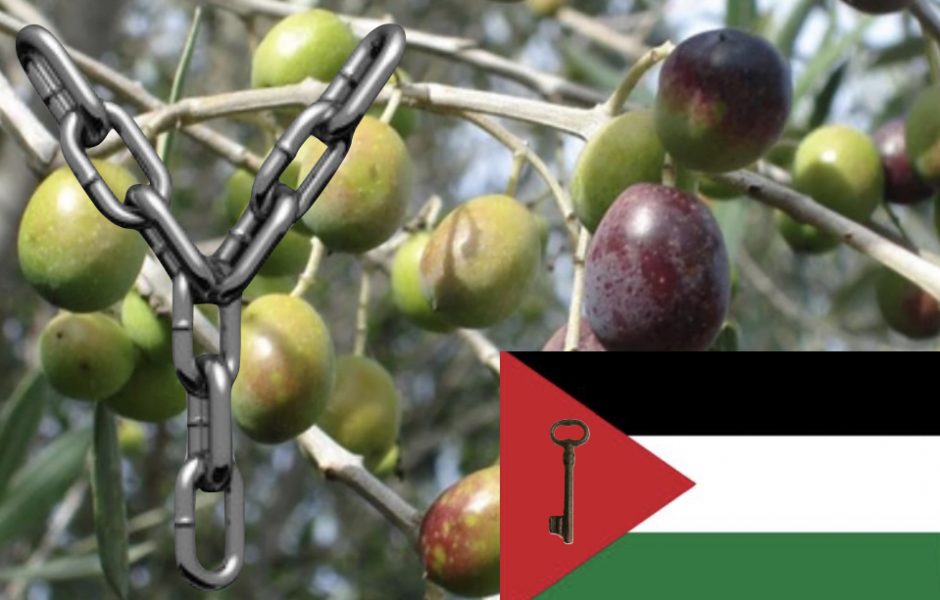
“Together We Will Dismantle the Apartheid System“

Use slideshow to see more

Posted in Admin, Justice, Media, Palestinian history | Tagged | Comments Off on “Together We Will Dismantle the Apartheid System“

As Long As You Are Not Black, Israel’s Apartheid is Your Homeland

Astromystic, 22/03/25

Israel’s reputation as a racist and exclusionary state is growing due to its mistreatment of Palestinians and discrimination against minority Jews. This racism extends beyond Palestinians to also include Jews from ethnic minority backgrounds. Despite being considered above Palestinians, these minority Jews are still treated as inferior compared to non-black Jews.

Bringing Black Ethiopian Jews

Ethiopian Jews have faced significant challenges in Israel, including discrimination in housing, employment, and education. The covert operations that brought Ethiopian Jews to Israel included Operation Moses (1984), Operation Joshua (1985), and Operation Solomon (1991). These operations involved the transportation of thousands of Ethiopian Jews from Sudan to Israel in an effort to rescue them from political turmoil and bring them to their alleged homeland. The airlifts were part of a coordinated effort involving the Israeli Army, the CIA, and other entities to facilitate the immigration of Ethiopian Jews to Israel. These operations were conducted under challenging circumstances and had significant implications for the Ethiopian Jewish community. Despite being brought to Israel, Ethiopian Jews have struggled to integrate into Israeli society.

Racism in Housing

One of the most significant challenges faced by Ethiopian Jews in Israel is discrimination in housing. Some areas have policies of not selling apartments to non-white Jews, and there have been reports of graves in Jewish cemeteries being separated according to the color of the corpses. This discrimination has contributed to the marginalization of Ethiopian Jews in Israeli society.

Racism in employment

Ethiopian Jews have also faced discrimination in employment. A recent study revealed that 53% of employers preferred not to hire Ethiopians, and 70% of employers tended not to promote them. Out of 4,500 Ethiopian Jews who graduated with degrees, only 15% managed to find work in their field. There is also an unfair testing system used by the Civil Service, with culturally biased tests automatically disqualifying Ethiopian-born candidates from qualifying for certain government positions.

Racism in Education

In education, Ethiopian Jews have been placed in lower-level classes and have been subjected to racist treatment by teachers and other students. These discriminatory practices have contributed to the marginalization of Ethiopian Jews in Israeli society. Ethiopian students in Israel face discrimination throughout the education system, with racism from teachers and institutions hindering their academic progress. Some are segregated from their peers, subjected to separate classes, different recess hours, and even given cab fare to avoid interaction. Racial slurs are common, and poverty further exacerbates their educational disadvantages, as many cannot afford nursery or pre-school programs, leading to higher dropout rates for early entry into the workforce.

Racism in Healthcare

The mistreatment of Ethiopian Jews in the healthcare system is another significant issue. In 1996, it was discovered that blood donated by Ethiopian Jews was being thrown out by hospitals due to irrational fears that their blood would be contaminated with HIV. This act of deception and racial profiling marked a new low point in the relationship between Ethiopian Jews and Israelis. Over 200 people protested in November 2006 outside government offices in Israel against the Health Ministry’s decision to discard donated Ethiopian blood. Gadi Yabarken, one of the organizers, questioned the treatment of fellow Jews and their disregard for the significance of blood according to the Torah.

In 2010, a controversial health issue emerged in Israel, where female Ethiopian immigrants were reportedly being given a long-term birth control drug. Women’s groups accused the policy of being racially motivated in an attempt to decrease the number of black babies. Shockingly, 57% of those prescribed the drug were Ethiopian women, despite their community representing only 2% of the total Israeli population.

Racism in Army 

Ethiopian Jews face widespread discrimination in the workforce, with high rates of rejection for job applications and limited promotion opportunities. Many Ethiopian graduates struggle to find work in their field and are often relegated to temporary or unrelated positions. Racist biases during job interviews and a culturally biased testing system further impede their career prospects. In the Israeli Army, Ethiopian soldiers endure degrading treatment and frequent humiliation, leading to alarming suicide rates among this community. Instances of explicit racism, such as being denied access to army facilities, contribute to the distressing conditions experienced by Ethiopian soldiers.

Black Ethiopian as a boost of Illegal Settlements

Ethiopian immigrants have also been used to bolster the population of illegal settlements in the West Bank. This practice has been criticized by human rights organizations, as it contributes to the displacement of Palestinians and violates international law.

Posted in News from the apartheid | Tagged | Comments Off on As Long As You Are Not Black, Israel’s Apartheid is Your Homeland

Israel’s Constant Violation of International Law

Voice of Palestine, 23/03/24

In the so called international relations, the concept of sovereignty and adherence to international law are foundational principles that guide the behavior of nations. However, for decades, Israel has faced accusations of operating with impunity and being perceived as above international law, particularly in its treatment of the Palestinian people and its actions in the occupied territories.

One of the most glaring examples of Israel’s exceptionalism is its continued illegal occupation of Palestine, in defiance of numerous United Nations resolutions and international law. Since the Six-Day War in 1967, Israel has maintained control over the West Bank, East Jerusalem, and the Gaza Strip, despite the unequivocal condemnation of the international community and the legal consensus that these territories are occupied under international law.

The construction and expansion of illegal Israeli settlements in the occupied territories represent another clear violation of international law. The Fourth Geneva Convention prohibits the transfer of civilian populations into occupied territories, yet Israel has persistently defied this prohibition, leading to the establishment of numerous illegal settlements that have displaced Palestinian communities and encroached upon their land.

Furthermore, Israel’s brutal military actions in the occupied territories, including torture, targeted killings, collective punishment, sexual assaults and excessive use of force against Palestinian civilians are obvious examples of breaking international humanitarian law. The disproportionate use of force during military operations, such as the 2014 Gaza war, which killed over 2,000 Palestinians, including many civilians, has been condemned by human rights organizations and the international community. 

The current Israeli crimes since 7/10/24 are not only remained unpunished but assisted by the western governments despite  the ongoing blockade of Gaza, inhumane starvation of citizens and televised genocide where around 32000 people were killed including  25000 children and women and more than 70000 Palestinians were injured. This has been happening alongside total destruction of almost entire infrastructure of Gaza. One can’t  imagine what would happen if a single hospital or school or university  in Israel or any western country was targeted and destroyed by a military group.  On the other hand, these war crimes in Gaza are said to have been taking place  on daily basis and have become ‘normalised’ and without any accountability from the perpetrators or their supporters despite the ICJ ruling in this regard.

The issue of accountability is another area where Israel has been accused of evading international scrutiny and accountability for its actions. Despite numerous allegations of war crimes and human rights abuses, Israel has faced no consequences for its brutal actions in the occupied territories. The United States, Israel’s staunch ally, has consistently wielded its veto power in the United Nations Security Council to shield Israel from condemnation and accountability, further reinforcing the reality of Israeli exceptionalism.

Moreover, Israel’s treatment of Palestinian prisoners, detainees and hostages, including children, has been criticized by human rights organizations and legal experts for violating all international norms and standards. Reports of torture, ill-treatment, sexual assaults, rapes, and arbitrary detention of innocent Palestinians in Israeli prisons have proved Israel’s non-compliance with international human rights law and the Geneva Conventions.

In response to allegations of exceptionalism and impunity, Israel has often cited ‘security concerns’ and the need to defend itself against ‘terrorism’ as justification for its actions. However, critics argue that Israel’s security imperatives do not absolve it from its obligations under international law, and that its policies and practices in the occupied territories constitute apartheid regime with systematic violations of the rights of the Palestinian people whose security has been violated by IOF and the ongoing attacks on Palestinian citizens by the terrorist Israeli settlers.

As the debate over Israel’s exceptionalism continues, it is imperative for the international community to uphold the principles of accountability, justice, and the rule of law. Israel must be sanctioned and held accountable for its actions in the occupied territories, and efforts to address impunity and promote respect for international law must be pursued with urgency and determination. Only through adherence to these principles can a just and lasting resolution to the longstanding Israeli occupation of Palestine be achieved, and the rights, freedom and dignity of Palestinian people be guaranteed and safeguarded as soon as possible. 

Posted in Justice | Tagged , , | Comments Off on Israel’s Constant Violation of International Law

Palestinian Hummus: A Culinary Symbol of Identity and Heritage

Phalapoem editor, 20/03/25

Hummus, the creamy blend of chickpeas, tahini, lemon, and garlic, is more than just a dish—it is a cultural emblem deeply rooted in Palestinian identity. For generations, Palestinian families have perfected their own versions of this beloved dish, passing down recipes that reflect not only culinary expertise but also history, resilience, and the rich agricultural heritage of Palestine. In a world where food is increasingly politicized, hummus stands as a symbol of Palestinian existence, resistance, and the deep connection to the land.

The Palestinian Origins of Hummus

While hummus is enjoyed across the Middle East, its Palestinian roots are undeniable. Palestine’s fertile lands have long been a source of high-quality chickpeas, olive oil, and sesame seeds, the key ingredients in authentic hummus. The traditional Palestinian method of making hummus involves careful selection of local ingredients, creating a dish that is not only flavorful but also deeply tied to the land.

Palestinians have prepared hummus for centuries, serving it in homes, markets, and communal gatherings. Unlike mass-produced versions found in supermarkets today, Palestinian hummus is typically made fresh, with a smooth yet slightly rustic texture, and drizzled generously with extra virgin olive oil from the ancient olive groves of Palestine.

How to Make Authentic Palestinian Hummus

Ingredients:

1 ½ cups dried chickpeas (or 1 can of cooked chickpeas)

½ teaspoon baking soda (for soaking and cooking)

½ cup tahini (sesame paste)

Juice of 2 lemons (freshly squeezed)

2 cloves garlic (crushed)

½ teaspoon cumin (optional, for added depth)

1 teaspoon salt

¼ cup extra virgin olive oil (preferably Palestinian olive oil)

Cold water (as needed for smoothness)

Paprika, chopped parsley, and whole chickpeas for garnish

Instructions:

1. Soak and Cook the Chickpeas

• If using dried chickpeas, rinse them and soak them overnight in water with ½ teaspoon baking soda.

• The next day, drain and rinse, then place them in a pot with fresh water and another ½ teaspoon baking soda. Boil for about 1-2 hours, or until they are soft and easily mashed. Remove the skins for extra smooth hummus.

2. Blend the Hummus

• In a food processor, blend the chickpeas, garlic, lemon juice, salt, and cumin until smooth.

• Add the tahini and continue blending. Gradually add cold water (1–2 tablespoons at a time) until the mixture is creamy and light.

3. Serve with Love

• Transfer to a plate or bowl, using a spoon to create swirls on the surface.

• Drizzle generously with Palestinian olive oil, sprinkle with paprika and chopped parsley, and top with a few whole chickpeas.

• Serve with warm pita bread, fresh vegetables, or alongside other Palestinian dishes.

Hummus as a Symbol of Palestinian Identity

Hummus is more than just a dish—it represents Palestinian history, culture, and resilience. Each ingredient tells a story:

Chickpeas are one of the oldest cultivated crops in Palestine, grown in the region for thousands of years.

Olive oil comes from trees that are centuries old, standing as witnesses to Palestinian heritage and survival.

Tahini is made from sesame seeds, which have been an essential part of Palestinian agriculture for generations.

In the face of ongoing illegal Israeli occupation of Palestine,  genocide, ethnic cleansing  and cultural appropriation, hummus remains a symbol of Palestinian identity. The act of making hummus, sharing it with family, and preserving its authentic preparation methods is a quiet yet powerful form of resistance—a declaration that Palestinian culture is alive and unyielding.

Palestinian hummus is not just a dish; it is a story of tradition, land, and perseverance. Every bowl carries the warmth of Palestinian hospitality, the richness of its history, and the resilience of its people. As Palestinians continue to fight for their rights and recognition, their cuisine, especially hummus, remains a testament to their deep-rooted connection to their homeland. By making and sharing Palestinian hummus, we celebrate a culture that refuses to be erased—one plate at a time.

Posted in Palestinian art & culture, Palestinian cuisine | Tagged | Comments Off on Palestinian Hummus: A Culinary Symbol of Identity and Heritage

Collective Punishment

Posted in Gaza, Videos | Tagged | Comments Off on Collective Punishment

QATAR REPRESENTATIVE MADE THE FOLLOWING ARGUMENT TO THE ICJ ABOUT ISRAELI CRIMES

We believe that establishing international peace and justice is only possible through international law. We reject double standards and international law must apply to everyone. The credibility of international law depends on the court’s decision and opinion.

Israel is doing confirms that the situation in Palestine is the greatest threat to international security.The court must consider the repercussions of Israel’s practices. The Israeli occupation must stop. Israel’s illegal practices are not a coincidence. The court has jurisdiction and there is no reason to refuse to present its opinion.

Israel has obstructed all peaceful solutions and continues to occupy Palestinian Territories. The Israeli occupation is illegal. Israel is pursuing an apartheid policy with regard to its settlement project. Israel’s practices are a flagrant violation of international humanitarian law.

The basis of the Israeli project is settlement and the imposition of settlers on the occupied territories. The war in Gaza was exploited to cover settlement activities in Jerusalem and the West Bank

The situation in Gaza is related to the work of the court. The court’s powers are consistent with the situation in Gaza even before October 7. The situation in the West Bank is no less bad than the situation in Gaza. Israel divides the Palestinians, isolates them, and hinders their movements and daily activities

Israel has been isolating the residents of Gaza from the world since 2007. Israel imposed an inspection regime to which thousands of Palestinians are subjected daily. Israel imposes an unprecedented siege on all residents of the West Bank

Settlers, with the support of the state, practice violence against the Palestinians. The court cannot ignore the worsening situation in the Gaza Strip. Israel targets Palestinians in the West Bank with planes and missiles. Israel’s use of violence in the West Bank has expanded since October 7. Israel is pursuing everyone who calls for its accountability, including journalists.The Israeli occupation is illegal and illegitimate

Israel has violated many basic laws and principles. Israel violates the Palestinians’ right to self-determination and pursues a policy of apartheid. The Israeli occupation is illegal because it is based on the use of force. The Israeli occupation is illegal because the annexation of lands by force violates international treaties. We support all arguments that confirm that the Israeli occupation is illegal

It is the court’s duty to take into account all opinions that consider the Israeli occupation illegal. The Israeli occupation is illegal and based on apartheid. Ending the apartheid regime requires creating a situation that gives the Palestinians their rights

Posted in Uncategorized | Tagged | Comments Off on QATAR REPRESENTATIVE MADE THE FOLLOWING ARGUMENT TO THE ICJ ABOUT ISRAELI CRIMES

USA Sugar Daddy

Posted in Media, Songs, USA, Videos | Comments Off on USA Sugar Daddy

Britain challenges ICC’s jurisdiction over Israel, delaying arrest warrant decision

Phalapoem editor and others , May 20, 2024.

The International Court of Justice has allowed the United Kingdom to file an amicus brief challenging the court’s jurisdiction over Israeli nationals in the investigation by The Hague tribunal into alleged Israeli war crimes and crimes against humanity.

The court’s Pre Trial Chamber I decided on Thursday to give the UK until July 12 to submit its brief, meaning that the decision-making process on whether or not to issue arrest warrants against Prime Minister Benjamin Netanyahu and Defense Minister Yoav Gallant will be suspended until a decision can be made on the UK’s challenge.

According to court documents published on Thursday, the UK made its request on June 10, where it cited a decision by the same chamber from 2021 when it ruled that, despite the State of Palestine not being a sovereign state the ICC did have jurisdiction over any alleged violations of the Rome Statute, the ICC’s foundational charter, in the West Bank, East Jerusalem, and Gaza.Skip Ad

The UK’s argument is that the Palestinian authorities cannot have jurisdiction over Israeli nationals under the terms of the Oslo Accords, and so it cannot transfer that jurisdiction over to the ICC to prosecute Israelis.

International Criminal Court Prosecutor Karim Khan shakes hands with Venezuelan dictator Nicolas Maduro during a visit of Khans to Caracas from April 22 to 24, 2024. (Courtesy: International Criminal Court)

The court said that other member states of the ICC could file similar briefs if they so wished by the July 12 deadline.

Dr. Tal Mimran, a lecturer in law and technology at the Hebrew University of Jerusalem and a program director at the Tachlith Institute, said he did not expect the decision to delay the ICC’s decision-making process on the arrest warrants for Netanyahu and Gallant for very long.

Anne Herzberg, a legal adviser to NGO Monitor, said however that the move was however significant since it would force the Pre Trial Chamber to deal with the issue.

She also noted that the ICC had sought to keep the filing secret but that it acceded to the UK’s request to make the amicus brief public.

Herzberg said that in February 2021, the Pre Trial Chamber had allowed the Prosecutor to move forward with an investigation of Israel but that it had “ignored that the Oslo Accords fully barred the Palestinians from delegating criminal jurisdiction over Israelis to the ICC.”

Continued Herzberg “The UK filing, which the ICC tried to keep secret, forces the Pre Trial Chamber  to address this issue, which if the Court actually applies the law, will require the rejection of the Prosecutor’s request for warrants against Netanyahu and Gallant.”

She said she hoped that now the hearing is public, “additional countries of conscience will step in and demand the Court end the Prosecutor’s egregious jurisdictional overreach.”

ICC Chief Prosecutor Karim Khan announced in May that he was seeking arrest warrants for Netanyahu and Gallant due to suspected crimes of “causing extermination, causing starvation as a method of war including the denial of humanitarian relief supplies, deliberately targeting civilians in conflict.”

The decision was fiercely criticized by Israel, the US and others, arguing among other claims that Israel’s independent judiciary and legal system was capable of investigating any criminal wrongdoing during the ongoing Gaza war, and that the prosecutor had not allowed enough time to Israel to exercise that power.

Critics also argued that Khan had not engaged with Israel to understand what steps it might have taken or was currently carrying out to investigate any possible criminal actions during the war, unlike his attitude in other investigations such as against Caracas where he has engaged with the dictatorial regime of Nicolas Maduro.

Posted in Gaza, Justice, Karim Khan, Massacres & genocides, South Africa, UK | Tagged , , , | Comments Off on Britain challenges ICC’s jurisdiction over Israel, delaying arrest warrant decision

“ICC was built for Africa and other thugs like …”

Posted in Evidence of Israeli Fascism and Nazism and Genocide, Justice, Media, Videos | Tagged | Comments Off on “ICC was built for Africa and other thugs like …”

Examining Israeli Influence on BBC Reporting

Voice of Palestine, 22/03/24

The British Broadcasting Corporation (BBC), revered globally for its commitment to impartial and accurate journalism, has found itself embroiled in controversy regarding its coverage of issues related to Israel and Palestine. Over the years, accusations of bias and pro-Israeli sentiment have dogged the BBC, raising questions about the influence of Israeli interests on its reporting and editorial decisions.

Critics argue that the BBC’s coverage of the Israeli-Palestinian conflict often tilts in favor of the Israeli government’s narrative, downplaying Palestinian perspectives and amplifying Israeli perspectives. This perceived bias manifests in various ways, including selective framing of events, unequal airtime given to Israeli and Palestinian voices, and reliance on sources sympathetic to the Israeli government.

One of the most contentious aspects of the BBC’s coverage is its language and terminology used to describe the conflict. Critics argue that the BBC’s use of terms such as “conflict” or “clashes” to describe Israeli military actions against Palestinians obscures the power dynamics at play and perpetuates a false equivalence between occupier and occupied. Similarly, the BBC’s characterization of Israeli settlements in the occupied territories as “disputed” rather than “illegal” is seen as a departure from internationally recognized legal terminology.

Furthermore, the BBC’s treatment of Israeli officials and spokespersons has come under scrutiny, with accusations of deference and softball questioning. Critics point to instances where Israeli government officials are given a platform to disseminate their views without rigorous scrutiny or challenge, while Palestinian voices are marginalized or sidelined.

The influence of Israeli interests on BBC reporting extends beyond the content of news coverage to include editorial decisions and management appointments. Allegations of pro-Israel bias within the BBC’s editorial leadership have raised concerns about the organization’s independence and integrity. Critics argue that individuals with close ties to pro-Israel advocacy groups or the Israeli government have been appointed to key positions within the BBC, influencing the organization’s editorial direction and agenda-setting.

In response to accusations of bias, the BBC has defended its reporting practices, citing its commitment to impartiality and adherence to journalistic standards. The BBC maintains that its coverage of the Israeli-Palestinian conflict is guided by principles of accuracy, fairness, and balance, and that it seeks to provide a range of perspectives on complex issues.

However, despite these assurances, the BBC’s coverage continues to face scrutiny and criticism from advocates for Palestinian rights and media watchdogs. Calls for greater transparency, accountability, and diversity in BBC reporting have grown louder in recent years, as the organization grapples with the challenge of maintaining its reputation for impartiality in the face of mounting pressure and scrutiny.

Ultimately, the debate over Israeli influence on BBC reporting underscores the broader issue of media integrity and the challenges of reporting on contentious issues in a balanced and objective manner. As the BBC navigates these challenges, it must remain vigilant in upholding its commitment to impartiality and accountability, ensuring that its reporting reflects a diversity of voices and perspectives, including those of Palestinians, in order to provide audiences with a comprehensive understanding of complex geopolitical conflicts

Watch

.

Posted in Media, UK, Voice of Palestine | Tagged | Comments Off on Examining Israeli Influence on BBC Reporting