We stand firmly against injustice in all its forms. Nothing can justify the current war crimes committed by Israel in occupied Palestine. Equally, nothing can excuse the continued support offered by other nations to this apartheid regime. If you believe in human rights, dignity, and justice, then we urge you to boycott this rogue state. Silence is complicity, do what’s right.
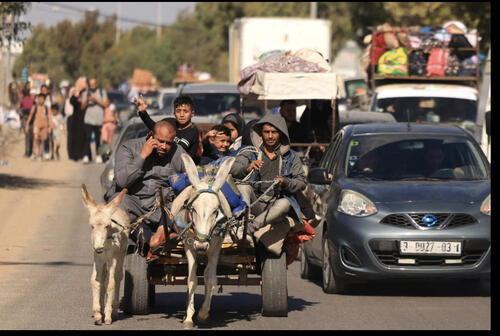
Background: During the Israeli war on Gaza, the donkeys helped the displaced people more than any of the world leaders.
Deprived of water, denied of fare, In Gaza’s siege, a burden to bear. Donkeys emerged, compassionate haze, Carrying the wounded in love’s embrace.
Himar*, symbol of compassion and grace, In the heart of love, a sacred space. Through war’s shadows, it bore the weight, A silent hero at love’s steadfast gate.
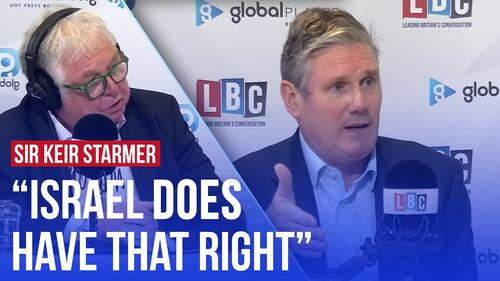
Background Speaking to LBC, Kier Starmer said “Israel has the right to do everything it can to get those hostages back safe and sound and Israel has the right to withhold power and water from Palestinian civilians”.
In the twisted folds of legal lore, Starmer, once a rights defender, it seems no more. Declared, “Gaza under siege, let them endure, No access to essentials, a stance obscure.”
A backtrack followed, after public disdain, Yet, no ceasefire plea, just a political game. An MP ousted for seeking peace, In the face of conflict, a leadership cease.
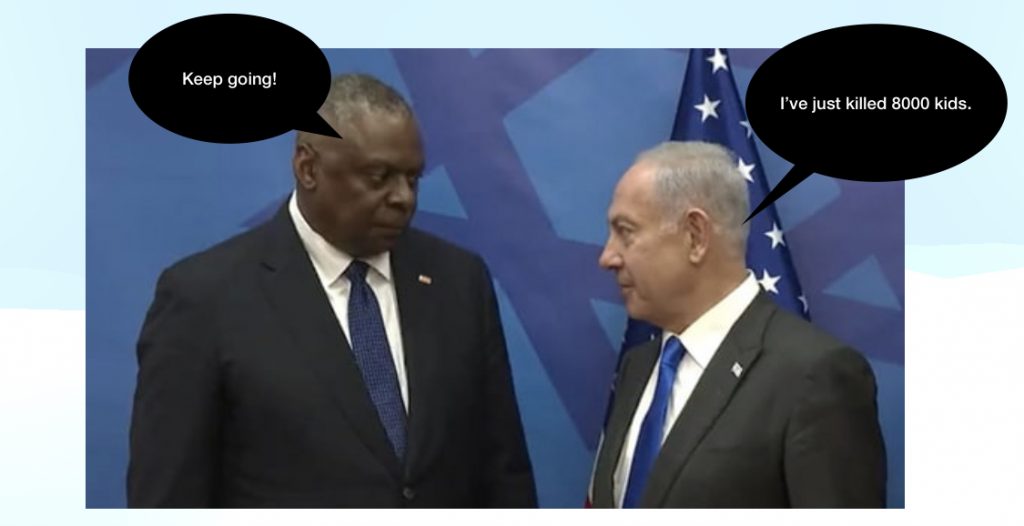
Where learned he such a convoluted law? Backing Netanyahu, a choice with flaw. The butcher of Gaza, a grim embrace, Children’s lives at stake, in this moral maze.
Agreeing to starve the innocent souls, Leaves us pondering, as empathy strolls. Speechless we are, at this ethical decay, In a ballad of critique, we question the way.
I grew up in South Africa, and vigorously refuted parallels with Israel. But in the Netanyahu era, the charge is becoming fact
Sat 19 Aug 2023 04.00 EDT
4 months old
Israel 2023, South Africa 1948. I’ve lived through it before: power grabbing, fascism and racism – the destruction of democracy. Israel is going where South Africa was 75 years ago. It’s like watching the replay of a horror movie.
In 1948, as a teenager in Cape Town, I followed the results of the 26 May electionon a giant board on a newspaper building. The winner-takes-all electoral system produced distorted results: the Afrikaner Nationalist party, with its smaller partner, won 79 parliamentary seats against 74 for the United party and its smaller partner.
But the Nats, as they were called, in fact won only 37.7% of the vote against the opposition’s 49.2%. Although the opposition received more votes, the Nats said they had a majority and could do what they wanted.
In the Israel of 2023, I’m reliving some of these same experiences. Our proportional election system can distort results as well: last November, Likud, with its smaller partners, won 64 seats against 56 for the opposition. In fact, the rightwing bloc won by only 0.6% of the vote. The 0.6% government says it represents the will of the majority and can do whatever it wants. South Africa enjoyed democracy – that is, among the whites who made up 20% of the population. Black people had no right to vote; only some so-called Coloureds and Asian South Africans could vote. Those who were not white suffered heavy racial discrimination in every part of their lives.
In Israel, Arabs, who form about 21% of the population, can vote. But they suffer discrimination: Muslims and Christians are not drafted, and those who do not do army service lose out on benefits. The Jewish National Fund owns about 13% of Israel’s land and bars non-Jews – that is, Arabs – from owning or renting it. The coalition promises to deepen the discrimination. It has already threatened to withdrawmillions of shekels meant for upgrading poor Arab living conditions.
In South Africa, the Nationalist victory meant apartheid, which intensified and institutionalised the existing discrimination against people of colour.
In 2001, I joined Israel’s government delegation to the world conference against racism in Durban. The government of Ariel Sharon invited me because of my expertise after a quarter-century as a journalist in South Africa; my specialty was reporting on apartheid close up.
At the conference, I was disturbed and angered by the multitude of lies and exaggerations about Israel. During the years since, I have argued with all my mightagainst the accusation that Israel is an apartheid state – in lectures, newspaper articles, on TV and in a book.
However, the accusation is becoming fact. First, the nation-state law elevates Jews above fellow citizens who are Arab – Muslim, Druze, Bedouin and Christian. Every day sees government ministers and their allies venting racism and following up with discriminatory actions. There is no mercy even for the Druze, who, like Jews, have been conscripted into the military since 1956.
Second, Israel can no longer claim security as the reason for our behaviour in the West Bank and the siege of Gaza. After 56 years, our occupation can no longer be explained as temporary, pending a solution to the conflict with Palestinians. We are heading toward annexation, with calls to double the population of Jewish settlers in the West Bank, which currently stands at around 500,000.
The army is fully complicit in the illegal seizure of land and the creation of settlement outposts. The government misuses many millions of shekels for settlers. It abuses its own laws. Settlers kill Palestinians and destroy houses and cars. The courts seldom intervene. Soldiers stand by and watch.
We deny Palestinians any hope of freedom or normal lives. We believe our own propaganda that a few million people will meekly accept perpetual inferiority and oppression. The government is driving Israel deeper and deeper into inhuman, cruel behaviour beyond any defence. I don’t have to be religious to know that this is a shameful betrayal of Jewish morality and history.
‘The prime minister, Benjamin Netanyahu, tells foreign TV that the changes in the judicial review are small and the opposition is silly to oppose them.’ Photograph: Ronen Zvulun/Reuters
In South Africa, nice words were used for destructive laws. Imposing apartheid on universities to restrict black access was done by 1959’s Extension of University Education Act. Tightening the “pass” – the document that was the basic means of control over black people – was done by the Abolition of Passes (Coordination of Documents) Act.
In Israel, “judicial reform” is used to describe the destruction of democracy, starting with ending judicial review of the executive and Knesset. The prime minister, Benjamin Netanyahu, tells foreign TV that the changes are small and the opposition is silly. He does not explain why, then, he and his partners have been ruthlessly determined to ram it through, despite colossal opposition.
In South Africa, removing the vote from Coloured and Asian citizens set off mass protests, led by second world war veterans. The highest court, the appellate division, struck down the vote law as unconstitutional. The Nationalists used their majority in parliament to set up a high court of parliament, which overruled the appellate division. Coloured and Asian citizens lost the right to vote.
Opposition to apartheid grew. The Nats, with their majority in parliament, enacted the Suppression of Communism Act, giving the justice minister the authority to issue arbitrary decrees severely curtailing personal freedoms. Punishments included house arrest and being forbidden to be with more than one other person, and prohibition on public speaking or writing. Offenders could get up to five years in jail. Communists were the first target, followed by liberals – even fervent anti-communists – and anyone who opposed apartheid, peacefully or violently. Then came 30-day detention without trial, which grew to three months, then six months – and finally detention without end.
Many thousands were “banned”, detained without trial and sentenced to lengthy imprisonment. Army and police repeatedly went into segregated black townships and killed and brutalised people.
In Israel, about 1,200 West Bank Palestinians are reported to be imprisoned without trial. The defence minister signs the orders for security reasons, to deal with terrorism. The army constantly raids West Bank towns, wreaking havoc and detaining more suspects. Tragedies continue.
Under the guise of fighting crime in the Arab community, the national security minister, Itamar Ben-Gvir, wants a law to give the police the power to jail Israelis without charge or trial – a policy already practised in the West Bank. He wants an expensive “national guard” under his control.
In South Africa, a secret Afrikaner organisation, the Broederbond (band of brothers), pulled the strings behind the scenes. It approved every job of significance: school headteachers, police, senior prison and army officers and civil service members. Its partner was the Dutch Reformed Church, described as “the Nationalist party at prayer”. Calvinist and conservative, its priests declared that the Bible was literally true, that it justified apartheid and Afrikaners were the chosen people, whose mission was to save “white civilisation”.
The Nats applied “Christian national education” to schools. Radio and television were tightly controlled. Movies and theatre were censored. Thousands of books were banned as “undesirable, objectionable or obscene”. Marriage across colour lines was prohibited. The entire country was divided so that people of different races lived in their own areas; whites took the most and the best. Millions of people of colour were forced out of their homes.
‘In Israel, about 1,200 West Bank Palestinians are reported to be imprisoned without trial.’ Palestinians take part in a protest in solidarity with prisoners held in Israeli jails, Nablus, West Bank, 15 August 2023. Photograph: APAImages/Shutterstock
In Israel, the ultra-Orthodox have joined forces with Likud and religious nationalists to secure unlimited money for their separate schools, to keep their children out of the army and to impose their religious dictates on the entire country. They control Jewish marriage and divorce, and allow only Orthodox marriages. Their reach is only spreading.
In South Africa, international opposition to apartheid was rejected. The country became the “polecat of the world”. United Nations condemnations and boycotts and business disinvestment were dismissed. The economy sank. Finally, ruined, it could no longer support apartheid and this was a major reason for whites being forced to give up their power and privileges in 1994.
In Israel, the results of the coalition’s assault on the judiciary, and its promises of much more to come, are well reported. The disastrous effects on the economy are already emerging. The United States gives Israel $3.8bn-plus military aid every year and defends us against attacks, whether justified or not, in international forums. We depend on the US for survival, but we are losing support in Congress. Coalition leaders couldn’t care less.
The education ministry’s director general has quit in protest at the judicial overhaul. Judges are denigrated. The coalition wants the attorney general fired. The lawyers’ association is being defanged. Stringent control is under way for the media. Shabbat observance is coerced. Culture and women’s rights are coming under restrictive control. Bedouin are evicted en masse. Protesters are called traitors.
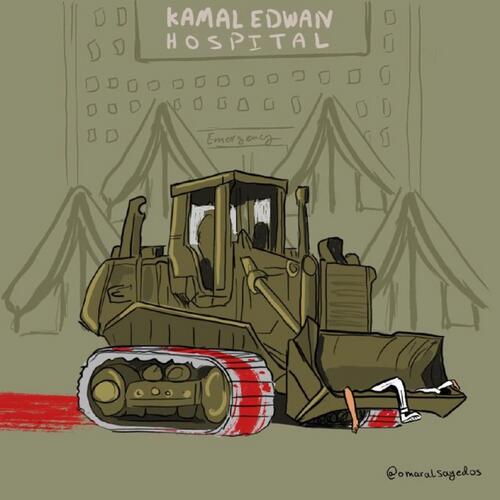
The Israeli army bulldozed and killed tens of civilians including children and women who were taking refuge in tents in the yard of Kamal Udwan hospital in northern Gaza.