S.T. Salah, 19/12/25
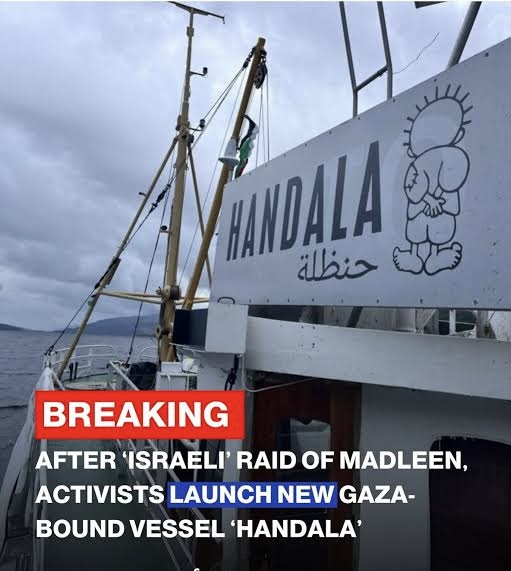
Handala (hands clasped behind his back, back to the reader):
You stand in a uniform and call it order. Tell me — what name do you give the empty cup you hand a man who asks only for water?
Israeli Guard (tight, practiced smile):
Procedure. Discipline. Measures for security.
Handala:
Procedure is a word people use to hide what they will not admit to their conscience. Do you feel secure when you deny another human the basics of life?
Israeli Guard:
We do what is necessary. The orders come from above, mainly from Ben-Gvir and Netanyahu.
Handala:
“Above” is a place for commands, not for conscience. When the ones above praise humiliation and racism as policy, whose face do you have to wash before you sleep?
Israeli Guard (bristles):
You speak as if you know the world of decisions. We protect Jewish citizens.
Handala:
Protection of one ethnic group that strips dignity from another becomes the very thing it pretends to guard against. If protection means turning a person into a lesson, who taught you that lesson?
Israeli Guard:
Leaders set the rules. We carry them out. Loyalty matters.
Handala:
Loyalty to apartheid and racist laws! Loyalty to cruelty! There is a line between following an order and becoming the instrument of someone’s cruelty. Do you draw that line or blur it?
Israeli Guard (low):
We’re told the stakes are existential for our nation. The rhetoric is hot; the streets demand toughness and iron hand against our enemies.
Handala:
Rhetoric is a fire that warms Israelis and burns Palestinians. When your nazi leaders stoke flames with words that dehumanise, do you not notice that smoke in your own lungs?
Israeli Guard:
Politics is complicated. People in power say hard things.
Handala:
“Complicated” is a comfortable coat to wear when you’re standing barefoot over someone else’s life. When a policy promises nothing but humiliation and discrimination and racism, is that protection — or punishment dressed as policy?
Israeli Guard (shifts):
We follow the legal chain. If there are problems, they are for the courts to resolve.
Handala:
Which courts? Israeli courts are part of this illegal apartheid. They have never punish Israeli war criminals but punished the victims and stripped them from their rights. Who speaks for the silent, for the ones who can no longer speak because the rules were too racist? If you were the one cuffed, who would bet that the same chain would loosen?
Israeli Guard:
There are checks. There are reports.
Handala:
Reports written by the perpetrators are lies — and lies written on paper burn easily.
Who strikes the match when accountability is turned into politics?
When leaders cheer the breaking of human spirits, is that justice — or just theatre?
Israeli Guard (voice cracks):
You accuse my nation, you are anti-Semite.
Handala:
I accuse these acts — criminal, inhumane, and racist — for what they are.
And don’t hide behind your tired propaganda; remember, I am Semitic too.
Nations are built by many hands: some create, some destroy.
You chose which hand to be — the one that breaks, not the one that builds.
Israeli Guard:
I am only one. What can one man do against a whole machine?
Handala:
One man can refuse to be the cog that grinds. One man can tell the truth in the corridor where the loud mouths boast. One man can hand a cup back, or stop a chained joke. Courage is small at first; its echo is large. What do you whisper to your kids in the evening about these tortures?
Israeli Guard (quiet):
And if I speak? If I refuse?
Handala:
Then you will be alone for a while and the right thing will be right forever. You will not be free of consequence — but you will be free of complicity.
Israeli Guard:
They will call me traitor.
Handala:
They will call many names, but many will call you hero for standing against the illegal and inhumane practices.
History calls them witnesses. Which name would you rather hear when the children come looking for answers — “he obeyed” or “he stopped”?
Israeli Guard (after a silence):
The orders… come from powerful men who promise safety, and they reward those who obey and punish those who refuse.
Handala:
Power that buys obedience with promises of false safety is cheap and corrupted power. True safety is built when mercy and equal law walk together — not when the occupier stomps people under occupation.
Israeli Guard:
And those above? They speak loudly. They have followers.
Handala:
Loud mouths are not the same as right hands. Followers that cheer humiliation and racism will one day need forgiveness. Will you be the hand that offers it, or the hand that tightens the lash?
Israeli Guard (looking away):
I have a uniform, a family, fear.
Handala:
So did the first man who refused an unjust order. Courage asks less than the conscience demands; it only asks you to remember you are a human when you no longer see one across from you.
Israeli Guard:
You speak as if you know forgiveness.
Handala:
I speak as if I know memory. Memory is the bank where we deposit our deeds. What you put in there you will one day withdraw.
Israeli Guard (a breath):
If I told the truth, what would change?
Handala:
Truth is a small seed that grows stubborn. It forces inquiries, protects witnesses, makes courts listen and may save victims. It does not erase what was done, but it stops the next hand from repeating the same act.
Israeli Guard:
They’ll silence me. They’ll punish me for exposing orders.
Handala:
Then let it not be said you were silent because it was easy. Let it be said you were silent because you feared. Fear is human. Regret is heavier. Choose which burden you will carry.
Israeli Guard (quietly, almost to himself):
If I refuse to obey an order to humiliate, will that make me a criminal to my people?
Handala:
Not to the people who build a future worth living in. You might be a criminal to a moment’s politics. But history forgives the man who saves another’s dignity more readily than it forgives the man who kept his badge and lost his humanity.
Israeli Guard (hands unclench):
And if the orders are from the very ministers who celebrate violence and torture?
Handala:
Ministers wore garments of authority — others wore bones of consequence. When ministers reward torture, they expose not strength but fragility. Strength does not need to humiliate.
Israeli Guard:
You will not turn. You will always stand with your back to the reader, unbowed.
Handala (still turned away):
My back faces the world that turned its back on justice. My posture is not surrender but a promise: that I will not look away until the hand that breaks is held to account.
Israeli Guard (softly):
And if I walk with you?
Handala:
Then the burden will be shared. Then the story will change — from a catalogue of brokenness to one of repair. Walk, but first empty your pockets of excuses.
Israeli Guard:
I will carry nothing but truth.
Handala:
Then begin by naming what you know. Names have weight. Once named, things can be fixed.
Israeli Guard (nods, a small, uncertain resolve):
I will… speak.
Handala (no fanfare, just the fixed posture of a child who will not be pulled in):
Speak and make your silence a bargain for life, not a receipt for shame.