Hilmi’s Paintings

Mr Saed Hilmi is a distinguished Palestinian artist, was born in 1967 in Al-Arroub Camp in Hebron, and his roots extend to the displaced village of Iraq Al-Manshiya, abandoned during the brutal events of 1948. His artistic journey commenced in his formative years, where he honed his skills in arts, drawing, and photography. A graduate of an Institute of Fine Arts and an esteemed member of the Fine Artists Association in Palestine, Saed Hilmi is also affiliated with Naji Ali’s Group, a renowned Palestinian cartoonist known for his incisive political commentary on Arab regimes and Israel. Currently engrossed in the realm of rock sculpting, Saed Hilmi’s focus primarily lies in the art of sculpture. His active participation in numerous exhibitions underscores his deep connection to Palestinian heritage and the profound struggles faced by his people. Notable among these exhibitions is the Barcelona showcase in 1999, which centered on Palestinian prisoners.

Saed Hilmi’s artistic expression revolves around realistic fine art, utilizing paintings as a powerful medium to convey the poignant narrative of the Palestinian people. As a resident of a refugee camp, his paintings vividly portray the anguish of mothers of martyrs, the resilience of Palestinian people, and the enduring sacrifices within his community. Employing a distinctive palette featuring red, green, black, and white, symbolizing the Palestinian flag and the valor of honorable martyrs, Saed Hilmi’s art serves as a compelling message to the world. His visual storytelling resonates with the struggles, resilience, and strength of the Palestinian people, encapsulating the essence of a community and conveying a potent message that transcends borders, speaking to the universal human experience. Through his art, Saed Hilmi becomes a storyteller of his people’s journey, inviting viewers to understand and empathize with the profound aspects of Palestinian history and identity.

The Displaced Village 

In this evocative artwork, a Palestinian woman with a traditional attire carries an old oil lamp, casting a warm glow that reveals the spectral echoes of an abandoned village within her silhouette. The resilient spirit of the Palestinian people is depicted clearly, with the emergence of homes through her figure, narrating tales of displacement and the ability to endure. Against the backdrop of a moonlit night, a solitary cactus tree stands as a symbol of enduring patience, rooted in the soil of perpetual identity. This painting embodies the silent narrative of a people’s journey, where history is etched in the lines of shadows, and the light of hope prevails amidst the darkness of displacement.

The Nakba Day

This painting captures the profound essence of Nakba Day, portraying a Palestinian woman in traditional attire. She gently touches her little son, his tiny body and expressive face demonstrate a touching anger mixed with fears, reflective of the historical injustices of Palestinianpeople who have been displaced from their villages and cities in 1948. A majestic, ancient tree stands tall, its branches reaching towards the sky, symbolizing protection and resilience. The roots of the tree encircle the woman and her son, representing the deep connection to their land and heritage. Above, within the intricate branches of the tree, a full, illuminating moon graces the sky, casting a luminous glow on the scene. The woman’s silence echoes the weight of her sorrow, etched on her face as a testament to the enduring spirit of the Palestinian people in the face of adversity. 

A Face of Memories

In this masterpiece, a mournful pigeon perches upon a stick with its melancholy gaze fixates on the remnants of a small stone bridge and the skeletal remains of a stone house, poignant relics from a village obliterated in 1948by Israeli occupation force. The scene unfolds beneath a sky adorned with convoluted clouds, through which a full moon casts its luminous glow. The moon’s radiant beams pierce through the clouds, creating a mesmerizing celestial display. An old tree stands as a silent witness, offering solace to the grieving pigeon. In the foreground, the branches of another tree reach out, devoid of leaves, emphasizing the stark reality of the passage of time. “A Face of Memories” is a profound exploration of loss, resilience, and the enduring connection between the remnants of history and the ever-watchful, silent observers of time.

The Last Hope

The idea behind this painting unfolds on the walls of Gaza. Originally, the painting depicted a scene of serenity before its descent, where a multitude of pigeons stood upon a giant olive tree, serving as a testament to the tranquil coexistence shattered by the ravages of brutal occupation. Amidst the brutal bombing in 2021, the artwork succumbed to the chaos, its wooden frame fell down, and the peace doves flew from within and olive tree branches cascaded to the ground, leaving the artwork fragmented yet resonant. This touching piece of art encapsulates the harrowing narrative of the war on the Gaza Strip in 2021. The fallen artwork, with its liberated dove, and scattered olive branches, becomes a powerful symbol of resilience amidst destruction, echoing the profound impact of war on both art and the human spirit.

Posted in Hilmi, Media, Palestinian art & culture | Tagged | Comments Off on Hilmi’s Paintings

Identity Card

By Mahmoud Darwish

Write down ! 
I am an Arab 
And my identity card number is fifty thousand 
I have eight children 
And the ninth will come after a summer 
Will you be angry? 
. 
Write down! 
I am an Arab 
Employed with fellow workers at a quarry 
I have eight children 
I get them bread 
Garments and books 
from the rocks.. 
I do not supplicate charity at your doors 
Nor do I belittle myself at the footsteps of your chamber 
So will you be angry? 
. 
Write down! 
I am an Arab 
I have a name without a title 
Patient in a country 
Where people are enraged 
My roots 
Were entrenched before the birth of time 
And before the opening of the eras 
Before the pines, and the olive trees 
And before the grass grew. 
My father.. descends from the family of the plow 
Not from a privileged class 
And my grandfather..was a farmer 
Neither well-bred, nor well-born! 
Teaches me the pride of the sun 
Before teaching me how to read 
And my house is like a watchman's hut 
Made of branches and cane 
Are you satisfied with my status? 
I have a name without a title! 
. 
Write down! 
I am an Arab 
You have stolen the orchards of my ancestors 
And the land which I cultivated 
Along with my children 
And you left nothing for us 
Except for these rocks.. 
So will the State take them 
As it has been said?! 
. 
Therefore! 
Write down on the top of the first page: 
I do not hate poeple 
Nor do I encroach 
But if I become hungry 
The usurper's flesh will be my food 
Beware.. 
Beware.. 
Of my hunger 
And my anger!


Listen to the famous song of this poem, for which Mr Darwish  was placed under house arrest by Israeli Occupation: 
Posted in Mahmoud Darwish, Palestinian art & culture | Tagged | Comments Off on Identity Card

Rape of Palestinian Prisoners in Israeli Jails: Western Silence and the Collapse of Moral Accountability

By Phalapoem editor, 12/01/2025

Watch

Reports of the rape and sexual abuse of Palestinian prisoners in Israeli jails represent some of the gravest violations of human rights. These atrocities are not isolated incidents but rather part of a broader system of dehumanization and violence against Palestinians under occupation. Yet, these heinous acts, which amount to war crimes, are met with deafening silence from the Western media and governments that claim to champion democracy and human rights.

Why is the world turning a blind eye to such atrocities, even as similar crimes committed elsewhere are met with widespread condemnation and international intervention? What allows Israel to operate beyond the bounds of international law? And where is the West’s moral compass in this unrelenting dystopia?

Sexual violence against prisoners is a brutal and systematic tool of oppression, used to humiliate, degrade, and break the spirit of the Palestinian people. Reports from human rights organizations and testimonies from former detainees reveal widespread abuse, including threats of rape, actual sexual assault, physical and psychological torture. These acts are not random; they are deeply embedded in the practices of the Israeli occupation forces.

Under international law, the rape of prisoners is a grave breach of the Geneva Conventions and constitutes a war crime. Yet, Israeli authorities either deny such practices outright or shield perpetrators from accountability, often under the guise of “national security.”

Shockingly, some Israeli legal defenses have sought to justify these acts. Courts and legal bodies in Israel have often dismissed claims of abuse by Palestinian prisoners, perpetuating a culture of impunity. This legal and systemic failure further emboldens such atrocities and sends a clear message: Palestinians are not afforded the same human rights as others.

While Western media often highlights human rights violations committed by other regimes, particularly in non-Western or non-White contexts, Israeli crimes are conspicuously downplayed or outright ignored. Why does the same media that condemns atrocities in Syria, Sudan, or Afghanistan remain silent on the sexual abuse of Palestinian prisoners?

This double standard is rooted in the West’s political and financial support for Israel. Billions of dollars in aid flow from the United States and European nations to Israel annually, effectively subsidizing its military occupation and enabling its crimes. Speaking out against Israeli atrocities would challenge this longstanding alliance and disrupt the narrative of Israel as a democratic, peace-seeking nation.

Elon Musk, one of the most influential figures in the world, exemplifies the West’s moral hypocrisy. As the owner of the social media platform X (formerly Twitter), Musk has openly criticized atrocities carried out by non-White groups or in regions like Africa, often amplifying racist and divisive narratives. Yet, when it comes to Israeli crimes, including the genocide in Gaza and the systematic abuse of Palestinian prisoners, Musk remains notably silent.

By refusing to acknowledge Israel’s atrocities, Musk not only perpetuates Western double standards but also provides a platform where these crimes are ignored, normalized, or even justified. His selective outrage reveals a troubling lack of consistency and underscores the West’s failure to uphold universal human rights.

Where is the moral compass of the West? How can nations that claim to uphold international law remain complicit in Israel’s atrocities?

The silence is not just hypocrisy; it is complicity. By turning a blind eye to the rape of Palestinian prisoners, the collective West undermines its credibility and the very principles it claims to stand for. This double standard erodes trust in international institutions, exposes the selective application of human rights, and perpetuates a global order where power dictates morality.

How far can Israel go before the world takes action? Are there any red lines that Israel cannot cross? The genocide in Gaza, the daily humiliation of Palestinians, the theft of land by illegal settlers, and the sexual abuse of prisoners all point to a dystopian reality where one state operates with complete impunity.

This dystopia is not inevitable. It is the result of political choices, financial incentives, and a failure of global accountability.

What Can Be Done?

1. Expose the Truth: Activists, journalists, and human rights organizations must continue to document and expose Israeli crimes, breaking through the silence of mainstream Western media.

2. Demand Accountability: Governments and international bodies must hold Israel accountable for its violations of international law. This includes supporting investigations by the International Criminal Court and imposing sanctions.

3. End Double Standards: The West must apply the same standards to Israel that it applies to other nations. Human rights are universal and cannot be selective.

4. Empower Grassroots Movements: Movements like Boycott, Divestment, and Sanctions (BDS) offer a nonviolent way to pressure Israel to end its crimes. Citizens around the world can support these efforts to challenge the status quo.

5. Challenge Western Complicity: Citizens in the U.S. and Europe must hold their own governments accountable for their role in enabling Israeli crimes. This includes challenging the influence of pro-Israel lobbies like AIPAC.

The rape of Palestinian prisoners and other atrocities committed by Israel are not just crimes against Palestinians—they are an indictment of a global system that allows such crimes to persist. The silence of Western media and governments is a betrayal of the principles of justice, equality, and human dignity.

To stop these crimes, the world must reject the double standards that allow Israel to operate above the law. It is not just about defending the rights of Palestinians—it is about reclaiming humanity’s moral compass and ensuring that no state, no matter how powerful, is above accountability.

Posted in Evidence of Israeli Fascism and Nazism and Genocide, Gaza, Massacres & genocides, Media, News from the apartheid, Palestinian art & culture, Palestinian history, Phalapoem editor, Videos | Tagged , , | Comments Off on Rape of Palestinian Prisoners in Israeli Jails: Western Silence and the Collapse of Moral Accountability

Mahmoud Darwish

Photo by Gil Cohen Magen-Pool/Getty Images.
Source: https://www.poetryfoundation.org/poets/mahmoud-darwish


Palestinian Mahmoud Darwish was born in al-Birwa in Galilee, a village that was occupied and later razed by the Israeli army. Because they had missed the official Israeli census, Darwish and his family were considered “internal refugees” or “present-absent aliens.” Darwish lived for many years in exile in Beirut and Paris. He is the author of over 30 books of poetry and eight books of prose, and earned the Lannan Cultural Freedom Prize from the Lannan Foundation, the Lenin Peace Prize, and the Knight of Arts and Belles Lettres Medal from France.

In the 1960s Darwish was imprisoned for reciting poetry and traveling between villages without a permit. Considered a “resistance poet,” he was placed under house arrest when his poem “Identity Card” was turned into a protest song. After spending a year at a university of Moscow in 1970, Darwish worked at the newspaper Al-Ahramin Cairo. He subsequently lived in Beirut, where he edited the journal Palestinian Affairs from 1973 to 1982. In 1981 he founded and edited the journal Al-Karmel. Darwish served from 1987 to 1993 on the executive committee of the Palestinian Liberation Organization. In 1996 he was permitted to return from exile to visit friends and family in Israel and Palestine.

Mahmoud Darwish’s early work of the 1960s and 1970s reflects his unhappiness with the occupation of his native land. Carolyn Forché and Runir Akash noted in their introduction tou Unfortunately It Was Paradise (2003) that “as much as [Darwish] is the voice of the Palestinian Diaspora, he is the voice of the fragmented soul.” Forché and Akash commented also on his 20th volume, Mural: “Assimilating centuries of Arabic poetic forms and applying the chisel of modern sensibility to the richly veined ore of its literary past, Darwish subjected his art to the impress of exile and to his own demand that the work remain true to itself, independent of its critical or public reception.”

Poet Naomi Shihab Nye commented on the poems in Unfortunately It Was Paradise: “[The style here is quintessential Darwish—lyrical, imagistic, plaintive, haunting, always passionate, and elegant—and never anything less than free—what he would dream for all his people.”

Mahmoud Darwish died in 2008 in Houston, Texas.

Posted in Mahmoud Darwish, Palestinian art & culture | Tagged | Comments Off on Mahmoud Darwish

America’s Complicity in Israeli Genocide: When Will the Support for Apartheid and Ethnic Cleansing End?

 By Phalapoem editor, 11/01/2025

Image symbolizing America’s complicity in the devastation of Gaza, portraying destruction, oppression, and resilience with striking clarity.

The ongoing genocide in Gaza, perpetrated by the Israeli government, is enabled by unwavering American support. Billions of dollars in U.S. aid, advanced weapons, and diplomatic shielding at international forums have turned the United States into a direct accomplice in the slaughter of innocent Palestinians. For decades, American leaders have prioritized Israel’s colonial ambitions over the human rights of Palestinians. But the question remains: when will this support end? And what can Americans and the rest of the world do to achieve this noble goal of justice and peace?

The first step toward change is for America to recognize Palestinians as human beings with rights and dignity equal to those of anyone else. For too long, the dehumanization of Palestinians has been central to Israeli propaganda and U.S. foreign policy. Palestinians are portrayed as mere obstacles to Israel’s expansion rather than as indigenous people who have endured decades of occupation, dispossession, and systematic violence.

The United States must confront its role in perpetuating these atrocities. American-made bombs are dropped on Gaza’s civilians. U.S.-funded weapons destroy homes, schools, and hospitals. The blockade of Gaza, enforced with American complicity, subjects millions to starvation and medical deprivation. It is impossible to claim ignorance when the evidence of U.S. involvement in this genocide is so clear. Change will only begin when Americans demand accountability and reject the narrative that justifies these crimes under the guise of “self-defense.”

A major barrier to ending U.S. support for Israeli apartheid is the outsized influence of pro-Israel lobbying groups like AIPAC (American Israel Public Affairs Committee). These  terrorist organizations funnel vast sums of money into the campaigns of congressmen and senators, ensuring unwavering political support for Israel regardless of the human cost. This illegal  influence undermines the democratic process and allows foreign policy to be dictated by a foreign lobby that prioritizes Israel’s interests over America’s own values and constitution.

Americans must demand transparency and accountability from their elected officials. Supporting an apartheid regime and funding ethnic cleansing are fundamentally at odds with the principles enshrined in the U.S. Constitution. Citizens should pressure their representatives to cut ties with terrorist AIPAC and stop supporting legislation that bankrolls Israeli war crimes. Public awareness campaigns, grassroots activism, and organized boycotts can all play a role in challenging the political stranglehold of illegal pro-Israel lobbying groups.

The question of how Palestinians can live in peace when their oppressors continue to steal their land, kill their children, and humiliate them daily is central to understanding the colonial mindset. Peace cannot coexist with apartheid, colonialism, or genocide. For Palestinians to live in peace, the illegal Israeli occupation must end, the apartheid system must be dismantled, and Palestinians must be granted the full rights and sovereignty they deserve.

Palestinians cannot negotiate peace with an enemy that refuses to recognize their humanity and actively seeks their eradication. The international community must step in to hold Israel accountable. Sanctions, arms embargoes, and legal actions against Israeli war criminals are essential steps toward achieving justice.

For many, the daily oppression of Palestinians has become normalized. Israeli propaganda and Western media have desensitized the public to the horrors of apartheid. But this normalization must be challenged at every turn. Governments, institutions, and individuals must speak out against Israeli crimes and reject the idea that apartheid is an acceptable status quo.

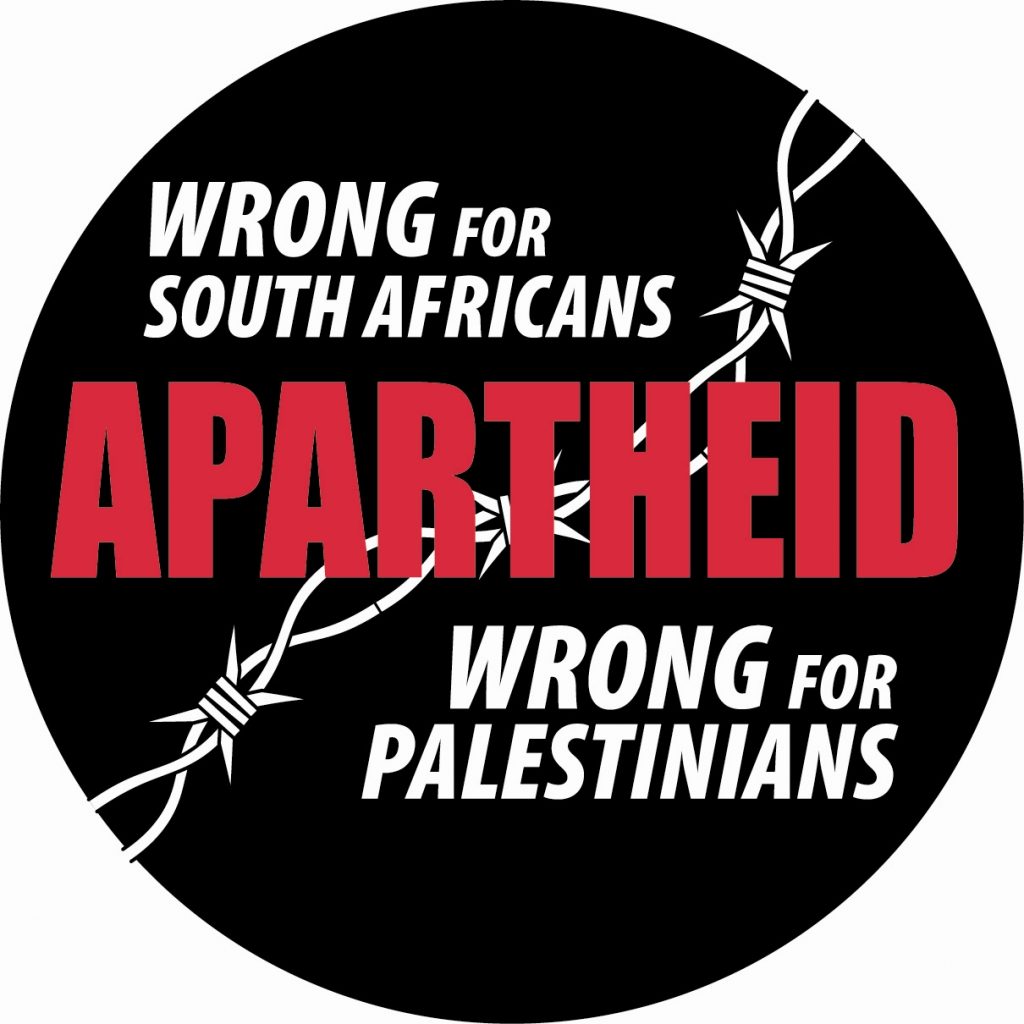
The success of the anti-apartheid movement in South Africa offers hope. Like Israel today, the South African apartheid regime was once supported by powerful nations like the USA and UK and justified through propaganda. But sustained international pressure, grassroots activism, and the moral clarity of those who opposed injustice eventually led to its downfall. Israel’s apartheid regime can and must meet the same fate.

The role of American leaders in enabling Israel’s war crimes cannot be ignored. War criminals like Joe Biden, secretaries of state like Antony Blinken, and countless others in the political and military establishment bear direct responsibility for the suffering in Gaza. They approve the arms deals, sign off on military aid, and block international efforts to hold Israel accountable.

These criminal individuals must face justice. While the prospect of prosecuting American war criminals may seem far-fetched, international courts and tribunals have the power to issue arrest warrants for  leaders who enable genocide. The recent decision by the International Criminal Court (ICC) to investigate Israeli war crimes is a step in the right direction. The global movement for accountability must extend to all those complicit, including American, German and British leaders who have shielded Israel from consequences.

To end American support for Israeli genocide in Gaza, the global community must act decisively:

1. Support Boycott, Divestment, and Sanctions (BDS): This peaceful movement aims to pressure Israel into ending its apartheid regime, respecting Palestinian rights, and complying with international law.

2. Raise Awareness: Educate others about the realities of Israeli apartheid and the role of U.S. support in perpetuating it. Challenge biased narratives in media and political discourse.

3. Demand Political Action: Pressure governments to cut military and economic ties with Israel. Call for sanctions and international investigations into Israeli crimes.

4. Support Palestinian Voices: Amplify the voices of Palestinians and their stories of resistance, resilience, and suffering.

The apartheid regime in Israel is not sustainable. History has shown that systems of oppression eventually collapse under the weight of their own immorality. Palestinians, as the indigenous people of the land, have the right to live in peace and dignity. The end of American support for Israeli genocide is not just a moral imperative—it is a necessary step toward justice and lasting peace.

Change will come when Americans and the global community unite in solidarity with Palestine, holding perpetrators accountable and refusing to normalize apartheid. The path to justice is not easy, but it is inevitable. As history has shown, the righteous will ultimately prevail.

Posted in American Congressmen Terrorists, Gaza, Justice, Massacres & genocides, Palestinian art & culture, Palestinian diaspora, Palestinian history, Phalapoem editor, South Africa, UK, USA, Voice of Palestine | Tagged , , , , , | Comments Off on America’s Complicity in Israeli Genocide: When Will the Support for Apartheid and Ethnic Cleansing End?

Immigration Isn’t Broken—Western Policies Are: Stop Invading, Interfering, and Exploiting

Phalapoem editor, 8/01/2025

The debate over immigration has long been a contentious issue in both the United States and Western Europe. Politicians, media, and the public frequently clash over border policies, asylum seekers, and integration challenges. Yet, amid this heated discourse, the focus remains overwhelmingly on the symptoms rather than the causes of migration.

If immigration is seen as a crisis, it is imperative to ask: What compels millions to uproot their lives and embark on dangerous journeys to foreign lands? The answer is often tied to the policies and actions of Western nations themselves. To address immigration effectively, Western countries must confront their colonial role in creating the very conditions that drive people to migrate.

For decades, the United States and Western European countries have engaged in illegal military interventions, regime changes, and unjustified economic exploitation across the Global South. These actions have destabilized nations, weakened economies, and displaced millions of innocent people. From the illegal war on Iraq to the NATO intervention in Libya, these policies have left behind broken states where war, poverty, and insecurity reign.

For example:

• The U.S. illegal invasion of Iraq in 2003 destabilized the region, leading to the rise of extremist groups and mass displacement.

• The 2011 NATO intervention in Libya toppled Muammar Gaddafi but plunged the country into chaos, creating a hub for human trafficking and migration routes to Europe.

• Western-backed coups, inhuman sanctions, and economic policies in Latin America have contributed to economic hardship and forced migration toward the U.S.

When powerful nations invade or destabilize weaker ones, the resulting chaos often leaves ordinary people with little choice but to flee. Immigration, then, becomes a survival strategy for millions whose homelands were upended by foreign interference.

Beyond war, Western economic policies have played a significant role in perpetuating global inequality. Institutions like the International Monetary Fund (IMF) and World Bank, dominated by Western interests, have imposed austerity measures, debt traps, and structural adjustments that cripple developing economies. Trade agreements often benefit multinational corporations at the expense of local industries, leaving communities impoverished.

Additionally, Western nations have disproportionately contributed to climate change, which exacerbates migration pressures. Rising sea levels, droughts, and extreme weather events disproportionately impact the Global South, forcing millions to flee uninhabitable regions.

Western nations simultaneously criticize immigration while facilitating it in ways that serve their own interests. Many countries rely on immigrant labor to fill low-paying jobs while denying these workers rights and pathways to citizenship. Moreover, Western countries often extend asylum to those fleeing regimes they oppose, using migration as a political tool rather than a humanitarian necessity.

By destabilizing nations and then selectively offering asylum, Western powers create a cycle that perpetuates migration. This cycle is further exploited by far-right movements, which weaponize immigration fears to gain political power.

If Western nations are serious about addressing immigration challenges, they must focus on the root causes:

1. Stop Aggressive Military Interventions: End unnecessary wars, invasions, and regime changes that destabilize countries and force people to flee.

2. Respect Sovereignty: Cease interfering in the internal affairs of other nations, whether through coups, sanctions, or political manipulation.

3. Support Economic Justice: Reform global trade policies and cancel odious debts that keep developing nations in perpetual poverty.

4. Address Climate Change: Commit to reducing emissions and providing resources to the countries most affected by the climate crisis.

5. Invest in Rebuilding: Support infrastructure and economic development in countries that have been harmed by Western actions.

Migration is not a spontaneous phenomenon—it is often the direct result of decades of foreign interference, economic exploitation, and environmental destruction. Western nations have a moral and practical obligation to address the conditions they helped create.

By focusing on these root causes, they can not only reduce migration pressures but also promote global stability and justice. Anything less is merely a band-aid on a wound they themselves inflicted.

Posted in Justice, Owen Jones, Palestinian art & culture, Palestinian diaspora, Phalapoem editor, UK, USA, Voice of Palestine | Tagged | Comments Off on Immigration Isn’t Broken—Western Policies Are: Stop Invading, Interfering, and Exploiting

America’s Genocidal Veto 

Background 
The U.S. vetoed a resolution calling for a ceasefire in Gaza put forward by the United Arab Emirates and backed by more than 110 Member States at a meeting in New York City. Compared to 13 council members’ votes in favour, the U.S. was the sole veto.

Power’s halls, veto decree,
Gaza echoes, plea’s plea.
Palestinian strife, world looks on,
UN’s freeze, justice withdrawn.

US shield, wrong narrative,
Israeli force, tide imperative.
Humanity weeps, justice denied,
Council’s shadow, where hopes subside.

Nations five, interests command,
Veto’s power, system in disdain.
Hope persists, justice to share,
End darkness, embrace the light’s glare.

Posted in Uncategorized | Tagged , , , | Comments Off on America’s Genocidal Veto 

Ein al-Zeitun Massacre 

In Ein al Zeitun’s shadows, whispers of fate,
800 souls, a village’s tragic state.
1929’s echoes, a vengeful surge,
Palmach’s battalion, on Safed’s verge.

Davidka’s deadly strain, a village in pain,
Ein Zeitun’s tale, forced exodus’s stain.
Palmach’s fury, Safad’s twilight delight,
Golani Brigade’s chilling decree in the night.

Captives in despair, shadows fall,
Darkness prevails, truth’s somber call.
A massacre’s cry, soldiers detailed,
Aharon Yo’eli’s testimony unveiled.

Vengeance sought, dark alliance aligned,
Ein al Zeitun’s tragedy in shadows confined.
Hassidis expelled, Safad’s pursuit dread,
A grim tale in lyrics spread.

Posted in Evidence of Israeli Fascism and Nazism and Genocide, Massacres & genocides, News from the apartheid, Palestinian history, Poems | Tagged | Comments Off on Ein al-Zeitun Massacre 

Supremacy and Ignorance of Western States Towards Palestinians

Phalapoem editor, 5/01/25

The Israeli-Palestinian conflict has long been a focal point of international politics, with the actions and policies of Western states often drawing scrutiny for their perceived bias towards Israel. This essay explores the concepts of supremacy and ignorance as they relate to Western attitudes and policies concerning Palestinians, highlighting historical and contemporary dynamics.

The roots of Western involvement in the Israeli-Palestinian conflict can be traced back to the early 20th century with the Balfour Declaration of 1917, where Britain expressed support for a “national home for the Jewish people” in Palestine, without regard for the existing Arab population. This set a precedent for ignoring Palestinian rights and aspirations, which has persisted through various forms of Western policy and diplomacy. The British Mandate, from 1923 to 1948, facilitated Jewish immigration at the expense of Palestinian land rights, contributing to the Nakba, or “catastrophe,” in 1948, where countless  of massacres were carried out by Israeli terrorist gangs against Palestinian people and hundreds of thousands of them were ethnically cleansed during the establishment of Israel. 

Western states, particularly the United States, have often exhibited a form of geopolitical supremacy in their approach to the conflict. This is evident in U.S. policy, which has historically provided Israel with substantial military and economic aid, ensuring a strategic imbalance in the region. The U.S. has vetoed numerous UN Security Council resolutions critical of Israel, thereby protecting Israel from international censure and potentially from accountability under international law. This support is not only financial and military but also diplomatic, with the U.S. consistently backing Israel’s right to defend itself, often without similar acknowledgment of Palestinian rights to self-determination or security. How could an occupation be defending itself from people under occupation from whom it stole their land and freedom and massacred tens of thousands of civilians? This is against international law which says that the occupation power that should protect the indigenous people living under occupation. 

The notion of supremacy extends into the narrative Western countries promote or allow to be propagated. Media bias has been a significant concern, with numerous studies and journalists pointing out the disproportionate focus on Israeli suffering while under-reporting or misrepresenting Palestinian hardships. This bias can be seen as an extension of colonial and white supremacist legacies where Palestinian lives are implicitly valued less, a perspective that has been criticized in various analyses of world media coverage.

On the part of ignorance, Western states and their publics often show a lack of understanding or acknowledgment of the historical and ongoing injustices faced by Palestinians on daily basis. This ignorance is perpetuated by educational systems that do not adequately address the crimes of the Israeli apartheid and occupation , focusing instead on false narratives that align with Western political interests. Public opinion in the West, which often leans towards Israel due to historical alliances, media portrayal, and lobbying by pro-Israel groups, further demonstrates this ignorance or selective awareness.

The ignorance is also structural, seen in how international law and human rights are applied selectively. For instance, the genocide, starvation and blockade of Gaza, has been confirmed by ICJ as such, and consequently issued arrest warrants for the war criminals Netanyahu and Galant, yet responses from Western and particularly the American government have been arrogant and shameful in rejecting the ICJ decision. 

This combination of supremacy and ignorance has significant consequences. It undermines peace processes by not holding all parties equally accountable and by ignoring the root causes of the conflict, such as occupation, settlement expansion, and the denial of Palestinian rights. It also contributes to a global perception of Western hypocrisy, where human rights are seen through the lens of political alliances rather than universal principles.

The Western approach to the Israeli-Palestinian conflict exemplifies a troubling blend of supremacy and ignorance. By supporting Israel with an asymmetry that often neglects Palestinian rights and realities, Western states not only contribute to the perpetuation of conflict but also to a broader narrative of selective justice and historical amnesia. For any meaningful progress towards peace, there needs to be a reevaluation of these stances, fostering a policy environment based on equality, acknowledgment of historical injustices, and a genuine commitment to international law and human rights. Only through such a shift can the cycle of violence and misunderstanding be broken, paving the way for a just resolution that recognizes the humanity and rights of Palestinians.

Posted in Phalapoem editor | Tagged , | Comments Off on Supremacy and Ignorance of Western States Towards Palestinians

The Dance with Power’s Shadow

Phalapoem editor, 4/01/25


To the lands where conflict brews,
Where the cries of war infuse,
He aligns with power’s face,
Netanyahu’s embrace.

Critics watch with eyes so keen,
As he steps where few have been,
Supporting those with hands stained red,
From a war where peace has fled.

The world debates, the world divides,
On the actions he provides,
Is he blind to cries of pain,
Or does he seek some greater gain?

For in the quest for innovation,
Comes a moral calculation,
When you dance with war’s grim tune,
Do you lose your soul, your boon?

In the annals of history,
Will this be his legacy?
A man who soared the skies and stars,
But also mingled with war’s scars.

Posted in Celebrities, Poems, USA | Tagged , | Comments Off on The Dance with Power’s Shadow

A Call to Challenge Oppression

Background 
Boycott, Divestment, Sanctions (BDS) is a Palestinian-led movement for freedom, justice and equality.  


Where strife and oppression fiercely brew,
Occupation's grip, a tyrannical view.
Israel's actions, a blatant affront,
Palestinians' rights, brutally shunned.

Inspired by history, South Africa's defiant call,
Against apartheid, they stood tall.
Boycott, Divestment, Sanctions declare,
A fierce banner, equity's fervent affair.

BDS emerges, a global thunder,
For freedom, equality, tearing asunder.
Since 2005, its thunder swells,
Challenging support where injustice dwells.
Posted in Justice, Palestinian history, Peace, Poems | Tagged , , | Comments Off on A Call to Challenge Oppression

Israel’s Supreme Court rejected a legal challenge to to kill Palestinian civilians.

Original article for more information: https://t.co/VjkTvhfrON

Posted in Justice, News from the apartheid | 1 Comment

Apartheid’s Whisper: Netanyahu’s Sinister Plan

Before the storm on Gaza, Netanyahu unveiled,
A map of Israel, the world's gaze assailed.
No West Bank, no Gaza in this design,
Apartheid's shadow, a sinister sign.

Plan Dalet whispers of a darkened scheme,
Genocide and ethnic cleansing, a haunting dream.
The world, in shame, watches the scene unfold,
Heinous crimes against humanity, stories untold.
Posted in Massacres & genocides, News from the apartheid, Palestinian history | Tagged , , | Comments Off on Apartheid’s Whisper: Netanyahu’s Sinister Plan