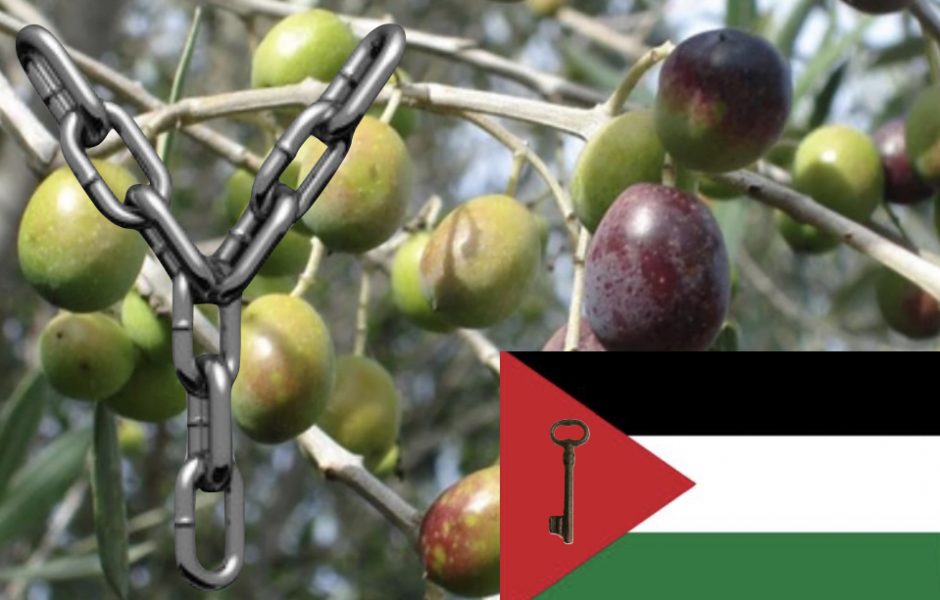
We stand firmly against injustice in all its forms. Nothing can justify the current war crimes committed by Israel in occupied Palestine. Equally, nothing can excuse the continued support offered by other nations to this apartheid regime. If you believe in human rights, dignity, and justice, then we urge you to boycott this rogue state. Silence is complicity, do what’s right.
Haifa, the breathtaking coastal city on the Mediterranean, is a place of deep Palestinian history, cultural richness, and resilience. Once a thriving Palestinian hub, Haifa remains a symbol of Palestinian identity and the enduring struggle for justice.
A City of Heritage and Diversity
Before 1948, Haifa was one of Palestine’s most vibrant cities, known for its cultural, economic, and intellectual prosperity. It was home to a diverse population of Muslims, Christians, and Jews who lived and worked together. The city’s bustling port, thriving markets, and historic neighborhoods made it a key Palestinian center.
The Nakba and the Forced Displacement
In 1948, Haifa witnessed one of the most tragic chapters in Palestinian history. Terrorist Zionist gangs attacked the city, forcing tens of thousands of Palestinians to flee by land and sea, many escaping by boats from its shores. From a majority-Palestinian city, Haifa was emptied of its indigenous people, with only a small number remaining under harsh, racist, military and apartheid rule.
Haifa Today: A Story of Survival
Despite the forced displacement, Haifa’s Palestinian spirit lives on. The city is home to one of the largest Palestinian communities in historic Palestine, where Palestinians continue to preserve their culture, language, and identity.
• Wadi Nisnas and the German Colony are neighborhoods where Palestinian history and resilience shine.
• The Palestinian theater, art, and literature scene in Haifa is growing, reclaiming space in a city that was once entirely Palestinian.
• Haifa’s youth and activists continue to resist oppression and work for justice, making their voices heard despite systemic discrimination.
A Symbol of Return and Hope
For Palestinians, Haifa is more than just a city—it is a symbol of the right of return, the endurance of Palestinian heritage, and the dream of justice. The beauty of its Mediterranean coastline, historic streets, and ancient mosques and churches tells a story that cannot be erased.
Haifa remains Palestinian, in memory, in spirit, and in the hearts of all who remember and resist.
Palestinians look for survivors after an Israeli airstrike in Rafah refugee camp, southern Gaza Strip. Photo Anas-Mohammed
In this article the Palestine Solidarity Campaign groups in Wales explore Wales’ proud history in opposing apartheid in South Africa. They consider whether Wales can still feel proud considering that we have collectively buried our heads in the desert sands when in comes to the ongoing apartheid Israel has imposed upon Palestinian people.
Out of 60 Senedd Members just 24 voted in support of a ceasefire. Several put forward an amendment calling for a humanitarian pause, and 19 voted against, including the entire Welsh Conservative group. The 13 Welsh Labour government ministers abstained as “Welsh Government has no jurisdiction over international affairs”.
In March 2022, in an admirable display of solidarity, the Welsh Government voted in support of humanitarian aid to Ukraine. And public bodies in Wales followed suit, engaging in a boycott of goods and services and divesting investments and pensions from Russian companies, and those with Russian ties.
At the time, First Minister Mark Drakeford stated that “The people of Wales are appalled at the invasion of Ukraine.“Though when it came to calls for an immediate ceasefire amidst the appalling bombardment of Gaza, Mark Drakeford attended but did not take part or comment. And in a way, perhaps that is understandable.
As the result of the debate was announced, cheering and shouts of “free Palestine” could be heard coming from the public gallery. And it is this cry for freedom, rather than the calls for a ceasefire, which are at the heart of the wider issue of apartheid.
Also in March 2022 Mr Lynk, the then UN ‘Special Rapporteur on the situation of human rights in the Palestinian Territory occupied since 1967’, released a statement which stated “that apartheid is being practiced by Israel in the occupied Palestinian territory”. Echoing findings by Palestinian, Israeli, and international human rights organisations
Discriminatory
The statement speaks of a “deeply discriminatory dual legal and political system” of “the walls, checkpoints, roads and an entrenched military presence” which separates the “more than three million Palestinians, who are without rights, living under an oppressive rule of institutional discrimination and without a path to a genuine Palestinian state that the world has long promised is their right”.
The statement described Gaza as an ‘open-air prison’ which even before the ‘siege on Gaza’ was “without adequate access to power, water or health, with a collapsing economy and with no ability to freely travel to the rest of Palestine or the outside world.”
The Special Rapporteur concluded that “a political regime which so intentionally and clearly prioritizes fundamental political, legal and social rights to one group over another within the same geographic unit on the basis of one’s racial-national-ethnic identity satisfies the international legal definition of apartheid”.
The UN Rapporteur’s remit covers only the occupied Palestinian territories and not Israel itself. Other human rights groups have referred to Israel practising apartheid against Palestinian citizens of Israel as well.
For example, a 2022 Amnesty International report states that Israel imposes a system of oppression and domination against Palestinians ‘wherever it has control over their rights’.
Nelson Mandela
We have learned that Wales has a proud history of opposing apartheid. When president Nelson Mandela made his only visit to Wales in 1998, four years after the ANC had been swept to power in South Africa’s first democratic elections, he praised Wales’ contribution in the fight to end apartheid.
The man, who had been labelled and imprisoned as a terrorist by the apartheid regime, was introduced by the then Cardiff City Council leader Russell Goodway as “a beacon of light during the dark days of apartheid and oppression” and “a symbol of hope in the new world order.”
After meeting with the Queen and thanking those in Wales who had campaigned for apartheid’s end, he asked the crowds at a Freedom of the City Ceremony in Cardiff Castle to “accept our heartfelt thanks on behalf of the people of South Africa for your solidarity. When the call for the international isolation of apartheid went out to the world, the people of Wales responded magnificently”.
Nelson Mandela meeting schoolchildren at Cardiff Castle. Image via YouTube
Archives
So how did this Wales come to have the proud history of opposing apartheid?
The archives held by the National Library of Wales record that “The Welsh Committee of the British Anti-Apartheid Movement (AAM) was established in 1981” as ‘The Wales Anti-Apartheid Movement’ (WAAM) bringing together numerous local branches ‘as a national movement in Wales, with a clear Welsh identity’.
According to these records its aims and objectives included informing the people of Wales and elsewhere about apartheid and campaigning for international action to bring about an end to apartheid.
And today we make similar public shows of unconditional support for an apartheid regime, and actively encourage trade and investments in arms and other equipment used to enforce apartheid. This includes companies based in Wales.
WAAM’s campaigning work “covered a wide range of areas including sports, cultural and consumer boycotts, and campaigns against investment in South Africa by British and international companies and banks, against nuclear and military collaboration, loans to South Africa and oil sanctions”.
As the apartheid regime of South Africa was a key cold war ally then, Israel is a key strategic ally of the UK today. Then as now, apartheid is an inconvenient truth best ignored, or even suppressed. To the extent that heavy pressure (which included spying) was put on activists campaigning to end apartheid.
And then as now expressing solidarity with an oppressed people is an incredibly brave thing for people to do. In Wales such outspoken activists included Peter Hain, who went on to become MP for Neath and the Welsh Office Minister; and Mick Antoniw who became, the AS/MS for Pontypridd and Counsel General for Wales.
And their valued contribution, and that of Wales was celebrated by Nelson Mandela when he stated that “The knowledge that local authorities all over Wales were banning apartheid products from canteens and schools – and that the universities, the Welsh Rugby Union, and the choirs had cut their links – was a great inspiration to us in our struggle.”
So, how does Wales fare when it comes to opposing apartheid today?
We’ve heard about how groups small local groups are coming together to campaign for Boycott, Divestment and Sanctions in Wales. And in a piece for the IWA ‘Protecting the Right to Boycott in Wales’ the author examined the ‘Economic Activity of Public Bodies (Overseas Matters) Bill (UK)’ and its likely impact on the right of public bodies to Boycott, Divestment and Sanctions here in Wales.
Undermine devolution
The article outlined how the UK Government is attempting to undermine devolution and the powers of public bodies to take part in Boycott, Divestment & Sanctions and how worryingly the bill passed its second reading in the House of Commons with ease on July 3, 2023, after many Labour MP’s followed the party whip and abstained and passed through both Committee and Report stages unamended.
Yet on the 15 November, following the terrible events of 7 October , and the brutal bombardment of Gaza which followed, when asked to vote on the SNP amendment to the King’s speech calling for a ceasefire in Gaza, 56 Labour MPs rebelled and voted in favour of the amendment.
The rebellion, however, was largely confined to Labour MPs from England. Out of 40 MPs from Wales only 5 voted for a ceasefire; 3 Plaid Cymru MPs, 1 Labour & 1 independent. One Labour MP was unavailable to vote as they were in the US. In the UK Parliament the Wales record on opposing apartheid isn’t looking great.
According to Mr Lynk “The 1998 Rome Statute of the International Criminal Court came into law after the collapse of the old South Africa. It is a forward-looking legal instrument which prohibits apartheid as a crime against humanity today and into the future, wherever it may exist.” Standing against apartheid then is therefore a matter of international law which Welsh politicians cannot pick and choose to ignore.
Thankfully, on 8 September Rebecca Evans, MS & Minister for Finance and Local Government laid a Legislative Consent Memorandum before the Senedd which stated that it would not be appropriate to adopt the Economic Activity of Public Bodies (Overseas Matters) Bill (UK)’ for Wales stating:
“I cannot recommend consent is given whilst questions remain as to the compatibility of this Bill with convention rights and international law”.
Then on 22 November the Legislation, Justice and Constitution Committee laid its final report on the proposed bill before the Senedd noting that: “The devolution settlement requires the Welsh Ministers to comply with both international obligations and the rights contained in the European Convention on Human Rights (the Convention rights)”
The committee also shared the ministers’ concerns that: “A decision by the Senedd to consent to the Bill could contribute to a breach of international law and would mean the Senedd acting incompatibly with international obligations, which would be in contrast to the spirit of the devolution settlement.”
When this report comes up for debate in the Senedd Chamber it looks highly likely that any motion to oppose consent for the bill as it stands will gain the support of the majority, but not all, of the Senedd’s members. Like the vote for a ceasefire, this will stand as a signal of solidarity between the people of Wales, as represented by the Senedd, and the Palestinian people in their ongoing struggle against apartheid.
But such a signal of solidarity still falls far short of the actions needed.
Significant areas of concern remain with regards to Wales’ ongoing relationship with the apartheid state of Israel. If the campaign to end apartheid is to be successful once more, then civil society will need to organise around the anti-apartheid banner. And bring concerted pressure to bear on the public sector so that it can play its part in boycotting goods and services, divesting finance, and engaging in sanctions.
Are we comfortable with Wales being a place where the Israeli arms industry does business? With Wales being a place where the Welsh public sector provides public sector inward investment support to cyber security, aerospace, and other firms with links to an apartheid regime. With Wales as a place where public sector pensions profit from apartheid. As the people of Wales, are we okay with this?
Friends of the Earth Cymru, People & Planet, and Palestine Solidarity groups have been calling for the divestment and decarbonisation of public Sector pension funds for several years. In July 2023 several Welsh Palestine Solidarity Campaign (PSC) groups wrote to their local authorities to express their concerns about the continuing investments of over £4.6bn of funds. Yet little progress on divesting has been made.
In his opening speech on the Ceasefire debate Rhun ap Iorwerth said: “There cannot be justification for the collective punishment of an entire population”. As the UN and other human rights organisations makes clear, apartheid is collective punishment.
Palestine solidarity groups in Wales are calling on civil society to join in the campaign for Boycott, Divestment and Sanctions (BDS). The groups are, for example, calling on everyone in Wales to boycott Israeli goods and companies that profit from Israel’s occupation of Palestine.
Yes, Wales has a proud history of opposing apartheid. But apartheid isn’t history. Let us work together to maintain Wales’ proud history of opposing apartheid whenever and wherever it arises.
Let us come together and oppose apartheid once again
Background
I received a comment from one person saying “they don’t feel sorry for the death of thousands of innocent children killed in Gaza by Israeli airstrikes and that Armageddon is coming and will be the end of Palestinians” and another one advising me to stop writing about politics, as this is “unwelcome”. My answer to them :


A truth exposed, deemed unwelcome, bold,
Gaza's narrative where Israel's grip takes hold.
Against egregious cruelty, a resolute stand,
For justice, they yearn to thwart, withstand.

Branded and silenced, the truth they abhor,
Yet defiantly, I persist, endure.
Child killers, cease your heartless spree,
End Israel's oppression, let humanity be free.
London (Quds News Network)- Jeremy Bowen, the BBC’s international editor, has accused Israel of blocking journalists from entering Gaza because of scenes “they don’t want us to see”.
Bowen said that in the last 18 months of Israeli assault, he had been granted only half a day with the Israeli forces within Gaza. He said that the lack of access was part of an attempt to “obfuscate what’s going on, and to inject this notion of doubt into information that comes out”.
He added that while Palestinian journalists were doing “fantastic work”, he and other international media colleagues wanted to contribute to reporting on the ground in Gaza. He spoke after he accepted a special fellowship award for the Society of Editors conference.
“Why don’t they let us in,” he said. “Because there’s stuff there they don’t want us to see. Beginning after those Hamas attacks on 7 October, they took us into the border communities. I was in Kfar Aza when there was still fighting going on inside it. They had only just started taking out the bodies of the dead Israelis. Why did they let us in there? Because they wanted us to see it.”
“Why don’t they let us in to Gaza? Because they don’t want us to see it. I think it’s really as simple as that. Israel took a bit of flak for that to start with, but none now, certainly not with [President] Trump. So I don’t see that changing anytime soon.”
Asked about whether international media should trust Gaza casualty figures released by the Palestinian Health Ministry, Bowen said the numbers were currently “the best measure that we have” because of the inability of reporters and other bodies to verify them.
According to the Ministry, over 50,200 Palestinians have been killed since the start of Israel’s assault on Gaza on October 7, 2023, with the majority being women and children.
“I think without question, it’s the bloodiest war that they’ve had since the foundation of the Israeli state of 1948,” Bowen said. “If the place could open up, people could go through, look at the records, count the graves, exhume the skeletons from under the rubble and then they’d get a better idea. But when the doors shut, these things become very, very difficult.”
Last year, Bowen was among 50 journalists, including the BBC’s Lyse Doucet and its former presenter Mishal Husain, calling on Israel and Egypt to provide “free and unfettered access to Gaza for all foreign media”.
Critics have accused Israel of targeting journalists in the Palestinian territory to obscure the truth about its war crimes there. Since the start of the assault, at least 208 Palestinian journalists have been killed in Israeli attacks in Gaza.
Posted inBBC, Gaza, Massacres & genocides, UK|TaggedBbc, Jeremy Bowen|Comments Off on They Don’t Want Us to See’: BBC’s Jeremy Bowen Accuses Israel of Blocking Journalists from Entering Gaza
I see what I want in the farm ... right now I see
braids of wheat combed by the wind, and I close my eyes
This mirage leads to Nihawand,
and this calm leads to lapis lazuli
I see what I want in the sea ... right now I see
a rush of swans at sunset, and I close my eyes
This wandering leads to an Andalusia,
and this sail is a dove's prayer over me
I see what I want in the night ... right now I see
the endings of this long life at one of the cities' gates
I will toss the pages of my log into the cafes at the dock and find a seat
for my absence aboard one of the ships
I see what I want in the soul: the face of a stone
scratched by lightning- green, oh land, green is the land of my soul-
haven't I been a child playing at the edge of a well?
I'm still playing ... this space is my playground and the stone is my wind
I see what I want in peace ... right now I see
a deer and grass and a stream of water ... and I close my eyes:
this deer is asleep on my arm
and the hunter asleep, too, near its sons, in a faraway place
I see what I want in war ... right now I see
the arms of our ancestors squeezing a wellspring into green stone
And our fathers inherited the water, but did not bequeath it, and I close
my eyes:
The land in my hands is the work of my hands
I see what I want in prison: days of a flowering
that led from here to two strangers in me
seated in a garden- I close my eyes:
How spacious is the earth! How beautiful the earth from the eye
of a needle
I see what I want in lightning ... right now I see
farms bursting from their chains with vegetation- bravo!
The song of the walnut floats down, white above the villages' smoke
like doves ... doves we feed alongside our children
I see what I want in love ... right now I see
horses making the plain dance, fifty guitars sighing
and a swarm of bees sucking wild mulberry, and I close my eyes
to see our shadow behind this homeless place
I see what I want in death: I fall in love, and my chest opens
and a white unicorn jumps out and gallops over the clouds
soaring on endless gauze, swirling with eternal blue
So please do not stop my death, do not return me to a star of soil
I see what I want in blood: right now I see the murdered,
his heart lit by the bullet, say to his murderer: from now on
you remember
no one but me. I killed you without meaning to but from now on
you remember no one but me, nor can you endure spring flowers
I see what I want in the theatre of the absurd: fiends in judges' robes,
the emperor's hat, the masks of our time, the colour of old sky,
women who dance for the palace, the chaos of armies
Then I choose to forget everything, remember only the noise behind
the curtain
I see what I want in poetry: when poets died, we attended their funerals,
buried them with flowers, returned safely to their poetry ...
now in the age of magazines, movies, and droning, we laugh—sprinkle
a handful of soil on their poems, come home to find them at our door
I see at dawn what I want in the dawn ... right now I see
nations looking for bread in other nations' bread
Bread is what unravels us from the silk of drowsiness, from the cotton
of our dreams
Is it from a grain of wheat that the dawn of life shines ... and the
dawn of war?
I see what I want in people: their desire
for yearning, their reluctance to go to work,
their urgency to come home ...
and their need for greetings in the morning

Translated by Saadi Simawe and Ellen Doré Watson from the Arabic