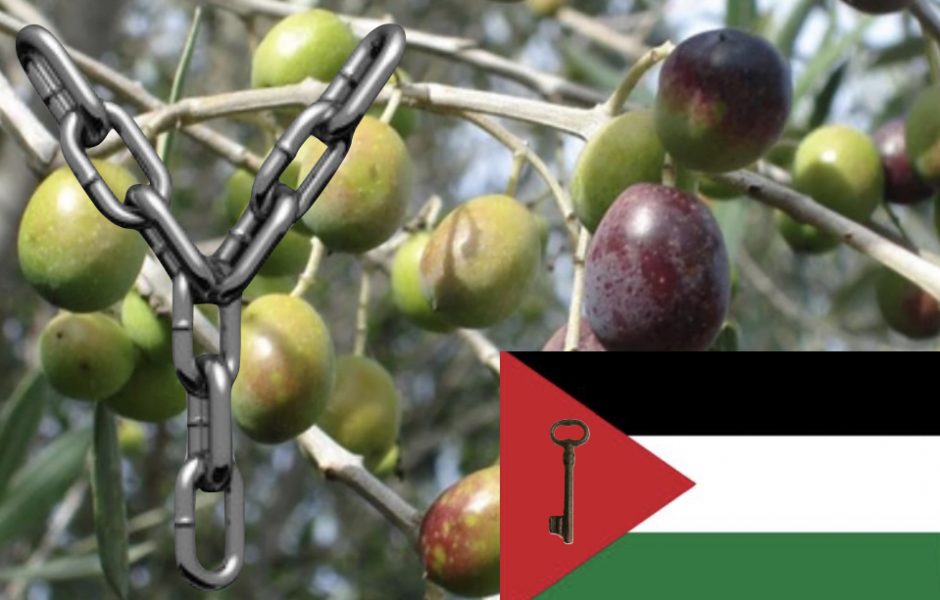
Phalapoem editor, 17/08/26
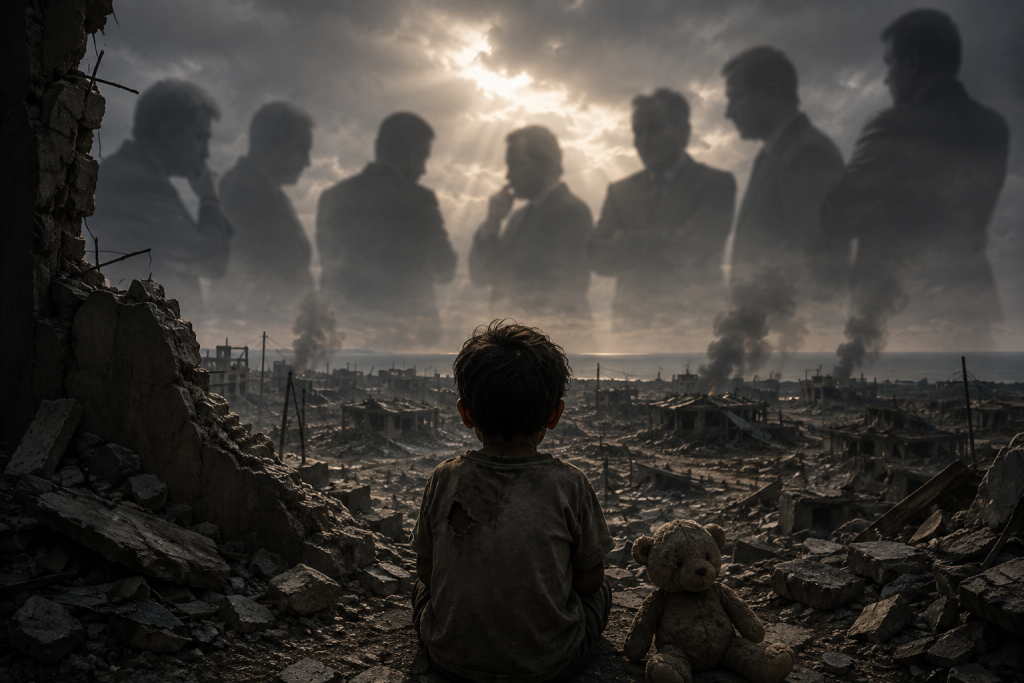
How can the world simply stand by and watch as Israeli politicians pursue policies that Palestinians and international organisations have described as starvation, genocide and ethnic cleansing? How can such suffering unfold in full view of the international community, while governments, institutions and much of the political establishment continue to debate, delay and issue statements that rarely translate into meaningful action?
For decades, Palestinians have lived under occupation, displacement, settlement expansion, blockade and repeated military campaigns. The consequences are not abstract. They are measured in homes destroyed, families separated, civilians killed, children traumatised, hospitals damaged, schools reduced to ruins and entire communities forced from their homes.
What makes the present moment particularly disturbing is that the suffering is being witnessed in real time. Images of starving children, destroyed neighbourhoods and overcrowded shelters circulate around the world within minutes. Humanitarian organisations repeatedly warn about catastrophic conditions, while journalists and aid workers document the consequences on the ground. Yet the international response often appears painfully disconnected from the scale of the human tragedy.
The question is therefore not simply what is happening in Palestine. The question is what the world is prepared to tolerate.
International law was created precisely because powerful states cannot be allowed to decide that some human lives matter less than others. The principles of civilian protection, prohibition of collective punishment, prevention of forced displacement and accountability for grave violations are supposed to apply universally. They cannot become principles that are invoked selectively depending on the identity of the victims or the political alliances of those responsible.
There is also a profound moral contradiction in repeatedly presenting the situation as though it were merely another disagreement between two equal sides. When one population possesses overwhelming military power while another population is subjected to apartheid policies, occupation, displacement and severe restrictions on its freedom, reducing the reality to a symmetrical political dispute obscures the fundamental imbalance of power.
Palestinians do not need the world to debate whether they deserve to exist. They need the same rights that are routinely affirmed for every other people: freedom, dignity, security, self-determination and protection from ongoing israeli persecution and collective punishment.
Criticism of the policies of the Israeli government should not be confused with hostility towards Jewish people. Indeed, opposing the destruction of Palestinian civilian life is entirely compatible with opposing antisemitism and protecting Jewish communities from hatred and discrimination. Human rights cannot be conditional on ethnicity or religion.
The international community has repeatedly demonstrated that it can act when there is sufficient political will. Sanctions can be imposed. Arms transfers can be restricted. Investigations can be supported. Diplomatic pressure can be applied. Humanitarian access can be demanded. Those suspected of serious international crimes can be investigated and, where appropriate, prosecuted.
The continuing tragedy is that the mechanisms of international justice appear far more powerful when directed at some states than others. When accountability becomes dependent upon geopolitical alliances, the credibility of the entire international system is weakened.
The people of Palestine should not have to wait for another generation to receive justice. Children should not grow up surrounded by the ruins of homes, schools and hospitals while politicians argue about whether their suffering has reached the threshold at which the world should finally care.
History will not only record what happened in Palestine. It will also record what the rest of the world did while it was happening.
Future generations may ask why governments that possessed the diplomatic, economic and political means to exert pressure chose caution instead. They may ask why warnings from humanitarian organisations were repeatedly treated as political inconveniences rather than urgent calls for action. And they may ask why the principle that every human life has equal value was so difficult to apply when the victims were Palestinian.
The world cannot claim that it did not know about Israel’s genocide in Gaza and deliberate starvation of millions of Palestinians. It cannot claim that the evidence was unavailable. It cannot claim that the warnings came too late.
The real question is whether the international community will continue watching, or finally decide that Palestinian lives, Palestinian freedom and Palestinian dignity deserve the same protection that it claims to uphold for everyone else.