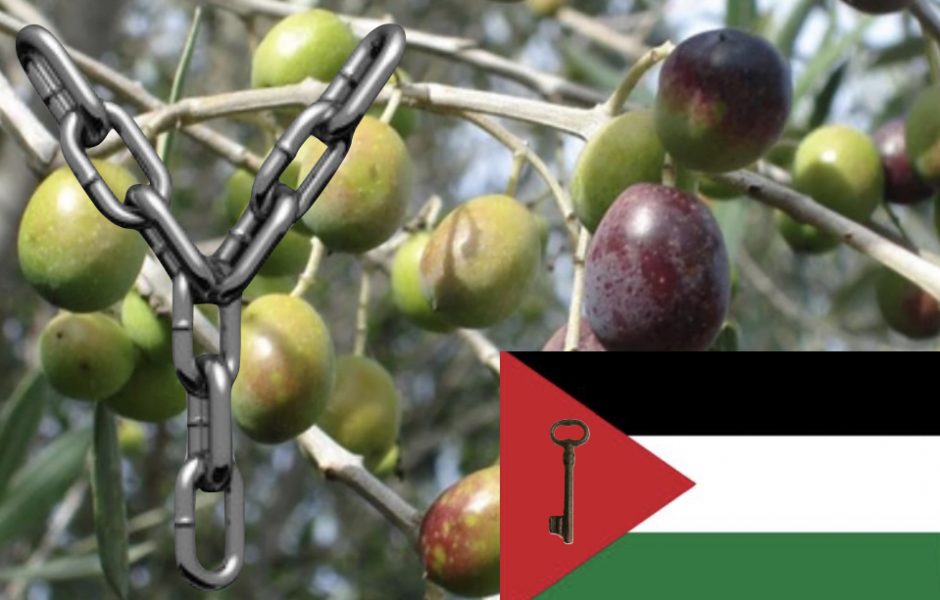
We stand firmly against injustice in all its forms. Nothing can justify the current war crimes committed by Israel in occupied Palestine. Equally, nothing can excuse the continued support offered by other nations to this apartheid regime. If you believe in human rights, dignity, and justice, then we urge you to boycott this rogue state. Silence is complicity, do what’s right.
The stark contrast between the return narratives of Palestinians and Israeli settlers offers a window into the deep inequalities and injustices underpinning the ongoing Israeli occupation. While Palestinians continue to live in the shadow of destruction, displacement, inhumane checkpoints, separation wall, and denial of their right to return to their homes, Israeli settlers are afforded the luxury of returning to Europe leaving behind intact homes, even as a genocidal assault unfolds in Gaza. This comparison highlights the systemic disparities in rights, agency, and humanity afforded to both groups living in Israeli apartheid.
Palestinians: A Right to Return Denied
For Palestinians, the right to return is a cornerstone of their struggle. Since the Nakba (the Catastrophe) in 1948, when over 750,000 Palestinians were forcibly displaced, millions of Palestinian refugees and their descendants have been denied the right to return to their homes, despite this being enshrined in international law. Today, as Israeli bombs decimate Gaza, countless Palestinians face renewed displacement, many losing their homes for the second or third time.
Even when the immediate violence subsides, the idea of return remains a distant dream for most Palestinians. Israeli racist policies systematically prevent Palestinians from reclaiming their homes and lands, often replacing them with illegal settlements or military zones. The destroyed homes in Gaza, the West Bank, and historic Palestine are not merely the result of war but a deliberate and apartheid strategy of erasure, ensuring that Palestinians remain stateless and displaced.
Israeli Settlers: The Privilege of Return
In sharp contrast, Israeli settlers—many of whom are recent arrivals to the region—enjoy the privilege of dual or even multiple citizenships. As the world witnesses the Israeli army’s genocidal campaign in Gaza, some settlers have chosen to return to Europe, citing safety concerns. Their homes in Israel remain intact, untouched by the violence they often support or enable, yet their departure is met with understanding and facilitated by international networks that prioritize their comfort and security.
This privilege reflects the broader reality of the Israeli settler-colonial project: settlers can return to ancestral or adopted homelands in Europe or elsewhere, while Palestinians, whose ties to the land span generations, are denied the same right. The settlers’ mobility is a testament to the systems of power and privilege that sustain the occupation, allowing them to move freely while Palestinians remain trapped under siege or in exile.
The stark disparity in the treatment of Palestinians and Israeli settlers underscores the deeply political nature of the “right to return.” For Palestinians, it is a matter of justice, rooted in historical ties to the land and recognized by UN Resolution 194. For Israeli settlers, return is a choice, not a necessity, enabled by the same structures that deny Palestinians their basic rights.
This disparity also reflects the broader dynamics of dehumanization. Palestinians, portrayed as threats or burdens, are denied the right to rebuild their lives. Meanwhile, Israeli settlers, often seen as agents of a “civilising ” project, are afforded every opportunity to thrive, even if it means leaving their supposed homeland behind.
The ongoing genocide in Gaza further highlights the hypocrisy of these dynamics. As tens of thousands of Palestinians are killed or displaced, their calls for justice are met with indifference or outright hostility from western governments. Meanwhile, the international community quietly enables the mobility and safety of Israeli settlers, even as they benefit from or support policies that perpetuate Palestinian suffering.
This hypocrisy is most evident in the framing of the occupation. Palestinian refugees are often depicted as eternal victims or security threats, while Israeli settlers are portrayed as pioneers or victims of anti-Semitism when they choose to return to Europe. The global narrative reinforces the idea that some lives are worth protecting, while others are expendable.
The comparison between the return of Palestinians to their destroyed homes and the return of Israeli settlers to Europe exposes the profound injustices at the heart of the Israeli occupation. It is a tale of two returns: one denied by systemic violence and oppression, and the other enabled by privilege and international complicity.
For Palestinians, the right to return is not just a legal principle but a symbol of their enduring connection to the land and their resilience in the face of displacement. For Israeli settlers, the ability to leave their homes intact underscores the colonial nature of the occupation, where the land is treated as a temporary asset rather than a shared homeland.
Until these disparities are addressed and the right to return is universally recognized, the cycle of displacement and inequality will persist, denying justice and peace to millions of Palestinians.
In May 2021, Palestinian families in Sheikh Jarrah, a neighbourhood in occupied East Jerusalem, began protesting against Israel’s plan to forcibly evict them from their homes to make way for Jewish settlers. Many of the families are refugees, who settled in Sheikh Jarrah after being forcibly displaced around the time of Israel’s establishment as a state in 1948. Since Israel occupied East Jerusalem and the rest of the West Bank in 1967, Palestinians in Sheikh Jarrah have been continuously targeted by Israeli authorities, who use discriminatory laws to systematically dispossess Palestinians of their land and homes for the benefit of Jewish Israelis.
In response to the demonstrations in Sheikh Jarrah, thousands of Palestinians across Israel and the Occupied Palestinian Territories (OPT) held their own protests in support of the families, and against their shared experience of fragmentation, dispossession, and segregation. These were met with excessive and deadly force by Israeli authorities with thousands injured, arrested and detained.
The events of May 2021 were emblematic of the oppression which Palestinians have faced every day, for decades. The discrimination, the dispossession, the repression of dissent, the killings and injuries – all are part of a system which is designed to privilege Jewish Israelis at the expense of Palestinians.
This isapartheid.
Amnesty International’s new investigation shows that Israel imposes a system of oppression and domination against Palestinians across all areas under its control: in Israel and the OPT, and against Palestinian refugees, in order to benefit Jewish Israelis. This amounts to apartheid as prohibited in international law.
Laws, policies and practices which are intended to maintain a cruel system of control over Palestinians, have left them fragmented geographically and politically, frequently impoverished, and in a constant state of fear and insecurity.
WHAT IS APARTHEID?
Apartheid is a violation of public international law, a grave violation of internationally protected human rights, and a crime against humanity under international criminal law.
The term “apartheid” was originally used to refer to a political system in South Africa which explicitly enforced racial segregation, and the domination and oppression of one racial group by another. It has since been adopted by the international community to condemn and criminalize such systems and practices wherever they occur in the world.
The crime against humanity of apartheid under the Apartheid Convention, the Rome Statute and customary international law is committed when any inhuman or inhumane act (essentially a serious human rights violation) is perpetrated in the context of an institutionalised regime of systematic oppression and domination by one racial group over another, with the intention to maintain that system.
Apartheid can best be understood as a system of prolonged and cruel discriminatory treatment by one racial group of members of another with the intention to control the second racial group.
Amnesty International has created a free 90-minute course called “Deconstructing Israel’s Apartheid Against Palestinians”.To learn more about the crime of apartheid in international law, what apartheid looks like in Israel/OPT, and how it affects Palestinians’ lives, sign up to our course on Amnesty International’s human rights education academy.
WHY IS AMNESTY INTERNATIONAL CAMPAIGNING AGAINST APARTHEID?
I do not know why the entire world is watching what is happening and letting Israel get away with it? It is time the world stopped spoiling Israel Nabil el-Kurd, one of the residents under threat of forced eviction in the East Jerusalem neighbourhood of Sheikh Jarrah
Apartheid is not acceptable anywhere in the world. So why has the world accepted it against Palestinians?
Human rights have long been side-lined by the international community when dealing with the decades-long struggle and suffering of Palestinians. Palestinians facing the brutality of Israel’s repression have been calling for an understanding of Israel’s rule as apartheid for over two decades. Over time, a broader international recognition of Israel’s treatment of Palestinians as apartheid has begun to take shape.
Yet, governments with the responsibility and power to do something have refused to take any meaningful action to hold Israel accountable. Instead, they have been hiding behind a moribund peace process at the expense of human rights and accountability. Unfortunately, the situation today is one of no progress towards a just solution and worsening human rights for Palestinians.
Amnesty is calling for Israel to end the international wrong, and crime, of apartheid, by dismantling measures of fragmentation, segregation, discrimination, and deprivation, currently in place against the Palestinian population.
TELL ISRAEL: DEMOLISH APARTHEID, NOT PALESTINIAN HOMES
The Palestinian experience of being denied a home is at the heart of Israel’s apartheid system. That’s why, as a first step towards dismantling this system, we are calling on Israel to end the practice of home demolitions.
Palestinian families need people to stand with them against injustice and discrimination, by taking action to help them protect their homes.
Israel is not a state of all its citizens… [but rather] the nation-state of the Jewish people and only them Israel’s then prime minister Benjamin Netanyahu (message posted online in March 2019)
ISRAEL’S SYSTEM OF OPPRESSION AND DOMINATION OF PALESTINIANS
Since the establishment of the State of Israel in 1948, successive governments have created and maintained a system of laws, policies, and practices designed to oppress and dominate Palestinians. This system plays out in different ways across the different areas where Israel exercises control over Palestinians’ rights, but the intent is always the same: to privilege Jewish Israelis at the expense of Palestinians.
Israeli authorities have done this through four main strategies:
Fragmentation into domains of control
At the heart of the system is keeping Palestinian separated from each other into distinct territorial, legal and administrative domains
Dispossession of land and property
Decades of discriminatory land and property seizures, home demolitions and forced evictions
Segregation and control
A system of laws and policies that keep Palestinians restricted to enclaves, subject to several measures that control their lives, and segregated from Jewish Israelis
Deprivation of economic & social rights
The deliberate impoverishment of Palestinians keeping them at great disadvantage in comparison to Jewish Israelis
FRAGMENTATION INTO DOMAINS OF CONTROL
In the course of establishing Israel as a Jewish state in 1948, Israel expelled hundreds of thousands of Palestinians and destroyed hundreds of Palestinian villages, in what amounted to ethnic cleansing.
Since then, successive governments have designed laws and policies to ensure the continued fragmentation of the Palestinian population. Palestinians are confined to enclaves in Israel, the West Bank and the Gaza Strip, and the refugee communities, where they are subject to different legal and administrative regimes. This has had the effect of undermining family, social and political ties between Palestinian communities and suppressing sustained dissent against the apartheid system; it also helps to maximise Jewish Israeli control over land and maintain a Jewish demographic majority.
Millions of Palestinians remain displaced as refugees and continue to be physically isolated from those residing in Israel and the OPT through Israel’s continuous denial of their right to return to their homes, towns and villages.
DISPOSSESSION OF LAND AND PROPERTY
Since 1948, Israel has enforced massive and cruel land seizures to dispossess Palestinians of their land and homes. Although Palestinians in Israel and the OPT are subjected to different legal and administrative regimes, Israel has used similar land expropriation measures across all areas – for example, since 1948, Israel has expropriated land in areas of strategic importance that include significant Palestinian populations such as the Galilee and the Negev/Naqab, and used similar measures in the OPT following Israel’s military occupation in 1967. In order to maximize Jewish Israeli control over land and minimize the Palestinian presence, Palestinians have been confined to separate, densely populated enclaves. While Israeli policies have allowed for the discriminatory allocation of state land to be used almost exclusively to benefit Jewish Israelis both inside of Israel and in the OPT.
SEGREGATION AND CONTROL
Successive Israeli governments have pursued a strategy of establishing domination through discriminatory laws and policies which segregate Palestinians into enclaves, based on their legal status and residence.
Israel denies Palestinian citizens their rights to equal nationality and status, while Palestinians in the OPT face severe restrictions on freedom of movement. Israel also restricts Palestinians’ rights to family unification in a profoundly discriminatory manner: for example, Palestinians from the OPT cannot gain residency or citizenship through marriage, which Jewish Israelis can.
Israel also places severe limitations on Palestinians’ civil and political rights, to suppress dissent and maintain the system of oppression and domination. For example, millions of Palestinians in the West Bank remain subject to Israel’s military rule and draconian military orders adopted since 1967.
DEPRIVATION OF ECONOMIC AND SOCIAL RIGHTS
These measures have left Palestinians marginalized, impoverished and economically disadvantaged across Israel and the OPT.
Decades of discriminatory allocation of resources by Israeli authorities, for the benefit of Jewish Israeli citizens in Israel and Israeli settlers in the OPT, compound these inequalities. For example, millions of Palestinians inside of Israel and East Jerusalem live in densely populated areas that are generally underdeveloped and lack adequate essential services such as garbage collection, electricity, public transportation and water and sanitation infrastructure.
Palestinians across all areas under Israel’s control have fewer opportunities to earn a living and engage in business than Jewish Israelis. They experience discriminatory limitations on access to and use of farmland, water, gas and oil amongst other natural resources, as well as restrictions on the provision of health, education and basic services.
In addition, Israeli authorities have appropriated the vast majority of Palestinians’ natural resources in the OPT for the economic benefit of Jewish citizens in Israel and in the illegal settlements.
LIFE UNDER APARTHEID
DENIED A HOME: DEMOLITIONS AND FORCED EVICTIONS
OPT
Palestinians are systematically subjected to home demolitions and forced evictions, and live in constant fear of losing their homes.
For more than 73 years, Israel has been forcibly displacing entire Palestinian communities. Hundreds of thousands of Palestinians’ homes have been demolished, causing terrible trauma & suffering. More than 6 million Palestinians remain refugees, the vast majority of whom live in refugee camps including outside of Israel/OPT. There are over 100,000 Palestinians in the OPT and another 68,000 inside of Israel at imminent risk of losing their homes, many for the second or third time.
Palestinians are caught in a Catch-22 situation. Israel requires them to obtain a permit to build or even erect a structure such as a tent, but – unlike Jewish Israeli applicants – rarely issues them a permit. Many Palestinians are forced to build without permits. Israel then demolishes Palestinian homes on the basis that they were built “illegally”. Israel uses these discriminatory planning and zoning policies to create unbearable living conditions to force Palestinians to leave their homes to allow for the expansion of Jewish settlement.
Mohammed Al-Rajabi, a resident of Al-Bustan area in Silwan, whose home was demolished by Israeli authorities on 23 June 2020 on the basis that it was built “illegally”, described to Amnesty International the devastating impact on his family:
This is extremely hard to deal with. It might be difficult to put into words… and I sensed that it was harder on my kids than on us. They were really excited for us to have this new home. I’m going to keep the photos from that day and show them to my children when they grow up, so they do not forget what happened to us. I will tell them, ‘you see what kind of memories I have to pass on to you?’ My plan was for them to have a warm family home close to their loved ones and family members. Now I’m passing on the memories of their first childhood home being destroyedMohammed Al-Rajabi, a resident of Al-Bustan area in Silwan
FRAGMENTED LOVE: SEPARATION OF PALESTINIAN FAMILIES
Israel has enacted discriminatory laws and policies that disrupt family life for Palestinians. Since 2002, Israel has adopted a policy of prohibiting Palestinians from the West Bank and Gaza from gaining status in Israel or East Jerusalem through marriage, thus preventing family unification.
Israel has long used discriminatory laws and policies to separate Palestinians from their families. For example, Palestinians from the West Bank and Gaza cannot gain legal status in Israel or occupied East Jerusalem through marriage, denying their rights to family unification. This policy has forced thousands of Palestinians to live apart from their loved ones; others are forced to go abroad, or live in constant fear of being arrested, expelled or deported.
These measures explicitly target Palestinians, and not Jewish Israelis, and are primarily guided by demographic considerations that aim to minimize Palestinian presence inside Israel/OPT.
Sumaia, was born and raised in Lod in central Israel. She married her husband, who is from the Gaza Strip, in 1998 and he moved to live with her in Lod. In 2000, Sumaia and her husband began the process of applying for family unification, so they could live together legally. The family unification process took 18 years, during which the couple lived in fear and anxiety. Sumaia told Amnesty International:
The government is controlling every detail of our lives, they are in our bedroom, in our homes. One of the most extreme cases was when they arrested my husband in 2004 while I was giving birth to one of my daughters…while I was in the delivery room they arrested himSumaia
UNDER SIEGE
Palestinian protesters run for cover after Israeli forces launched tear gas canisters during a demonstration along the border between the Gaza strip and Israel, east of Gaza city on June 22, 2018. (Photo by MAHMUD HAMS / AFP via Getty)
Over the past 14 years, more than 2 million Palestinians in the Gaza Strip have been living under Israel’s illegal blockade. Along with four major military offensivesh, the blockade has had catastrophic consequences for the people of Gaza.
The blockade is a form of collective punishment. It forces Gaza’s population – the majority of whom are refugees or their descendants who fled in 1948 – to live in increasingly dire conditions. There are severe shortages of housing, drinking water, electricity, essential medicines and medical care, food, educational equipment and building materials. In 2020, Gaza had the world’s highest unemployment rate, and more than half of its population was living below the poverty line.
On 30 March 2018, Palestinians in Gaza launched the Great March of Return, a series of weekly mass demonstrations along the fence between Gaza and Israel.They were demanding their right to return to their villages and towns in what is now Israel, as well as an end to Israel’s blockade on Gaza. The response was brutal: by the end of 2019, Israeli forces had killed 214 civilians, including 46 children, and injured more than 8,000 others with live ammunition. A total of 156 of those injured had to have limbs amputated. More than 1,200 patients require long-term, complex and expensive therapy and rehabilitation, and tens of thousands more require psycho-social support -none of which are widely available in Gaza.
The blockade prevents Palestinians from accessing adequate healthcare, in particular life-saving and other emergency medical treatment only available outside Gaza. The Israeli authorities often delay these permits and sometimes fail to provide them at all.
Adham Al-Hajjar, 36, is a freelance journalist and lives in Gaza City. On 6 April 2018, while he was covering the Great March of Return demonstrations, Israeli snipers positioned along the fence separating Gaza from Israel shot him. He is unable to get the medical help he needs in Gaza because of the debilitated health services there.
The bullet that entered my leg did not just enter and leave my body. It entered and stopped everything; it stopped my life. Just because a soldier pulled the trigger without thinking of how it would devastate my life. Did he or she ever think about what this would cause? I am walking around as a dead man, everything in my life froze from the moment that bullet entered my legAdham Al-Hajjar
CRIMINAL PATTERNS
Israel has been systematically committing serious human rights violations against Palestinians for decades. Violations such as forcible transfer, administrative detention, torture, unlawful killings and serious injuries, and the denial of basic rights and freedoms have been well documented by Amnesty and others. It is clear that Israel’s apartheid system is being maintained through committing these abuses—which have been perpetrated with almost total impunity.
They form part of a widespread and systematic attack against the Palestinian population, carried out within the context of Israel’s institutionalised regime of systematic oppression and domination over Palestinians, and therefore constitute crimes against humanity of apartheid.
DISMANTLING THE SYSTEM
There is no place for apartheid in our world. It is a crime against humanity, and it has to end.
Israeli authorities have enjoyed impunity for too long. The international failure to hold Israel to account means Palestinians are still suffering every single day. It’s time to speak up, to stand with Palestinians and tell Israel that we will not tolerate apartheid.
For decades, Palestinians have been calling for an end to the oppression they live under. All too often, they pay a terrible price for standing up for their rights, and they have long been calling for others around the world to help them.
Let this be the beginning of an end to Israel’s system of apartheid against Palestinians.
Join us in the fight for justice, freedom, and equality for all.
TELL ISRAEL: DEMOLISH APARTHEID, NOT PALESTINIAN HOMES
The Palestinian experience of being denied a home is at the heart of Israel’s apartheid system. That’s why, as a first step towards dismantling this system, we are calling on Israel to end the practice of home demolitions.
Palestinian families need people to stand with them against injustice and discrimination, by taking action to help them protect their homes.
Where justice falters and sighs are heard,
Israel's army casts shadows, dreams interred.
No future for Palestinians, hopes confined,
A somber tale, the Israeli army enshrined.

America applauds, a partner in the scheme,
Western nations follow, lost in the gleam.
Arab lands in silence, trembling with fear,
Uttering 'no' is too heavy, consequences severe.

China and Russia, oblivious to the plight,
Financial interest veils, obscuring the light.
Latin America's voice, feeble and small,
Against the Israeli army, struggling to call.

Palestinians encircled by the army's might,
A tragic tale, an oppressive night.
Shame upon this world, where justice is blurred,
In the echoes of sorrow, a plea unheard.
The ongoing Israeli occupation of Palestine, particularly the events surrounding Gaza, is marked by systemic oppression, land theft, genocide and dehumanization. These features are not unique to Israel; they echo the colonial histories and contemporary practices of many Western governments. This shared ideological framework helps explain the West’s complicity in Israel’s actions, its suppression of pro-Palestine movements, and its glaring double standards in addressing the human rights of Palestinians.
Common Features: Land Theft, Supremacy, and Dehumanization
The cornerstone of Israel’s occupation is the ongoing theft of Palestinian land. From the Nakba in 1948 to the annexation of the West Bank and the siege of Gaza, Israel’s territorial expansion mirrors the colonial land grabs undertaken by Western powers throughout history. Settler-colonialism, whether in the Americas, Australia, or Africa, has always relied on the dispossession of indigenous peoples, underpinned by a narrative of racial or cultural supremacy.
This supremacy manifests in Israel’s treatment of Palestinians as expendable, their rights negotiable, and their humanity ignored. Western governments, too, have long dehumanized those they seek to dominate—be it enslaved Africans, indigenous populations, or communities in the Global South subjected to imperial interventions. The dehumanization of Palestinians, then, is not an aberration but a continuation of a long history of viewing certain peoples as obstacles to progress or security.
Complicity in Genocide
Western complicity in Israel’s actions, including genocide in Gaza, is rooted in strategic and ideological alignments. Israel is often viewed as a Western outpost in the Middle East, a bulwark against regional powers that challenge Western dominance. This geopolitical utility makes Western governments unwilling to criticize Israel, let alone hold it accountable for violations of international law.
Furthermore, Israel’s actions align with a global trend among Western governments of prioritizing state security over human rights. The framing of Palestinians mirrors the way Western powers justify their own violence against marginalized groups. Whether it’s drone strikes in the Middle East or crackdowns on indigenous resistance movements, the West and Israel share a common rationale: violence is justified when it serves the interests of the powerful.
Suppression of the Pro-Palestine Movement
Western governments have gone to great lengths to suppress pro-Palestine movements, from criminalizing protests to censoring criticism of Israel under the guise of combating antisemitism. This suppression stems from a fear that these movements expose the hypocrisy of Western democracies. The pro-Palestine movement highlights the double standards of nations that claim to champion human rights while supporting or ignoring Israel’s violations.
Moreover, these movements threaten to disrupt Western narratives about Israel as a democratic state and an ally in the fight against “extremism.” Acknowledging the legitimacy of Palestinian resistance would force Western governments to confront their complicity in decades of suffering, something they are unwilling to do.
The Double Standard on Hostages
The Western response to the hostage situation further illustrates its bias. Thousands of Palestinians, including children, languish in Israeli prisons, often without trial or due process. Their plight is met with silence. In stark contrast, the capture of Israeli hostages by Palestinian groups prompts urgent international mobilization and outrage.
This disparity is not accidental. It reflects a deeply entrenched view that Israeli lives are more valuable than Palestinian ones. By ignoring Palestinian hostages, Western governments tacitly endorse Israel’s systemic violence while erasing the humanity of those who resist.
The shared values of land theft, supremacy, and dehumanization tie Western governments to the Israeli occupation. Their complicity in Israel’s actions is not only about geopolitics but also about maintaining systems of power that have long marginalized the oppressed. The suppression of pro-Palestine movements and the indifference to Palestinian suffering are symptoms of a broader unwillingness to confront the legacies and continuities of colonialism.
However, history has shown that such systems of oppression are not invincible. As global solidarity with Palestine grows, the cracks in this complicity will become harder to ignore. The fight for justice and freedom in Palestine is part of a larger struggle against the systems that dehumanize and dispossess, and it will continue to inspire movements around the world.
The modern Zionist narrative of Israel traces its historical roots to the alleged ancient Kingdom of Israel in the land of Palestine, as claimed in the Old Testament (Torah). Before the occupation of Palestine by Zionism in the early 20th century, Westernscholars were intrigued by these historical accounts. The exploration of history and archaeology in Palestine has been shaped to legitimize the Zionist state in Palestine, rather than for purely academic endeavors.
Three Pathways of Interpretation
In 1925, German theologian Albrecht Alt introduced the “Infiltration or Penetration” theory, proposing a peaceful migration of Israelites to Palestine during the Late Bronze Age. This theory later served to construct a historical narrative aligning with 20th-century Zionist objectives. The “Palestinian Conquest,” presented by American biblical archaeologist William F. Albright, offers an alternative account, emphasizing archaeological evidence of a military campaign leading to the destruction of Palestinian civilizations. Meanwhile, the American biblical scholar George Mendenhall contested the notion of an ancient invasion of historical Palestine in his 1962 article “The Hebrew Conquest of Palestine”. He argued that the Israelites were not invaders, but rather a group of Canaanites who gradually emerged as a distinct culture and religion over time. Thus, Albright challenged the narratives constructed by Alt and Albright.
The Myth of Archaeological Evidence
The interweaving of archaeology with the Zionist project has resulted in the manipulation of findings in the pursuit of historical legitimacy. The link between archaeological discoveries and the Torah has led to misinterpretations, fabrications, and a distorted understanding of the region’s past. The validity of the “United Kingdom of Israel” is disputed, with scholars like Israel Finkelstein questioning its historical existence, viewing it as political and religious propaganda.Interestingly, the archaeological record in Jerusalem, presumed to be a thriving capital of a United Kingdom, lacks evidence of a grand monarchy or ruling structures from the supposed prosperous period. The discovery of multi-roomed stone houses and pottery in the Levant is now met with skepticism, with some considering them to be lavish dwellings from the Umayyad period rather than royal cities. The absence of evidence in the archaeological record challenges the historicity of ancient Israel, particularly as portrayed in the Torah. This disconnection between the biblical narrative and historical and geographical reality raises questions about the feasibility of a unified kingdom and the existence of a significant political force in ancient Palestine.
Rationality Pondering
Efforts to support Zionist narratives through archaeological evidences have consistently fallen short. Picture this: a group of individuals, expelled from Europe, boldly asserts that your homeland belonged to their ancestors 2000 or 4000 years ago, demanding that you, the indigenous people, evacuate your homes for them. It sounds absurd, doesn’t it? A far-fetched ploy to legitimize land theft and atrocities against Palestinians. In this age of high-tech advancements, clinging to superstitious religious narratives without concrete proof seems implausible. Even if such claims were true, one might sarcastically suggest that, according to this logic, all modern nations should be searching for a new planet to inhabit, allowing indigenous inhabitants to reclaim their ancestral lands. Now, doesn’t that sound like a reasonable solution in our supposedly enlightened era?
The Israeli occupation of Palestine has been capturing global attention and sparking fierce debates for decades. The violence, suffering, and destruction associated with the occupation have led many to question which side bears greater responsibility for the ongoing turmoil. Is the Palestinian resistance, the greater evil? Or is the Israeli occupation, widely condemned as a violation of international law and human rights, the root of the issue? To answer this question, we must delve into the historical, legal, and moral dimensions of both.
The Israeli Occupation: A Violation of Rights
The illegal Israeli occupation of Palestine, including the West Bank and Gaza Strip, began in 1967 following the Six-Day War. Since then, Israel has implemented policies that have been widely criticized by human rights organizations, including land confiscation, settlement expansion, dehumanisation, humiliation, torture, rape and the restriction of Palestinians’ movement.
The expansion of Israeli settlements is a blatant violation of international law under the Fourth Geneva Convention. Despite global condemnation, over 700,000 Israeli settlers now illegally live in the West Bank and East Jerusalem, displacing Palestinians and further diminishing their access to land and resources. The occupation also brings with it daily military raids, arbitrary arrests, and home demolitions, creating a climate of terror, fear and humiliation for millions of Palestinians.
In Gaza, the situation is even more dire. The 17-year blockade imposed by Israel has turned the territory into an open-air prison for its two million residents. With restricted access to basic necessities like clean water, electricity, and medical supplies, civilians endured starvation and humanitarian disaster. According to the United Nations, Gaza could become unlivable if the blockade and genocide persist.
The Palestinian Resistance: A Response to Occupation
The Palestinian resistance has taken many forms, from peaceful protests and international advocacy to armed struggle. Some resilience groups have carried out attacks against Israeli civilians. These actions have drawn condemnation for their indiscriminate nature.
While such acts of violence are inexcusable, it is crucial to understand their context. The Palestinian resistance emerged as a reaction to the Israeli occupation and the systemic denial of Palestinian rights. When a population is subjected to decades of displacement, oppression, and humiliation, resistance becomes a natural, albeit tragic, response.
Many Palestinians argue that their resistance is a fight for self-determination, a right enshrined in international law. Peaceful protests have often been met with excessive force by Israeli security forces, leading to injuries and deaths, further fueling anger and despair.
The Root Cause of the Conflict
To assess which is worse—the Palestinian resistance or the Israeli occupation—we must examine the root cause of the conflict. The Israeli occupation is not just a backdrop to Palestinian resistance; it is the primary driver of it. Decades of land theft, systemic oppression, and the denial of a viable Palestinian state have created a situation where resistance is inevitable.
While acts of violence by Palestinian factions are reprehensible, they cannot be divorced from the context of occupation. An occupied people fighting for their freedom, even through morally questionable means, cannot be equated with a state systematically oppressing millions of people.
The Moral and Legal Perspective
From a moral and legal standpoint, the Israeli occupation is far worse than the Palestinian resistance. The Israeli occupation violates all international laws and deprives an entire population of their basic human rights. It is a state-sponsored system of apartheid, control and dispossession that perpetuates cycles of violence and despair.
The Palestinian resistance, while often criticized for its methods, is a reaction to the occupation. Ending the occupation would address the root cause of the violence and pave the way for a lasting solution.
The question of “which is worse” should not distract from the urgent need to resolve the conflict. Both Palestinians and Israelis deserve peace, security, and dignity. For that to happen, the Israeli apartheid and occupation must end, and both sides must engage in meaningful dialogue and negotiation. The international community has a critical role to play in holding Israel accountable for its war crimes and violations of international law while supporting Palestinian efforts to achieve self-freedom, and determination through peaceful means.
In the end, peace will only be possible when justice is served, and the root causes of the conflict are addressed. Until then, the cycle of violence and suffering will continue, with neither side emerging as a true victor.