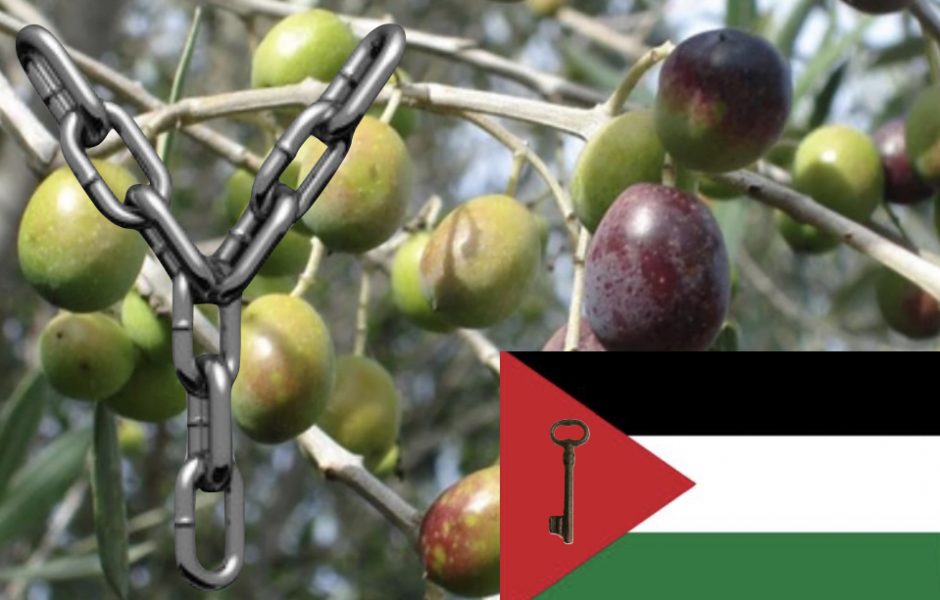
S. T. Salah, 18/04/26
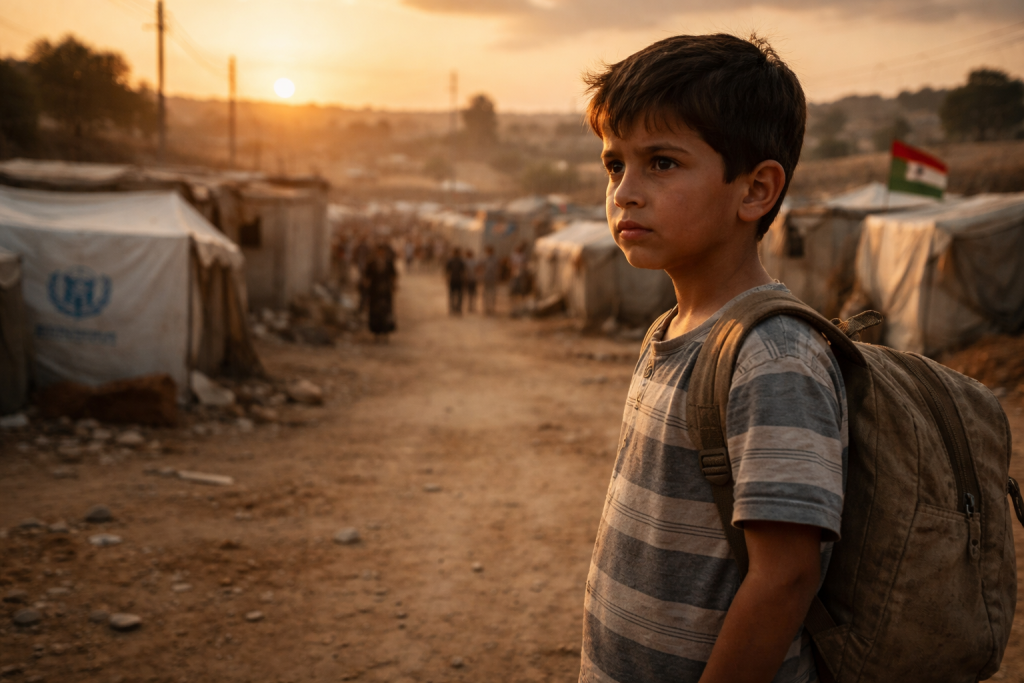
I was born a few years after the Six Day War in a refugee camp near Bethlehem. I entered the world already displaced, into a life shaped by events that had unfolded before I could speak.
My parents and older siblings were born in Jericho, an ancient city where my father owned a small grocery shop, farmland inherited from his parents, and a home that carried our family’s story. It was not wealth. It was dignity. It was rootedness.
After the war, everything was gone. Israeli occupation forces drove my family south, and the life they had built with their own hands vanished in days. What generations had cultivated was erased almost overnight.
My father remained in Palestine while some of his siblings fled to Jordan. My parents were first displaced to Ein al Sultan refugee camp, then to Al Fawar refugee camp near Hebron, before finally settling in a refugee camp near Bethlehem. Each move narrowed the horizon. Movement was not an opportunity. It was survival.
With UNRWA assistance they built a modest home and raised their children amid uncertainty, poverty, and fear. My father taught himself construction and plastering and spent most of his life working in Israeli settlements because it was the only work available. Each morning he left to build houses on land that mirrored our own loss.
When he reached his sixties, heart failure and asthma ended his ability to work. Like many Palestinians who laboured inside Israel, he had no guaranteed health insurance, no pension, and no worker protections. He spent his life constructing homes he could never inhabit. That contradiction captured the essence of Palestinian life under Israeli occupation.
My mother never recovered from losing Jericho, the land, and the home she loved. The trauma did not fade. It settled inside her. She once described the journey from Jericho to Al Fawar refugee camp under burning summer heat. One of my brothers became so thirsty that no water could be found. In desperation she asked my older brother to urinate so she could wet the child’s lips and keep him alive.
That is how my brother survived the desert heat of displacement.
Some memories do not fade. They remain.
Soon after the war, my father and eldest brother were placed in administrative detention for a year and a half without charge. Another brother was detained for six months during the First Intifada while distributing milk to children in the devastated camp. Arrest without explanation was not extraordinary. It became woven into daily life.
As a teenager, I joined peaceful protests demanding dignity and an end to occupation and daily humiliation. During one demonstration, a settler fired a live bullet that struck a tree just above my head. I survived by chance. Many did not. Survival felt more like luck than fate.
Night raids were routine. Soldiers stormed homes and forced entire families into single rooms while they searched and photographed everything. Sometimes they contaminated the flour with salt and sugar to make it inedible. Other times they poured water into the kerosene, leaving it useless for cooking or heat. Collective punishment was normal. Men aged sixteen to sixty were rounded up and held for hours in open fields under the sun. It was one of the many faces of occupation.
Checkpoints shaped our days. The camp was sealed by a barrier controlled by soldiers who opened or closed the gate at will. More than fifteen thousand people lived there, confined and controlled, forced to seek permission simply to leave or return.
How could this happen to us and still be tolerated by the world?
That question never left us. It still does not.
I remember a neighbour’s son being arrested while his mother ran behind the jeep begging for mercy. A soldier struck her head with a rifle and she was taken to hospital. I remember a school friend shot in the head during a peaceful protest only metres from where I stood.
I remember tear gas swallowing our streets and seeping into our homes, the smoke clinging to walls, curtains, and lungs alike. It burned the eyes, tightened the chest, and turned evenings into suffocation. We learned small rituals of survival. An onion in the pocket became our remedy, pressed to the nose in the hope that its sharp sting might dull the gas enough to breathe.
I remember friends lying on the ground crying for help, faces streaked with blood and dust. I remember long curfews when food ran out and we reheated mouldy bread while babies cried from hunger.
One afternoon during a curfew, in a moment of naïve defiance, I stepped outside. The street was unnaturally silent. Soldiers saw me and shouted for me to come to them. The sound cut through me. I ran.
I slipped into an empty house that belonged to my brother, who was living in Jordan. My heart pounded so loudly I was certain it could be heard. I hid behind a door and left the other doors open, convincing myself they might not search carefully. It was the logic of fear.
They entered the house. Boots on concrete. Metal against wood. Then the room.
The first soldier who pushed the door open did not expect to find anyone behind it. When he saw me pressed against the wall, he recoiled in surprise. For a brief second, he flinched as I froze in terror. It may be the only time in my life I frightened a soldier.
They dragged me outside and forced me to sit on the ground between them for nearly an hour. Time thickened. My family came running. Neighbours gathered. My mother cried. They pleaded to the soldiers that I was peaceful, that I had done nothing but study, that I was the quiet one, the serious one. In other words, a harmless boy whose rebellion extended no further than books.
Eventually, they released me.
But I have never forgotten that hour. The thin line between being killed, imprisoned, or allowed to stand and walk away. I still feel that uncertainty in my chest.
Soldiers could enter our homes at any time. Safety was an illusion. It was both a day and a nightmare.
At one point I asked what we had done to Jews to deserve such dehumanisation. My older brother answered quietly that it was because we are Palestinians and they do not want us to remain in Palestine. The explanation carried more weight than comfort.
After secondary school, I was not allowed to study at Israeli universities because I was a Palestinian from the West Bank. I travelled to Jordan with hope, earned excellent grades, and met every academic requirement. It did not matter. I was denied admission and forced to leave when my visa expired. Merit could not overcome identity.
Back home, I worked inside Israel to help my family survive. It was a necessity, not an ambition. I found work in a hotel in Tel Aviv through a subcontractor named Moshe. For two months I cleaned, carried, repaired, and did whatever was asked. I was never paid.
When I demanded my wages, Moshe delayed, avoided, and disappeared. I had no savings, not even enough for the journey home. That was when hope hardened.
Another colleague had also not been paid. We travelled to Tel Aviv to confront Moshe face to face. We believed that if we stood before him as workers who had fulfilled their duties, he would at least acknowledge us.
He tried to avoid us. We waited overnight to meet him in the morning. When he finally appeared, he looked at us as though he did not recognise us, as if two months of labour could dissolve. He began walking away and told us to leave.
Then six young Israeli men joined him. They surrounded us. The circle tightened. My colleague was shoved to the ground and told he would be killed if he did not leave immediately. The threat was unmistakable, heavy in their movements. It did not need to be shouted. The danger was clear.
I told my colleague to get up and go. No wage was worth a life.
We left without our money. We left carrying humiliation, and it weighed more than the wages.
Years later, whenever I struggle or ask for what is owed, my brother reminds me of Moshe. Not as a joke, but as a lesson. Some debts are never repaid in money.
I remember soldiers stopping our car on the way home from work. My brother, the one who survived the desert because our mother kept him alive with his sibling’s urine, smiled nervously as the soldiers approached. It was not defiance. It was fear. A soldier struck him across the face and demanded to know why he was smiling. Even a nervous smile on a Palestinian face was treated as provocation.
My brother left school at sixteen to support our family after our father became too ill to work. Without his sacrifice, none of us would have achieved our dreams. He was our quiet hero. He woke at four every morning and returned after dark just to feed us. Watching him humiliated in the street planted something inside me that never left.
Eventually I saved enough money to leave Palestine and was awarded a scholarship abroad. Thirty years later I returned with my partner to visit my family. I was allowed to enter. She was denied entry because she was not registered by the occupation as my partner. Our relationship, our history, our shared life meant nothing if it was not recognised in their records.
In that moment I understood something deeper. Under the apartheid, one people’s return is automatic and protected, while ours is questioned, restricted, or refused. Movement is not a right. It is a privilege granted selectively, and we are not the ones it was designed to protect.
At Allenby Bridge I was ordered to remove my clothes under Israeli security protocol. As he searched me, a soldier asked, “Do you know why Palestinians are stupid?” I shook my head. He answered, “Because they do not want peace with Israel.” He spoke with certainty, as if the humiliation of stripping me and reducing me to a body under inspection was justified, as if such dehumanisation required no explanation at all.
On another occasion we were pushed away from the luggage belt and treated like animals. I once placed dirty laundry at the top of my suitcase so the smell would halt the search. We learn small acts of resistance. But tricks do not restore rights.
My partner later recognised what I could not name. She noticed how my breathing tightened and my body stiffened whenever we approached an airport or border. Years of checkpoints and searches had trained my nervous system to expect danger. Even in peaceful airports far from Palestine, my body reacts as if humiliation is imminent.
PTSD does not always arrive with visible scars. Sometimes it lives between a passport and a control desk.
I lived eighteen intense years under occupation and apartheid. To record everything would require another book.
Now in my fifties, I teach my children where we come from. I tell them about Palestine so they will tell their children. Memory is the one thing that cannot be confiscated.
And I still believe that one day justice will find its way home.
As Holocaust survivor Elie Wiesel reminded the world, “There may be times when we are powerless to prevent injustice, but there must never be a time when we fail to protest.”