Phalapoem editor, 23/11/26
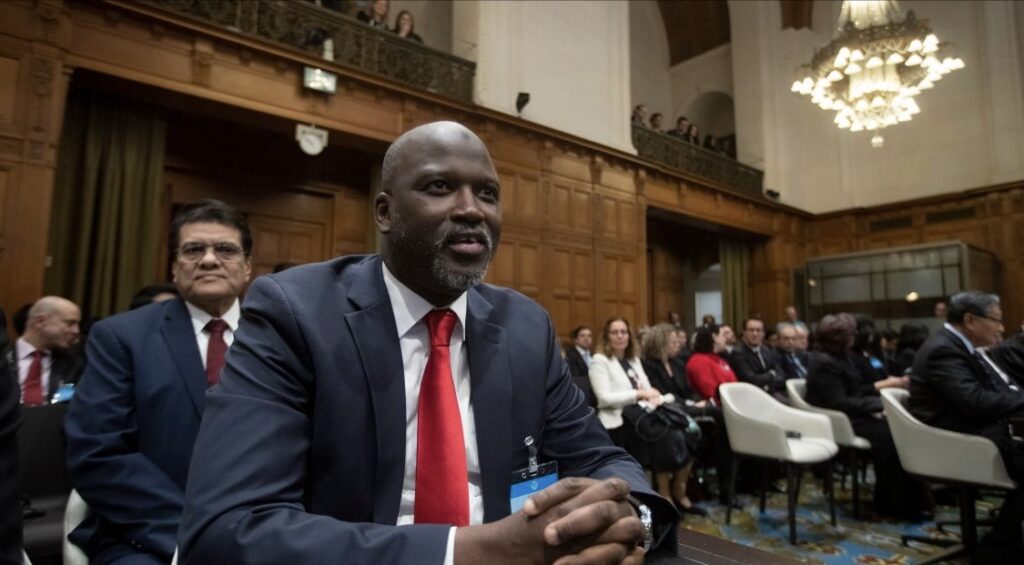
Former Gambian Justice Minister Abubacarr Tambadou, who led the legal action against Myanmar at the International Court of Justice, drawing on his experience in prosecuting perpetrators of the genocide in Rwanda (Associated Press).
“Well, why not The Gambia?”
That was the simple but powerful response of Abubacarr Tambadou, The Gambia’s then Minister of Justice, in December 2019, when an American radio programme, The World, questioned whether such a small African nation had the capacity to take on a case of enormous international significance.
His answer was equally profound: “We are doing this in the name of humanity.”
Seven years later, those words have acquired historic significance.
On 19 November 2026, the International Court of Justice (ICJ), the highest judicial body of the United Nations, delivered its landmark judgment in the case brought by The Gambia against Myanmar. By nine votes to six, the Court found Myanmar responsible for committing genocide against the Rohingya people in northern Rakhine State.
For the first time in its history, the ICJ has ruled that a state is responsible for committing genocide.
The judgment concerns the horrific military operations of 2017, during which Myanmar’s security forces killed thousands of Rohingya, committed widespread sexual violence, attacked children and destroyed entire villages. More than 700,000 Rohingya were forced to flee across the border into Bangladesh, joining a community that had endured decades of persecution, discrimination and denial of basic rights.
The Court concluded that these atrocities were committed with the intention of destroying a substantial part of the Rohingya population. It also found that Myanmar had failed in its obligations to prevent and punish genocide.
This was not simply a legal victory. It was the culmination of years of suffering, documentation, investigation and an extraordinary effort to bring the voices of an oppressed population before the world’s highest court.
What makes this case particularly significant is the country that initiated it. The Gambia is a small West African nation, geographically distant from Myanmar and with no direct territorial or political interests in the conflict. Yet it took the initiative, invoking the Genocide Convention and challenging the international community’s tendency to allow atrocities to go unanswered.
Its action demonstrated that the responsibility to confront genocide does not belong exclusively to powerful nations. Under international law, every state party to the Genocide Convention has a legal interest in ensuring that its provisions are respected.
The judgment is also a reminder that international justice, although often painfully slow, can eventually deliver an authoritative recognition of crimes that victims and survivors have spent years trying to bring to the world’s attention.
However, a judgment is not the end of the struggle. The ICJ has ordered Myanmar to take measures to prevent further violations, provide restitution and compensate the Rohingya for the harm they have suffered. The Court has also made clear that its judgment is final and binding. The challenge now is ensuring that these obligations are implemented.
For the Rohingya, no legal ruling can restore the lives lost, reunite every shattered family or erase the trauma of displacement. But recognition by the highest international court carries enormous significance. It gives legal weight to their suffering and establishes that the crimes committed against them cannot simply be dismissed, denied or forgotten.
There is also a wider message for the international community. The Genocide Convention cannot be treated as a declaration of good intentions, invoked selectively according to political alliances or the strategic interests of powerful states. Its obligations must apply equally, regardless of the identity of the victims or the political influence of those accused.
Perhaps the most important lesson of this historic case lies in the question that started it all.
Why not The Gambia?
Because justice should never depend on the size of a country, the strength of its military or the influence of its government. Sometimes, it begins with a small nation prepared to stand up for people who have been denied a voice
Abubacarr Tambadou’s answer in 2019 was that The Gambia was acting in the name of humanity. Seven years later, that principle has become part of a landmark judgment in international law.
The Gambia may be small on the world map, but its contribution to the pursuit of international justice will be remembered far beyond its border