S. T. Salah, 8/03/26

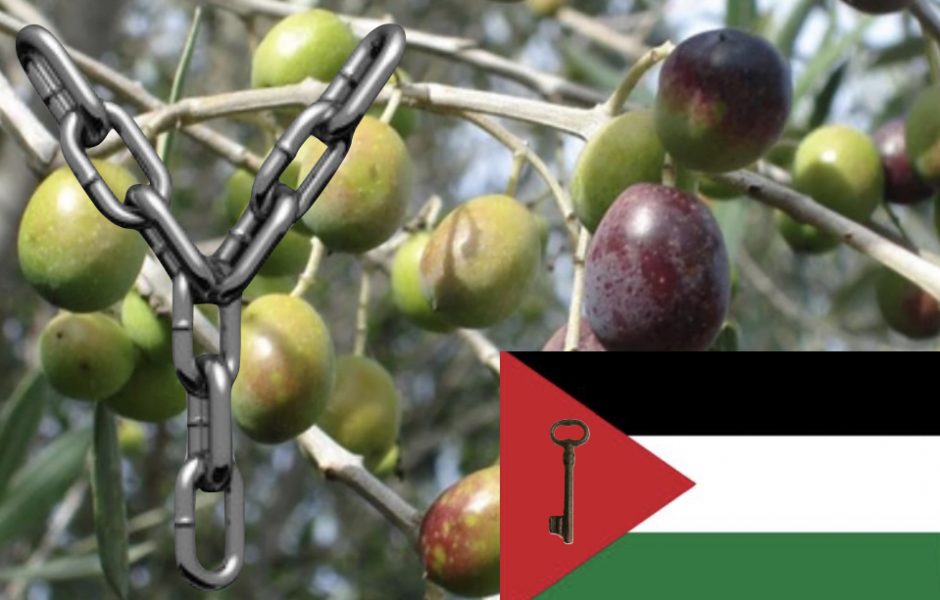
This book examines a crime that unfolded in full view of the world.
The destruction of Palestinian life under Israeli occupation was recorded in real time by governments, courts, humanitarian agencies, journalists, and human rights organisations. It was warned about, legally analysed, and documented for decades. It was never stopped.
This is not a chronological history. It is a forensic dissection of a system.
Using international law, official records, humanitarian reporting, military admissions, and institutional practice, the book demonstrates how a regime of racial domination and apartheid was built, legally reshaped, and politically protected with full knowledge of its consequences. It shows how ethnic cleansing, siege, collective punishment, starvation, mass killings and the destruction of social life were converted into policies that could be administered, debated, and managed instead of prohibited.
This is not a moral appeal. It is an examination of power and responsibility.
The analysis reveals how language normalised violence, how ceasefires reorganised harm instead of ending it, how humanitarian aid was restricted and instrumentalised, how legal frameworks were bent to authorise civilian targeting, and how accountability was fragmented so that no single actor was required to stop the state crimes.
This is not a book about competing narratives. It is a record of how domination survived scrutiny and how impunity was preserved by institutions created to prevent exactly this outcome.
The central question it leaves is not what happened, but why it was allowed to continue.
Indigenous Continuity
This section examines the long term formation of the land known as Palestine and of the population that is today called Palestinian. It reviews geological and environmental conditions, archaeological evidence, historical records, and genetic studies to assess patterns of habitation and continuity in the southern Levant.
Geologically, the area between the Jordan River and the Mediterranean Sea forms part of the Levantine corridor along the Dead Sea Transform fault system. It is a land bridge between Africa and Eurasia with Mediterranean climate zones on the coast and highlands and semi-arid steppes toward the Jordan Valley and Naqab. These conditions produced reliable winter rains, fertile alluvial plains and terraced hillsides, and access to freshwater from springs and aquifers. Archaeology associates these environmental conditions with some of the earliest evidence of sedentary settlement and agriculture.
Archaeological research documents continuous human presence from the Paleolithic period onward. Early Homo sapiens remains at Skhul and Qafzeh caves date to roughly 120000 to 90000 years ago.
By around 12500 to 9500 BCE, the Natufian culture had established semi settled villages in the southern Levant, including at Ein Mallaha in the Galilee. These communities harvested wild cereals and exploited gazelle herds, forming a base for the later transition to agriculture. At Tell es Sultan, ancient Jericho in the Jordan Valley, Neolithic layers dating to roughly 10000 to 9000 BCE include stone architecture, defensive walls and one of the earliest known towers. Jericho and other early sites in the Jordan Valley and central highlands demonstrate the early shift from hunter gatherer life to permanent farming villages.
During the Early and Middle Bronze Age, approximately 3300 to 1550 BCE, the region was organised into Canaanite civilisation and city states that gave the land its earliest widely recorded name, the Land of Canaan. These populations spoke Northwest Semitic languages and formed a documented cultural foundation of the southern Levant. Egyptian records from the second millennium BCE refer to Canaan and list towns corresponding to sites across the region.
Canaanite society developed as a network of fortified city states rather than a single centralised kingdom. Excavations at Hazor, Megiddo, Lachish, Gaza and Tell el Ajjul show walled towns, palaces, temples, olive and wine presses and trade links with Egypt and Mesopotamia. Cities such as Jericho, Shechem, Gaza, Megiddo, Hazor and early Jerusalem functioned as independent polities with rulers, armies, patron deities and defensive walls.
Canaanite culture was technologically and economically advanced. Coastal populations later known as Phoenicians developed early alphabetic writing systems that influenced later Greek, Latin, Arabic and Hebrew scripts. Maritime trade connected Levantine ports to Cyprus, North Africa and the western Mediterranean. Agricultural systems included terraced farming of olives, grapes and figs that remain characteristic of the region today.
Religion in Canaanite society was polytheistic and centred on natural forces. Deities such as El, Baal and Asherah appear in inscriptions and ritual sites across the region and influenced later religious traditions. Early Jerusalem originated as a Canaanite settlement associated with the Jebusites and appears in Bronze Age sources under names derived from Urusalim.
Ancient DNA from Bronze Age skeletons in the southern Levant and from tombs at Sidon indicates that Canaanite populations form a major ancestral component of present day Levantine populations and that population continuity extends over several millennia.
In the Iron Age, approximately 1200 to 500 BCE, new political entities emerged on the Canaanite base. Archaeology identifies an Aegean linked material culture in coastal cities often associated with Philistine groups. Genetic studies indicate limited migration followed by absorption rather than population replacement. In the highlands and interior, inscriptions and regional records indicate multiple Iron Age polities including Israel, Judah, Moab, Ammon and Edom. Archaeological evidence from sites such as Hebron, Nablus and Jerusalem shows continuity in settlement and agriculture from the late Bronze Age through the Persian and Hellenistic periods.
The name Palestine has ancient roots. Egyptian inscriptions from the twelfth century BCE refer to Peleset on the southern coast. Greek authors later used Palaistine Syria for the area between Phoenicia and Egypt. After the Bar Kokhba revolt of 132 to 135 CE, Roman authorities renamed the province Syria Palaestina. Byzantine and later Christian sources used variants of Palestina for administrative districts. After the seventh century, Arab rulers used Jund Filastin to designate a fiscal and military district centred on Ramla and encompassing much of central and southern Palestine.
From the seventh century onward, linguistic and religious shifts occurred through Arabisation and Islamisation while populations remained locally rooted. Muslim, Christian and Jewish communities lived in Jerusalem, Hebron, Nablus, Gaza, Safad and Acre and in hundreds of villages. Historical travel records and administrative archives describe stable rural communities cultivating wheat, barley, olives, grapes and legumes across terraced hillsides and plains.
Historical and genetic research indicates long term continuity and blending rather than disappearance of earlier populations. Genetic studies of modern regional populations show ancestry derived largely from local Levantine groups with subsequent admixture from neighbouring regions. Y chromosome and mitochondrial studies identify shared deep ancestry among Palestinians, other Arab Levantines and Jewish populations, reflecting common regional roots before later religious and political differentiation.
Claims that the land was empty or that Palestinians represent a recent arrival are not supported by archaeological, historical or genetic evidence. The record instead shows continuous habitation shaped by successive layers of empire, language and religion rather than population erasure.
The following sections examine how imperial rule, colonial administration and modern state formation transformed this long inhabited landscape into the political conditions examined in this audit.
Available now on Amazon. By choosing this book, you are doing far more than simply turning pages. You are extending a hand of support to Palestinian families who rely on UNRWA for education, healthcare, and the essentials of daily life.
Every purchase becomes a meaningful act of solidarity, helping provide Palestinian children with access to schooling, families with medical care, and communities with dignity and hope in the face of ongoing hardship.
This book is not only a story to be read, but a way to make a real difference. By buying it, you stand with the Palestinian people and contribute, in a small but powerful way, to easing their struggle and supporting their future.